
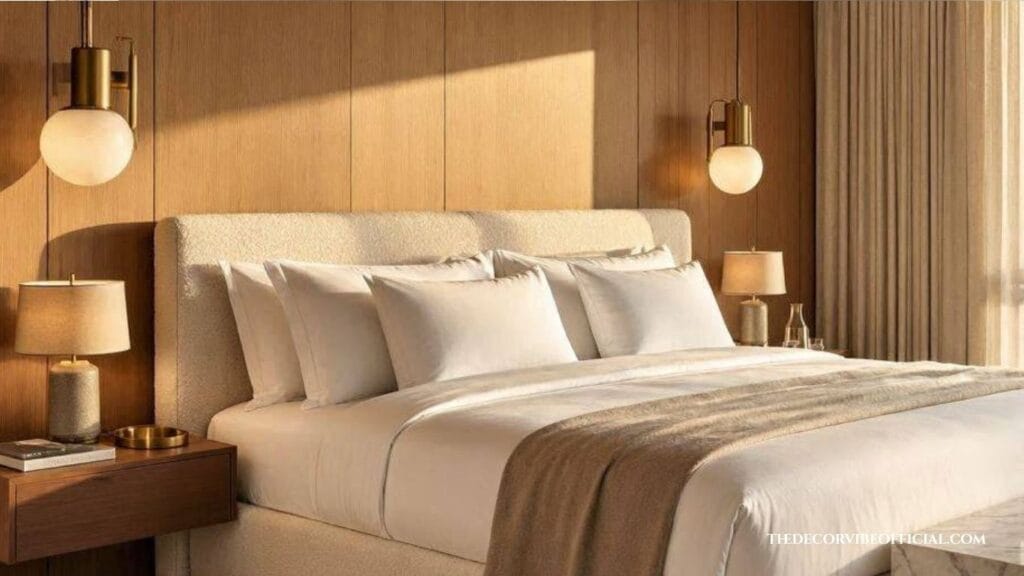
I remember checking into a mid-range hotel a few years ago and being genuinely confused about why the room felt so much calmer than my own bedroom at home, even though my furniture was arguably nicer. It took me a while to figure out it wasn’t about money at all. It was about restraint, layered lighting, and a bed that looked like someone had actually made it with intention that morning. That’s the whole idea behind a hotel vibe bedroom: it’s less about buying expensive things and more about editing down to the details hotels actually get right.
If you’ve searched for hotel vibe bedroom ideas before, you’ve likely found lists that mention “crisp white sheets” and “good lighting” without explaining why those things matter or how to actually pull them off at home. Below are 22 real hotel vibe bedroom designs, organized by category, along with the details most guides skip: real budget ranges, layout mistakes that undercut the whole effect, and how the approach shifts depending on room size.
What Actually Makes A Bedroom Feel Like A Hotel
A hotel vibe bedroom relies on a few consistent principles that have almost nothing to do with square footage or spending power. Hotels design rooms to feel calm and considered for guests who are only staying a few nights, which means every choice gets made with intention rather than habit. That intentionality is the piece most home bedrooms are missing, not a bigger budget or more square footage.
Here’s the thing: most home bedrooms accumulate decor over years, a nightstand from one era, art from another, bedding that doesn’t quite match anything. A hotel vibe bedroom strips that accumulation back to a smaller set of cohesive choices. Symmetry, a restrained color palette, and genuinely good bedding do more heavy lifting than any single expensive piece of furniture, since hotels design rooms to feel finished without relying on one showpiece item to carry the whole space.
This same restrained, layered approach shows up in our cozy minimalist bedroom ideas, if you want a version that leans softer and more casual than a hotel suite.
Why This Aesthetic Has Become So Popular
Hotel vibe bedroom design has grown well beyond a passing trend, largely because it promises something people genuinely want: a bedroom that feels like a break from daily life rather than a room full of unfinished tasks and mismatched furniture.
This shift also reflects how people actually experience hotels now. A weekend stay at a well-designed hotel creates a clear before-and-after feeling, walking into a calm, considered room versus walking into a bedroom cluttered with laundry and cords. Recreating even part of that feeling at home has become one of the most searched bedroom design goals, especially among people redoing a primary bedroom for the first time as adults, rather than simply living with whatever furniture came before.
22 Hotel Vibe Bedroom Designs By Category
Bedding and Linens
Bedding is where a hotel vibe bedroom lives or dies, since it’s the largest surface in the room and the first thing anyone notices.
1. Crisp White Cotton Sheets A high thread count cotton sateen sheet set creates the smooth, cool feel most people associate with hotel beds. Choosing a solid white or ivory keeps the base layer feeling clean and hotel-appropriate rather than casual.
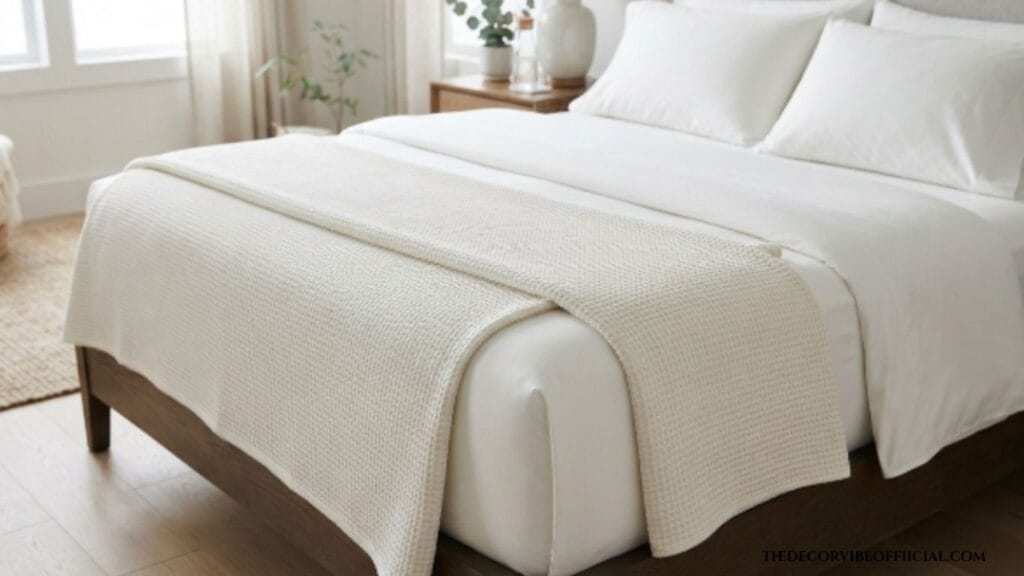
2. Fully Tucked Hospital Corners The way a bed is made matters as much as the bedding itself, and tight, tucked corners instantly read as more polished than a loosely draped duvet. This small habit costs nothing and takes only an extra minute each morning.
3. Layered Duvet and Coverlet Stacking a plush duvet under a lighter, folded coverlet at the foot of the bed adds the layered look hotels use to signal comfort without bulk. A coverlet in a slightly deeper tone than the duvet adds contrast without breaking the neutral palette.
4. Matching Euro Pillow Shams A row of large, matching Euro shams behind the standard pillows creates the fuller, more architectural headboard look common in higher-end hotel rooms. This detail alone often makes the biggest visible difference relative to its low cost.
5. Minimal Pillow Count Limiting the total pillow count to four or five, all coordinated, avoids the overstuffed look that can undercut an otherwise polished hotel vibe bedroom. Choosing a single accent pillow in a subtle texture, rather than a bold pattern, keeps the restraint intact.
Lighting
Lighting shapes the mood of a hotel vibe bedroom more than almost any other single choice, since hotels rarely rely on one harsh overhead fixture.
6. Dimmable Bedside Lamps A pair of matching lamps with dimmer switches lets the room shift from bright and functional to soft and restful depending on the time of day. This flexibility matters more than the lamp style itself, since the same fixture can support reading, relaxing, or falling asleep.
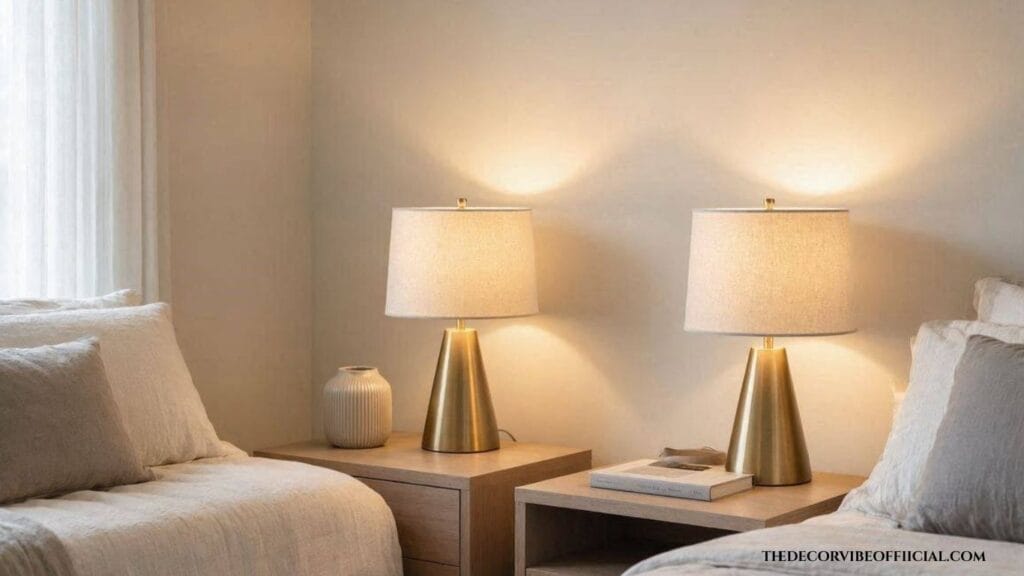
7. Warm-Toned Bulbs Throughout Choosing bulbs around 2700K keeps every light source in the room feeling soft rather than clinical, matching the warmth hotels consistently use. Mixing warm and cool bulbs in the same room is one of the fastest ways to break the cohesive feel a hotel vibe bedroom depends on.
8. Blackout Curtains Full blackout lining behind a decorative curtain layer supports genuinely restful sleep, which is a functional detail hotels prioritize far more than most home bedrooms do. Pairing the lining with a linen or cotton outer layer keeps the window from looking purely utilitarian.
9. Reading Sconces Mounted Above the Bed Wall-mounted sconces free up nightstand space and add the kind of considered, architectural lighting detail found in higher-end hotel rooms. Positioning them at a height that lights a book without shining directly into eyes takes some trial and error but pays off nightly.
Furniture and Layout
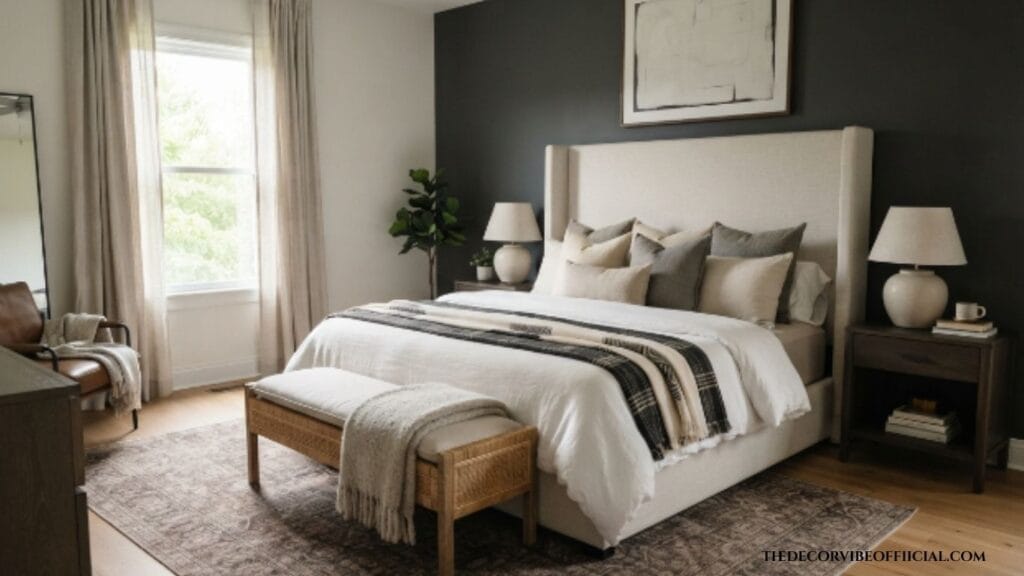
10. Symmetrical Nightstand Arrangement Matching nightstands and lamps on either side of the bed create the visual balance that’s one of the clearest hallmarks of hotel-style design. Even mismatched furniture can achieve this effect if both sides share the same scale and finish.
11. Upholstered Headboard A tall, upholstered headboard in a neutral fabric adds softness and a genuine focal point behind the bed. Channel-tufted or vertically ribbed styles read as slightly more elevated than a plain flat panel.
12. Bench at the Foot of the Bed A simple upholstered bench adds a spot to set clothes or luggage, a small detail that reads as intentional rather than decorative filler. It also gives the room a practical landing spot that keeps clothes off the floor.
13. Minimal Furniture Footprint Sticking to only the essential pieces, bed, nightstands, one dresser, keeps the room feeling spacious rather than crowded with furniture accumulated over time. Removing even one unnecessary piece often opens up more visual calm than adding new decor ever could.
For more ways to keep a bedroom corner from feeling like an afterthought, our under stairs corner decor ideas covers a lot of the same layout and lighting principles.
Color and Walls
14. Neutral Base Palette Warm whites, taupes, and soft grays create the calm, unified backdrop hotels consistently use across almost every room style. Sticking to two or three tones total keeps the palette from feeling busy.
15. Deep Accent Wall Behind the Bed A single wall in a deep, moody tone, like charcoal or navy, adds drama without overwhelming the room, a technique borrowed directly from higher-end hotel suites. Keeping the remaining walls light balances the visual weight of the darker accent.
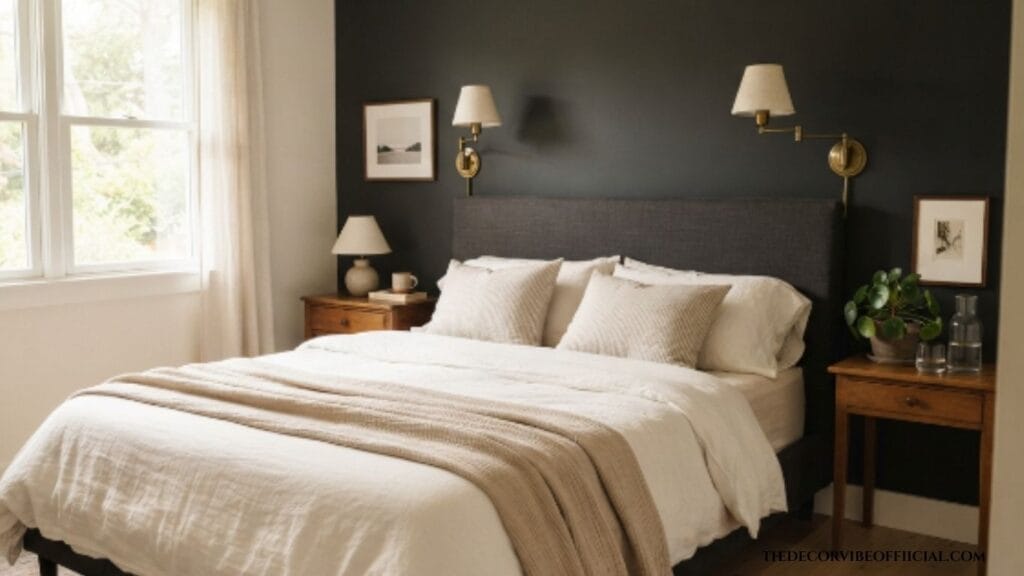
If a deep accent wall is the direction you want to take this bedroom, our full guide to accent wall paint colors bedroom owners actually use has real paint names to bring to the store.
16. Textured Wallpaper Panel A single grasscloth or subtly textured wallpaper panel behind the headboard adds tactile interest without introducing busy pattern. This works especially well paired with an upholstered headboard for a layered, boutique-hotel effect.
Spa and Bathroom-Adjacent Touches
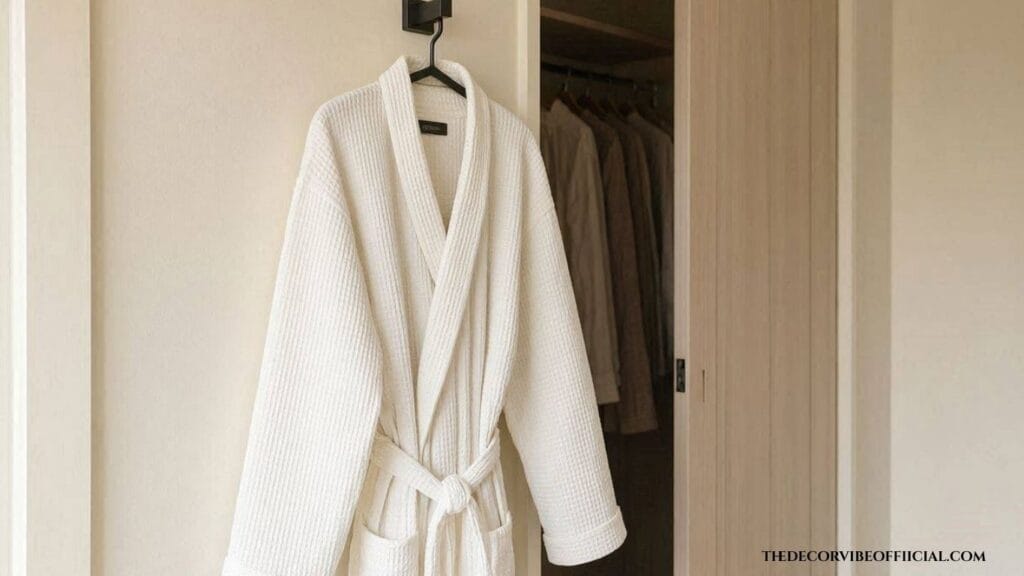
17. Matching Bathrobe on a Hook A single, neatly hung robe near the closet or bathroom door adds an instantly recognizable hotel detail for very little cost. A waffle-weave or Turkish cotton robe in white or cream fits the palette without adding visual noise.
18. Scented Candle or Diffuser A consistent, high-quality scent is something hotels use deliberately, and a single well-chosen candle or diffuser recreates that sensory layer at home. Sticking to one signature scent throughout the room, rather than mixing several, keeps the effect subtle rather than overwhelming.
19. Fresh Flowers or a Single Plant One well-placed plant or a small bud vase of fresh flowers adds the kind of quiet luxury detail found in boutique hotel rooms. A faux version works nearly as well for anyone who won’t keep up with regular watering.
For small, thoughtful styling touches like the robe and candle in this list, our dollar tree home decor hacks shows how to get a similar high-end look without the high-end price tag.
Finishing Details
20. Curated Nightstand Styling Limiting nightstand items to a lamp, a small stack of books, and one personal object avoids the cluttered look that undercuts an otherwise calm room. Clearing away chargers, receipts, and daily clutter before bed each night keeps this styling consistent.
21. A Single Piece of Art Above the Bed One well-scaled piece of art, rather than a full gallery wall, keeps the room feeling edited and intentional. Sizing it to roughly two-thirds the width of the headboard mirrors the proportions hotels use for their own artwork.
22. Fresh, Unwrinkled Textiles Daily Making the bed properly every morning, and keeping visible textiles pressed rather than rumpled, does more for the overall feel of a hotel vibe bedroom than any single purchase on this list. This habit costs nothing but consistently separates rooms that feel finished from ones that just look nice in photos.
Keeping the nightstand and surrounding surfaces this curated pairs well with our coat closet organization ideas, which covers the same principle for the rest of the bedroom’s storage.
Budget-Friendly Ways to Get the Look
Most roundups skip the real numbers, so here’s what building a hotel vibe bedroom actually costs depending on the approach.
| Route | Estimated Cost | Best For |
|---|---|---|
| Small refresh (new sheets, lighting swap, styling) | $150–$400 | Renters, quick weekend updates |
| Mid-range update (headboard, curtains, a bench) | $600–$1,500 | Most standard bedroom refreshes |
| Full furniture overhaul (headboard, nightstands, bench) | $2,000–$5,000+ | A complete room transformation |
A small refresh, better sheets, warmer lighting, a properly made bed, delivers a surprising amount of the hotel vibe bedroom feeling without buying a single new piece of furniture. A mid-range update adds real architectural elements like an upholstered headboard. A full furniture overhaul costs significantly more but delivers the most complete, cohesive result, especially when every piece is chosen with the same restrained palette and symmetry in mind.
If you’re refreshing more than just the bedroom, our small apartment decor ideas on a budget covers a lot of the same restrained, high-impact styling principles for the rest of the home.
Common Mistakes to Avoid
A few small missteps show up again and again in attempts at a hotel vibe bedroom that end up feeling almost right instead of genuinely polished.
- Buying cheap sheets and expecting a hotel feel. Thread count and fiber quality matter more here than almost any other single purchase on this list.
- Skipping symmetry. Mismatched nightstands or uneven lighting on either side of the bed undercuts the calm, balanced feeling hotels rely on.
- Overloading the bed with pillows. Beyond four or five coordinated pillows, the look starts to feel cluttered rather than luxurious.
- Relying only on overhead lighting. A single ceiling fixture rarely creates the layered, warm glow hotels use throughout guest rooms.
- Forgetting daily upkeep. Even a beautifully designed hotel vibe bedroom loses its effect fast if the bed isn’t made and surfaces stay cluttered.
- Choosing pattern over restraint. Busy prints across multiple textiles compete with each other, while hotels consistently favor texture over pattern.
Small Bedroom vs Large Bedroom Strategy
The right approach to a hotel vibe bedroom shifts depending on the actual square footage available.
In a small bedroom, prioritize the bed itself, since it’s the dominant visual element regardless of room size. A great headboard, quality bedding, and symmetrical lighting go further than trying to fit in a bench or extra seating that a tight room can’t comfortably support. In a larger bedroom, there’s more room to add a seating nook or bench at the foot of the bed, since hotels use that extra square footage specifically to create a sense of generous, uncluttered space.
Real Bedroom Examples
Seeing these hotel vibe bedroom ideas applied to an actual room makes them easier to picture in your own home.
Bedroom: Small City Apartment Look: Crisp white bedding with matching Euro shams, a pair of dimmable brass sconces, blackout curtains, and a single piece of art centered above the bed.
Bedroom: Primary Suite Look: A tall upholstered headboard in warm taupe, a deep charcoal accent wall, a bench at the foot of the bed, and layered bedding in neutral tones.
Bedroom: Guest Room Look: Symmetrical nightstands with matching lamps, a folded robe hanging by the closet, fresh flowers on the dresser, and minimal, curated styling throughout.
Bedroom: Modern Minimalist Bedroom Look: A textured grass cloth panel behind the bed, warm-toned lighting throughout, and a strict neutral palette with no more than four pillows on the bed.
Where to Shop for Hotel Vibe Bedroom Pieces
Look for cotton sateen sheets with a thread count between 300 and 500, since higher numbers beyond that often don’t translate to noticeably better quality. For lighting, prioritize warm-toned bulbs and genuine dimmer compatibility over statement fixtures, since the glow matters more than the design of the fixture itself. Hotel supply and hospitality wholesale sites, not just standard home retailers, are also worth checking for genuinely durable bedding and towels at a lower price than boutique home brands charge for similar quality.
Frequently Asked Questions
What makes a bedroom feel like a hotel room?
Layered lighting, high-quality neutral bedding, symmetry between the two sides of the bed, and a genuinely edited, clutter-free surface styling are the core elements that separate a hotel vibe bedroom from an ordinary one.
Do I need to spend a lot of money to get a hotel look?
Not necessarily. A small refresh focused on better sheets, warmer lighting, and a properly made bed can cost as little as $150 to $400 and still deliver a noticeable shift in feel.
What thread count is best for hotel-style sheets?
Between 300 and 500 thread count in cotton sateen tends to offer the best balance of softness and durability, without paying extra for numbers beyond that range that don’t meaningfully improve feel.
Should my bedroom be all white for a hotel vibe?
Not necessarily. While white and neutral palettes are common, a deep accent wall or moody color behind the bed is a technique higher-end hotels use just as often as an all-white scheme.
How do I keep a hotel vibe bedroom looking polished day to day?
Making the bed properly every morning and keeping nightstands limited to a few curated items matters more for daily upkeep than any single design choice on this list.
“For more inspiration on the full range of bedroom looks, browse our complete collection of bedroom decor ideas.
Wrapping Up
A hotel vibe bedroom isn’t about matching a five-star budget. It’s about borrowing the handful of principles hotels actually rely on: symmetry, quality bedding, layered lighting, and genuine restraint in what makes it onto every surface. These 22 hotel vibe bedroom designs show just how many directions that principle can take, from a simple sheet upgrade to a full room overhaul built around a considered, edited palette. Next time you walk into a bedroom that feels calm, balanced, and genuinely restful, there’s a good chance a few of these exact choices are why.
