
I almost painted my bedroom dark navy. I had the sample swatch taped to the wall for three weeks, convinced it would make me feel “sophisticated and cozy.” But every time I looked at it, something felt off. My stomach tightened a little. My mind wouldn’t settle.
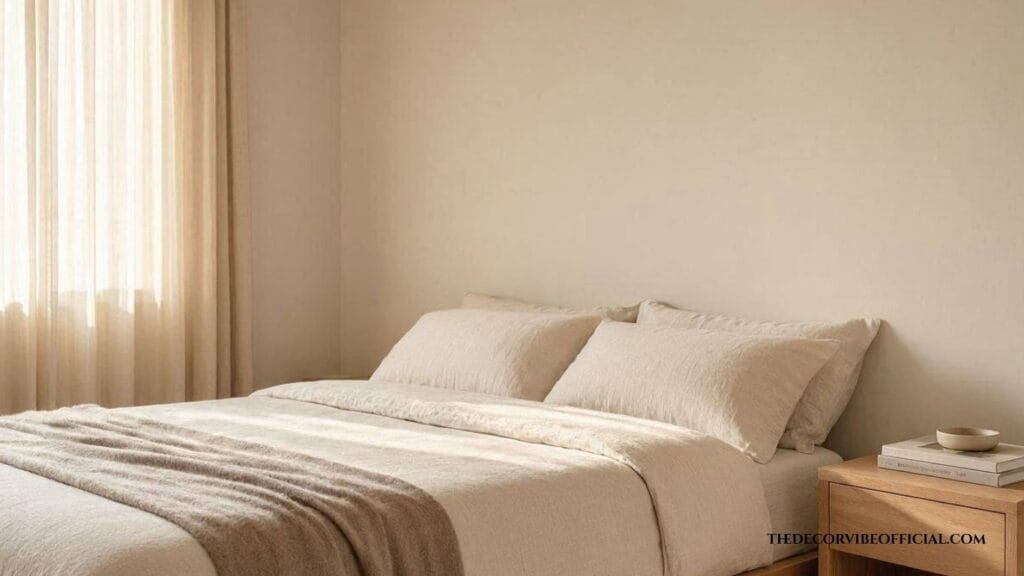
Then I painted it soft beige instead.
Everything changed. Not dramatically. Not like flipping a switch. But something shifted. I slept deeper. I felt calmer just walking into the room. I stopped scrolling my phone at midnight. The space literally changed how I felt.
That’s when I started wondering: what’s really happening psychologically when we choose neutral bedroom colors? Why do beige, gray, and cream feel so different from blues or greens? And what does our choice of neutral color say about us?
This is what I discovered about the psychology of neutral colors in bedrooms and how understanding it completely changed how I approach my own space and my clients’ bedrooms.
What Psychology Says About Choosing Neutral Colors
Here’s something most people don’t realize: your choice of neutral bedroom colors reveals something about your inner psychology that a color test never could.
When you choose neutrals, you’re not being boring. You’re being intentional.
The psychology of neutral bedroom colors is different from other color psychology because bedrooms are intimate spaces. Your bedroom is where you’re most vulnerable. It’s where you sleep, where you dream, where you’re alone with your thoughts. The colors you surround yourself with in that space aren’t about impressing anyone. They’re purely about how you want to feel.
People who gravitate toward the psychology of neutral colors beige, gray, cream, taupe tend to share something: they’re seeking peace. Not excitement. Not status. Peace.
This isn’t about being unambitious or afraid of color. It’s about understanding that your bedroom psychology might be different from your living room psychology. You might wear bold colors to work. You might decorate your kitchen in jewel tones. But in your bedroom? You want your nervous system to downshift. And the psychology of neutral bedroom colors facilitates exactly that.
The psychology behind neutral colors in bedrooms speaks to a need for safety, grounding, and emotional rest. It’s saying: “I don’t need my bedroom to stimulate me. I need it to settle me.”
The Neuroscience of Neutral Bedroom Psychology
Let’s talk about what actually happens in your brain when you look at neutral bedroom colors.
When your eyes perceive color, your brain goes to work immediately. Different wavelengths of light trigger different neural responses. Some colors activate your sympathetic nervous system (fight or flight). Others activate your parasympathetic nervous system (rest and digest).
The psychology of neutral colors in bedrooms works differently than other shades because neutrals sit in a specific place on the light spectrum. They’re not stimulating. They’re not jarring. They’re calming.
Here’s the neuroscience: when you look at soft beige or pale gray, your brain doesn’t have to work hard to process the color. Your pupils don’t constrict or dilate dramatically. Your amygdala—the fear center of your brain—doesn’t activate. Instead, something gentler happens. Your brain relaxes because there’s no signal of threat or excitement.
Research shows that the psychology of neutral bedroom colors directly impacts your cortisol levels (stress hormone) and melatonin production (sleep hormone). When you spend time in a neutral bedroom, your cortisol naturally decreases. Your body begins producing melatonin earlier in the evening. Your heart rate slows.
This is why the psychology of neutral colors in bedrooms actually works. It’s not aesthetic preference. It’s neurochemistry.
People who choose neutral bedroom colors are literally choosing to calm their nervous systems every single time they enter the room. That’s the neuroscience behind the psychology of neutral bedroom colors your choice triggers a physiological response.
The Four Neutral Bedroom Psychology Profiles
Here’s what nobody talks about: not all neutral bedroom colors have the same psychology.
Beige lovers, gray lovers, cream lovers, and taupe lovers actually have subtly different psychological profiles. Understanding the psychology of neutral bedroom colors means understanding which shade calls to you and what that reveals.
Beige Lovers: The Warmth Seekers
If you’re drawn to beige, the psychology of neutral bedroom colors for you speaks to warmth and comfort. Beige contains hints of yellow and brown, which psychologically feel approachable and safe. The psychology of beige in bedrooms suggests you want your space to feel like a warm hug intimate but not suffocating.
If you are ready to style a beige bedroom, I have a full guide with 25 beige bedroom ideas that bring this warm feeling to life.
Beige lovers tend to be people-oriented. They want their bedroom to feel inviting, even if it’s only inviting to themselves. The psychology of neutral colors like beige indicates you’re seeking warmth without intensity.
Gray Lovers: The Sophisticated Pragmatists
Gray psychology in neutral bedrooms is different. Gray is balanced. It’s not warm. It’s not cold. The psychology of neutral gray bedroom colors appeals to people who value equilibrium and modernity.
If you love gray, the psychology of neutral colors for you suggests you’re drawn to clarity and simplicity. You want your bedroom to feel sophisticated but not pretentious. The psychology of choosing gray in bedrooms often indicates someone who values function alongside aesthetics.
That same calm, considered balance is exactly what I explored in my minimalist luxury living spaces guide.
Cream Lovers: The Optimistic Minimalists
Cream is almost white, but warmer. The psychology of neutral bedroom colors leans toward cream when you want brightness without starkness. The psychology of cream in bedrooms suggests hope and lightness.
Cream psychology in neutral bedrooms appeals to people who want their space to feel airy and clean but not cold. If cream calls to you, the psychology of neutral colors indicates you might be seeking renewal a fresh start feeling in your bedroom.
Taupe Lovers: The Grounded Contemplatives
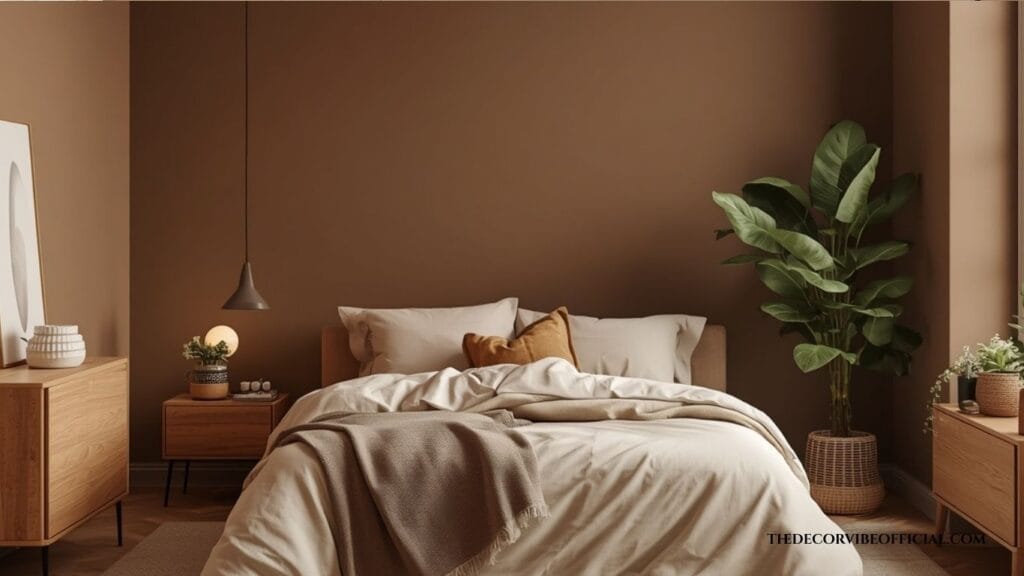
Taupe is complex. It’s part brown, part gray, part beige. The psychology of neutral bedroom colors reaches taupe when you want depth and contemplation. The psychology of taupe suggests you’re not looking for lightness or warmth you’re looking for grounding.
Taupe lovers tend to be thoughtful. The psychology of choosing taupe in bedrooms often indicates someone who values introspection and substance. You want your bedroom to feel solid, reliable, unchanging.
If this feeling of depth and permanence resonates, my grandmillennial decor guide speaks the same language.
Neutral Bedroom Psychology Changes by Room Size
Here’s something the psychology of neutral bedroom colors doesn’t account for: space.
The psychology of neutral colors works differently depending on whether you’re in a tiny bedroom or a sprawling master suite.
In small bedrooms, the psychology of neutral bedroom colors serves a dual purpose. Pale neutrals psychologically expand the space while calming your nervous system. The psychology at play here is both optical and emotional. Light neutrals make your brain perceive more space. That perception itself is calming. You feel less trapped.
In large bedrooms, the psychology of neutral colors shifts. Richer, deeper neutrals become psychologically grounding rather than expansive. The psychology here is about creating intimacy in a large space. Deeper taupe or warm gray psychologically pulls the room in, making it feel cozy rather than cavernous.
The psychology of neutral bedroom colors, then, isn’t one-size-fits-all. It depends on your space, your lighting, and what psychological need you’re trying to meet.
Common Mistakes in Neutral Bedroom Psychology
Most people don’t realize they’re making psychological mistakes when choosing neutral bedroom colors.
Mistake #1: Wrong Undertone
The psychology of neutral bedroom colors completely changes based on undertone. Warm beige vs. cool beige aren’t just different aesthetically they trigger different psychological responses.
If you choose a cool-undertone beige when your psychology actually craves warmth, you’ll feel unsettled. Your brain will be confused. The space won’t feel right, even if you can’t explain why. This is the psychology of neutral colors gone wrong: the shade is technically neutral, but it doesn’t match your psychological needs.
Mistake #2: Too Much Neutral
There’s a threshold in neutral bedroom psychology where too much neutrality becomes depressing instead of calming. This is rare, but it happens. When every surface is the exact same neutral with no texture, no variation, no visual interest, your brain actually gets bored. The psychology shifts from “calm” to “empty.”
The psychology of neutral bedroom colors works best when there’s variation in texture and tone. Different shades of neutral. Different materials. This maintains the psychological benefit without triggering emptiness.
One of the easiest ways to break up too much neutral without adding color is a single well-placed plant. I cover exactly how in my indoor plant ideas guide.
Mistake #3: Ignoring Lighting in Neutral Psychology
The psychology of neutral bedroom colors is completely different in natural light vs. artificial light. A beige that looks warm and welcoming at noon might look sickly under cool LED bulbs at night. The psychology you’re trying to create can backfire if the lighting doesn’t support it.
Step-by-Step: How to Choose YOUR Neutral Color
Understanding the psychology of neutral bedroom colors is one thing. Choosing the right one for your psychology is another.
Step 1: Identify Your Neutral Psychology Type
Are you a warmth seeker (beige), a clarity seeker (gray), an optimist (cream), or a contemplative (taupe)? This isn’t about what looks good. It’s about what psychology you need from your bedroom.
Step 2: Determine Your Light Situation
The psychology of neutral bedroom colors depends heavily on light. If your room gets warm afternoon light, cooler neutrals work psychologically. If it gets minimal light, warmer neutrals prevent the space from feeling dark.
Step 3: Test Your Undertones
The psychology of neutral colors requires testing. Paint large swatches. Live with them for a week. Notice how you feel in the morning. Notice how you feel at night. Your psychological response is the real test.
Step 4: Consider Texture
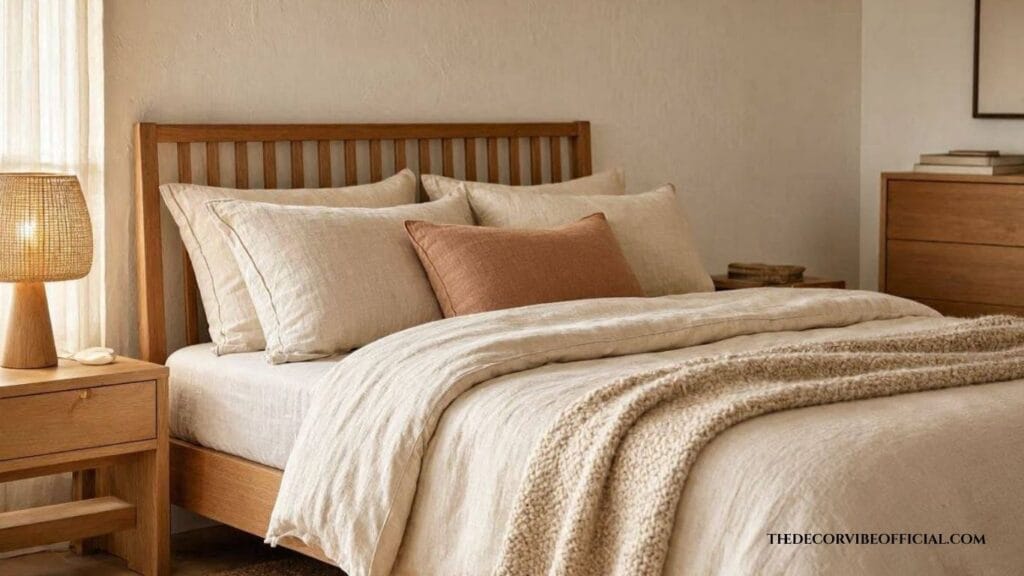
The psychology of neutral bedroom colors works better with textural variation. Matte walls, soft linens, natural wood, woven elements. This prevents the psychology from tipping into “empty” territory.
Step 5: Layer Your Neutrals
The psychology of neutral bedroom colors deepens when you use multiple shades. Paint one shade, bedding in another, accents in a third. This creates visual interest while maintaining the psychological calm.
Neutral Bedroom Psychology and Sleep Science
Here’s what the research actually shows about the psychology of neutral bedroom colors and sleep:
Studies on neutral bedroom psychology consistently find that rooms painted in neutral tones show better sleep quality metrics than rooms painted in stimulating colors. Your REM sleep increases. You wake fewer times during the night. You feel more rested.
The psychology of neutral bedroom colors works because your brain recognizes the space as safe. When your brain feels safe, it prioritizes sleep. The psychology here is pure survival instinct: if there’s no threat (no stimulating color = no threat signal), your body can relax completely.
This is why the psychology of neutral colors in bedrooms is so powerful for sleep. You’re not just choosing an aesthetic. You’re choosing a physiological state.
This same trick works in any small space. My small living room decor ideas guide covers it room by room.
Budget-Friendly Neutral Bedroom Psychology
The psychology of neutral bedroom colors doesn’t require expensive paint brands.
High-end neutrals from Farrow & Ball or Bauwerk are beautiful, but the psychology works just the same with budget neutrals from Sherwin-Williams or Benjamin Moore. What matters for the psychology of neutral colors is the undertone and the finish not the price tag.
The psychology of neutral bedroom colors is democratic. Whether you spend $30 or $300 on paint, your nervous system responds the same way to true neutrals.
Real Examples: Neutral Bedroom Psychology Transformations
Sarah’s Beige Bedroom Psychology Shift
Sarah painted her bedroom from white to warm beige. “The psychology changed immediately,” she told me. “White felt clinical. Beige felt like home. My anxiety dropped noticeably.”
This is the psychology of neutral colors at work: warm beige triggered her “safe space” response where white hadn’t.
Marcus’s Gray Bedroom Psychology
Marcus chose cool gray when he wanted calm but felt the psychology was too cold. He added texture and warmer accents. “The psychology shifted from sterile to sophisticated,” he said. “Same neutral, but the feeling was completely different.”
This is the psychology of neutral bedroom colors with intention: not just the color, but how you use it.
Jennifer’s Taupe Bedroom Psychology
Jennifer moved from colorful to taupe, seeking grounding. “The psychology of choosing taupe was me choosing stability,” she explained. “My life was chaotic. My bedroom became my anchor.”
This is the psychology of neutral colors as emotional medicine.
FAQ: Neutral Bedroom Psychology Questions
Does neutral bedroom psychology change over time?
The psychology of neutral colors stays consistent neurologically, but your psychological relationship to the space deepens. You become more comfortable. Safer.
Can you change your psychology by changing your neutral?
Yes. Shifting from cool gray to warm beige triggers a different psychological response. The psychology of neutral bedroom colors is responsive to change.
Do some neutrals help sleep better than others psychologically?
The psychology of neutral bedroom colors shows warm neutrals slightly edge out cool ones for sleep, but the difference is small. What matters psychologically is choosing the neutral that feels right to you.
Why doesn’t the psychology of neutral colors work for me?
Usually the undertone is wrong. Or you need more texture. The psychology of neutral bedroom colors needs variation to avoid feeling empty.
The Psychology of Your Neutral Choice
Here’s what I’ve learned about the psychology of neutral bedroom colors: it’s not about being afraid of color. It’s about being honest with yourself about what you need.
Your bedroom psychology isn’t about impressing anyone. It’s about coming home to yourself.
The psychology of choosing neutral bedroom colors is an act of self-knowledge. You’re saying: “This is what my nervous system needs. This is what makes me feel safe.”
That’s not boring. That’s wise.
The psychology of neutral colors in bedrooms is the psychology of prioritizing your own peace over anyone else’s expectations.
And that changes everything.
