
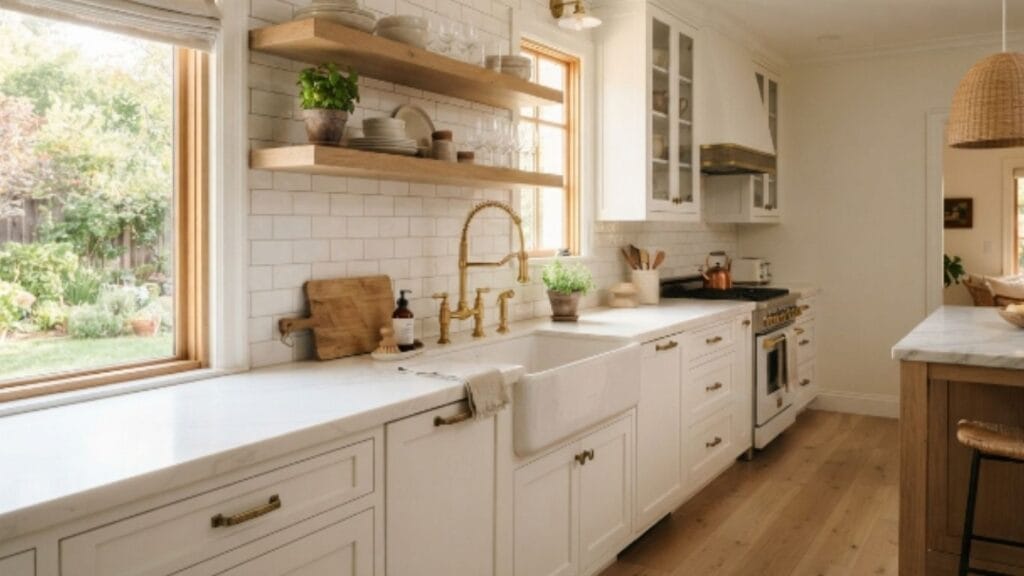
I still remember the first time I redid a kitchen backsplash with my own two hands. I was nervous, my grout lines were a little wobbly, and I loved every second of it. That project taught me something I still believe today: a farmhouse kitchen backsplash can change the whole feel of a home, even if the rest of the room stays exactly the same.
If you are dreaming up a cozy, welcoming kitchen, you are in the right place. In my home decor projects, I have tried almost every farmhouse backsplash style out there, from classic subway tile to rustic brick. So, let’s walk through what actually works, what to avoid, and how to pick a look you will love for years, not just for a season.
Why a Farmhouse Kitchen Backsplash Still Feels Right at Home
Trends come and go, but a farmhouse kitchen backsplash never really goes out of style. It is warm. It is a little imperfect in the best way. And it works with almost any budget, which is not something you can say about every design trend.
I think that is exactly why so many homeowners across the US, UK, Canada, and Europe keep coming back to this look. It blends old-world charm with everyday practicality, so your kitchen feels lived-in and loved, not staged for a photo shoot.
This style first grew out of real farmhouses, where kitchens had to be both functional and welcoming. That history still shows up today in the natural materials, soft colors, and slightly imperfect textures you see in most farmhouse kitchens.
A good farmhouse kitchen backsplash also does more than look pretty. It protects your walls from splashes and stains, and it quietly ties together your cabinets, countertops, and flooring. That is a lot of work for one design feature, so it is worth taking your time to get it right.
Because this look has stayed popular for so long, it also tends to hold its value. Buyers and renters alike respond well to a warm, classic kitchen, which makes this a smart choice if you ever plan to sell your home.
A backsplash is only part of the story, so if you’re planning a bigger layout change, our kitchen island ideas are worth a look too.
How to Choose the Right Farmhouse Kitchen Backsplash for Your Space
Before you fall in love with a photo online, take a moment to think about your own kitchen. What works in a magazine spread does not always work in a real home with real lighting, real cooking habits, and real storage needs.
Think About Your Cabinet Color First
If you have white or cream cabinets, almost any farmhouse kitchen backsplash will work, from classic white subway tile to a bold patterned option. However, if your cabinets are already a statement color, such as navy or sage green, a simpler backsplash usually looks more balanced and lets the cabinets stay the star of the room.
Match the Backsplash to Your Countertop
You might love this trick: hold a tile sample against your countertop before you buy anything. Busy countertops, like veined marble or granite, pair better with a calmer backsplash, while plain countertops can handle more texture and pattern without feeling overwhelming.
Think About Lighting
Natural light changes how tile looks throughout the day, so try to view samples in your kitchen both morning and evening. A backsplash that looks bright and fresh at noon can look flat under warm evening light, so it helps to check before you commit.
If you’re still deciding on a color, our light blue kitchen cabinets ideas are a great place to start.
Consider Your Kitchen Style
A modern farmhouse kitchen usually pairs well with cleaner lines, like plain subway tile or simple stacked stone. A more traditional or cottage-style kitchen can handle more pattern, texture, and detail, such as beadboard or patterned cement tile.
Consider Your Budget and Timeline
Natural stone and handmade tile look stunning, but they cost more and take longer to install. Peel-and-stick options and ceramic subway tile are far more budget-friendly, and honestly, they still look beautiful when installed well.
10 Farmhouse Kitchen Backsplash Ideas We’re Loving Right Now
Here are the ideas that keep showing up in my favorite projects, plus a few that deserve more attention than they usually get.
1. Classic White Subway Tile
This is the backsplash equivalent of a little black dress. White subway tile is simple, timeless, and it goes with almost every farmhouse kitchen style. I like it laid in a classic brick pattern for that traditional touch, though a herringbone layout adds a little extra character without changing the overall color palette.
2. Rustic Thin Brick
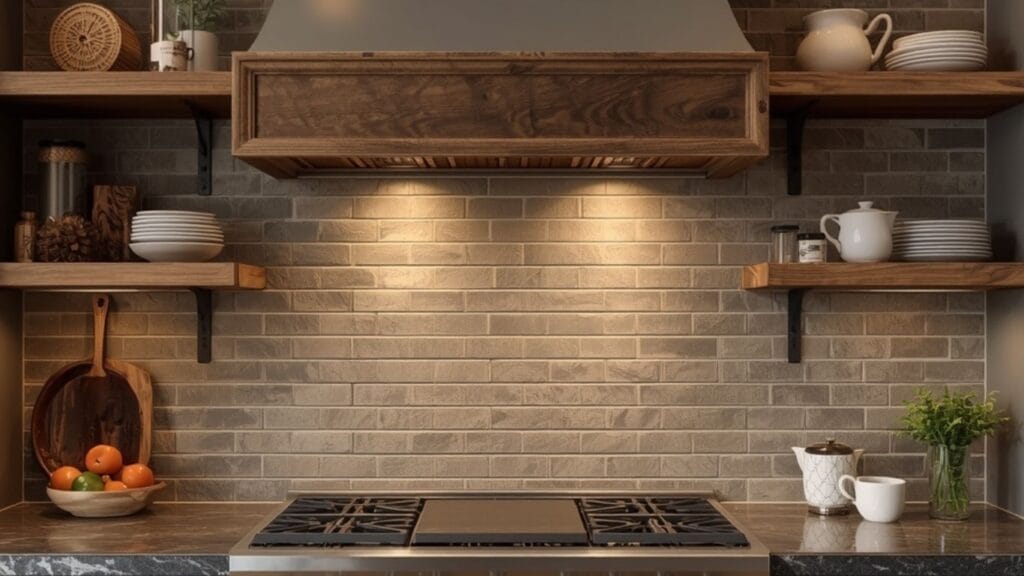
Thin brick tile brings texture and warmth in a way that flat tile simply cannot match. It works beautifully behind a range or a farmhouse sink, and it only gets more charming as it ages. Pair it with open wood shelving for a full farmhouse effect.
3. Beadboard Backsplash
Beadboard is an underrated backsplash choice for a farmhouse kitchen. The narrow, vertical panel lines add cottage-style charm, and it is often more affordable than tile. Just be sure to seal it properly near the stove or sink area.
4. Shiplap-Style Backsplash
Shiplap is not just for accent walls anymore. Painted white or soft gray, it brings that cozy, cottage feeling right up to your countertop. It works especially well in kitchens that already have shiplap somewhere else in the home.
5. Herringbone Marble
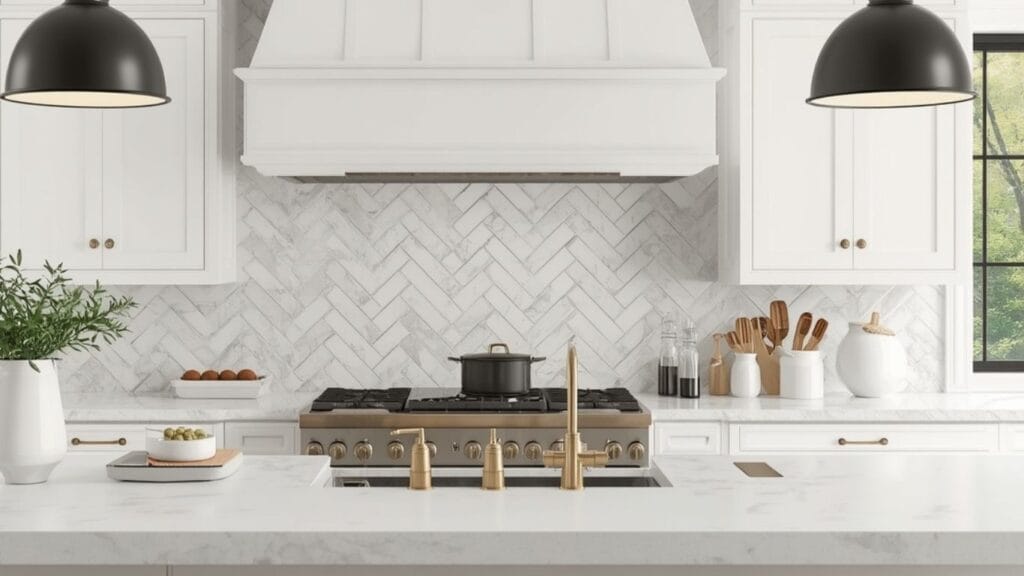
For a more elevated farmhouse kitchen backsplash, herringbone marble tile adds a subtle sparkle and a sense of quiet luxury, especially when paired with brass or matte black hardware. It is a favorite for anyone blending farmhouse charm with a slightly more upscale feel.
If you’re leaning toward brass or matte black fixtures, our guide to mixing metals in the kitchen will help you get the pairing right.
6. Ledger Stone Panels
If you want serious texture, ledger stone panels create a dramatic, stacked-stone look. This works especially well in kitchens with wood beams, reclaimed wood shelving, or a stone fireplace elsewhere in the home for a cohesive feel.
7. Peel-and-Stick Farmhouse Tile
I know, peel-and-stick sounds risky. But modern versions look surprisingly realistic, and they are a smart choice for renters or anyone who wants a quick weekend update without a big budget or a long project timeline.
8. Patterned Cement Tile
A patterned cement tile design adds personality without overwhelming the room, especially when kept to a small accent area, like above the stove or as a framed section behind open shelving.
9. Zellige Tile
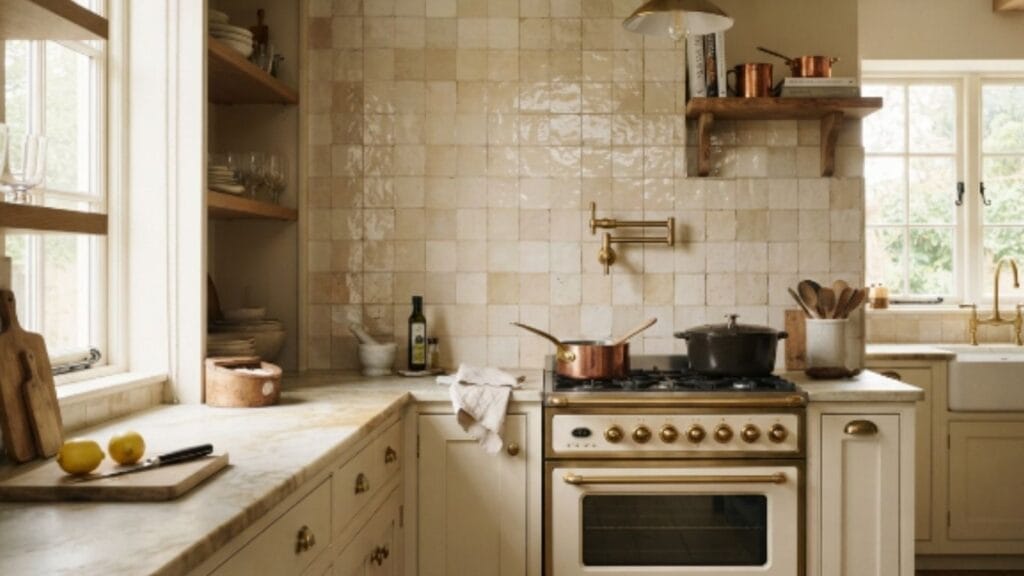
Zellige tile has a handmade, slightly uneven surface that catches the light beautifully. It is a favorite for anyone who wants their kitchen to feel a little more artisanal, with each tile looking just a bit different from the next.
10. Blue and White Gingham-Inspired Tile
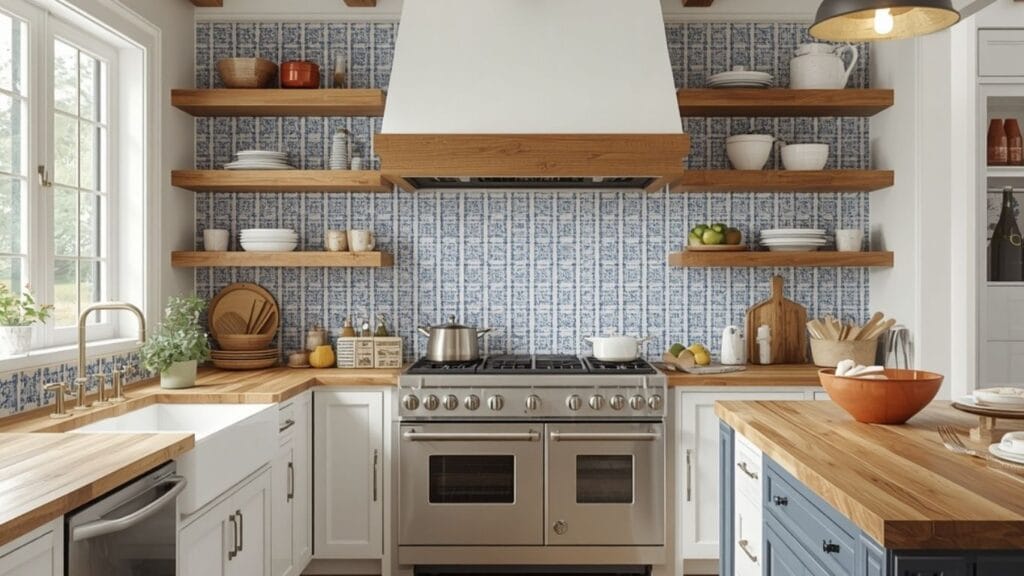
For a French country twist on the farmhouse look, blue and white patterned tile brings charm without feeling too busy or too trendy. It pairs especially well with butcher block counters and open shelving.
Farmhouse Kitchen Backsplash Materials: Pros and Cons
Choosing a material is often the hardest part of any backsplash project. Here is a quick breakdown to help you decide:
- Ceramic Tile: Affordable, easy to clean, and available in countless farmhouse styles. It can chip over time, especially near the edge of the counter.
- Natural Stone: Gorgeous and one of a kind, but it needs sealing and regular care to prevent staining and water damage.
- Brick or Faux Brick: Adds instant texture and warmth, though it can be harder to keep grease-free without regular wiping.
- Beadboard or Shiplap: Budget-friendly and full of charm, but not ideal directly behind a busy cooktop without a proper sealant.
- Peel-and-Stick: Quick, renter-friendly, and easy to update, though it may not handle high heat quite as well as tile.
- Cement Tile: Beautiful and full of pattern, but it needs sealing and can be more porous than ceramic options.
Every option has trade-offs, so think about how you actually use your kitchen, and how much maintenance you are willing to do, before you commit.
Farmhouse Kitchen Backsplash Color Palettes to Try
Color sets the whole mood of a kitchen, so it is worth slowing down on this choice. Here are a few palettes that work beautifully in this backsplash style:
- Soft White and Cream: The most classic combination, and it makes any kitchen feel bright, airy, and larger than it actually is.
- Warm Gray and Greige: A gentle, modern twist that still feels cozy, especially paired with wood tones and brass hardware.
- Sage Green and Olive: A quiet, nature-inspired palette that has become a favorite in modern farmhouse kitchens over the last few years.
- Navy and White: A crisp, classic pairing that adds a little more drama without losing that welcoming farmhouse feel.
- Terracotta and Rust: A warmer, earthy palette that works especially well with wood cabinetry and open shelving.
I think it helps to pick your palette before you shop for tile, since it narrows your choices and keeps you from feeling overwhelmed in the store.
Small Kitchen? Backsplash Ideas That Still Work
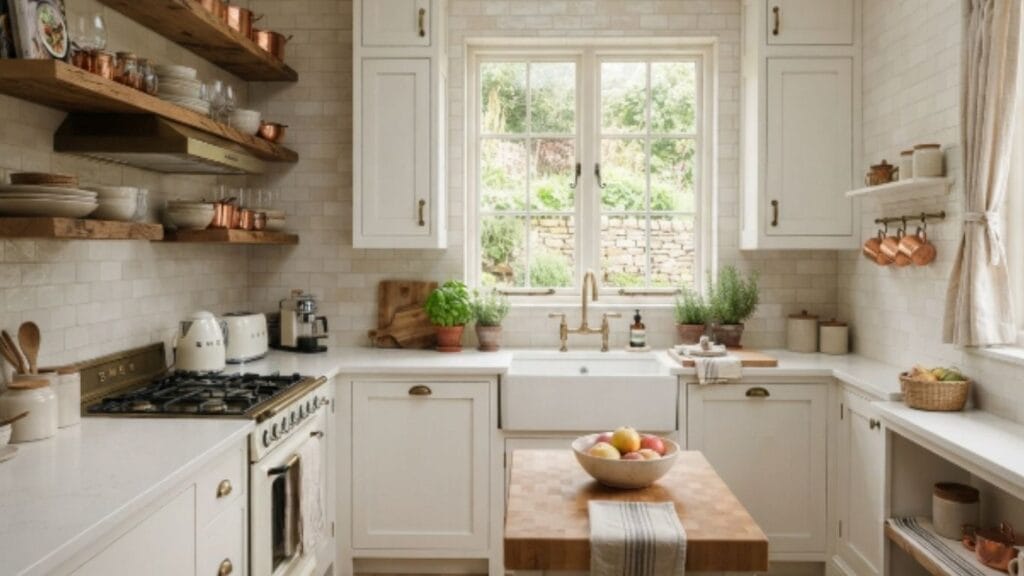
A smaller kitchen does not mean you have to skip the details you love. In fact, the right backsplash can make a small space feel bigger and brighter.
- Stick with lighter colors, like soft white or cream, to keep the room feeling open.
- Choose a smaller tile size, since oversized tile can overwhelm a compact wall.
- Carry the backsplash slightly higher than usual to draw the eye upward.
- Skip heavy texture, like thick ledger stone, in favor of flatter tile with subtle pattern.
- Use the same grout color as your tile to create a smoother, more seamless look.
You might love this approach if you live in an older home, a rental, or a cottage-style kitchen where every inch of space matters.
For more ways to make the most of a compact layout, check out our above fridge storage ideas.
Pro Tip
Here is one thing I wish someone had told me sooner: always order 10 percent more tile than you think you need. Cuts, breaks, and future repairs happen, and matching an old dye lot later is nearly impossible, especially with handmade or natural stone tile.
How to Install a Farmhouse Kitchen Backsplash
If you are considering a do-it-yourself project, here is a simple overview of the general process. Always check local codes and consider hiring a professional for electrical or plumbing-adjacent work.
- Turn off power to any outlets in the work area and remove switch plates and covers.
- Clean the wall thoroughly and repair any holes or uneven spots.
- Measure your space and dry-fit your tile layout before applying any adhesive.
- Apply tile adhesive with a notched trowel, working in small sections at a time.
- Set your tile, using spacers to keep your lines even and consistent.
- Let the adhesive cure fully before grouting, usually 24 to 48 hours.
- Apply grout, wipe away the excess, and seal if your material requires it.
This is a project many confident beginners can tackle over a weekend, especially with simple subway tile or peel-and-stick options.
How to Clean and Maintain Your Farmhouse Kitchen Backsplash
A little regular care keeps your backsplash looking as good as the day it was installed.
- Wipe up splatters and grease as soon as possible to avoid staining, especially near the stove.
- Use a gentle, non-abrasive cleaner to avoid scratching glazed tile or natural stone.
- Reseal natural stone or cement tile once a year, or as recommended by the manufacturer.
- Check grout lines regularly and repair small cracks before they turn into bigger problems.
- Avoid harsh, acidic cleaners on marble or limestone, since they can etch the surface over time.
Budget-Friendly Farmhouse Kitchen Backsplash Ideas
You do not need a huge renovation budget to get a beautiful look. A few of my favorite budget-friendly ideas include:
- Painting an existing tile backsplash with tile-specific paint for a fresh, updated look.
- Using peel-and-stick tile as a temporary or long-term solution.
- Sticking to a small accent area, like just behind the stove, instead of covering the whole wall.
- Choosing standard-size subway tile instead of custom cuts or imported stone.
- Shopping end-of-lot or discontinued tile sales at local home improvement stores.
- Mixing a small amount of pricier tile with a more affordable field tile for balance.
This Look Around the World: US, UK, Canada, and Europe
One of the reasons I love this style is how well it travels. A farmhouse kitchen backsplash looks a little different depending on where you live, and that is part of the charm.
- United States: Modern farmhouse kitchens often lean toward white subway tile, shiplap, and warm wood accents, especially in newer builds and renovated older homes.
- United Kingdom: Cottage-style kitchens tend to favor patterned tile, beadboard, and softer, muted color palettes that suit older stone and brick homes.
- Canada: With long winters, many Canadian homeowners choose warmer materials, like thin brick or textured stone, to add extra coziness to the kitchen.
- Europe: Rustic country kitchens across France, Italy, and beyond often feature handmade zellige tile, terracotta tones, and patterned cement tile for a look full of character.
No matter where you live, the core idea stays the same: a warm, welcoming kitchen that feels comfortable to gather in, day after day.
Common Mistakes to Avoid With This Backsplash Style
Even a beautiful farmhouse kitchen backsplash can go wrong if a few small details are missed. Watch out for these common mistakes:
- Choosing a busy pattern to match busy countertops, which can make the whole kitchen feel cluttered.
- Skipping the sealant on natural stone or cement tile, which leads to staining.
- Forgetting to plan outlet and switch placement before the tile goes up.
- Picking grout that is too bright white, since it can look dirty fast in a working kitchen.
- Rushing the layout without dry-fitting tile first to check spacing and pattern flow.
- Ignoring the scale of the tile compared to the size of the kitchen, which can make a small space feel busier than it needs to.
Where to Shop for Tile and Materials
Once you know the style you want, sourcing materials is the next step. A few places worth checking:
- Local tile and stone shops: Great for seeing samples in person and getting advice from staff who know your local climate and homes.
- Big-box home improvement stores: Convenient and budget-friendly, with a solid range of subway tile, peel-and-stick options, and basic natural stone.
- Specialty online retailers: Ideal for zellige, handmade cement tile, or imported options that local shops may not carry.
- Salvage and reclamation yards: A wonderful source for reclaimed brick, vintage tile, and unique pieces with real history.
I always recommend ordering a sample or two before buying in bulk. Tile can look different in your kitchen’s lighting than it does in a showroom or on a screen.
And if open shelving is part of your plan, our walk-in pantry ideas pair beautifully with a farmhouse kitchen.
Frequently Asked Questions
What is the most popular farmhouse kitchen backsplash?
White subway tile remains the most popular choice because it is timeless, affordable, and easy to match with almost any cabinet color.
Is a farmhouse kitchen backsplash still in style?
Yes, farmhouse style has remained popular for years because it blends comfort with practicality, and it works well in both older and newer homes.
What color grout works best with a farmhouse kitchen backsplash?
Soft white, warm gray, or beige grout usually works best. Bright white grout can look striking at first but tends to show dirt more quickly.
Can I install a farmhouse kitchen backsplash myself?
Many homeowners install peel-and-stick or standard subway tile on their own with basic tools. Natural stone or complex patterns are usually better left to a professional.
How much does a farmhouse kitchen backsplash cost?
Costs vary widely, but a mid-range tile backsplash typically runs a few hundred to a couple thousand dollars, depending on the size of your kitchen and local labor costs.
Does a farmhouse kitchen backsplash work with modern kitchens?
Yes, a simple version, like plain subway tile or beadboard, pairs beautifully with modern cabinets for a relaxed, transitional look that still feels current.
What tile size works best for a small kitchen?
Smaller tile, such as a 2-by-4-inch subway tile, tends to work best in compact kitchens, since it avoids overwhelming the wall while still adding classic farmhouse charm.
Final Thoughts on Choosing a Farmhouse Kitchen Backsplash
At the end of the day, this backsplash style should feel like you, not like a copy of someone else’s Pinterest board. Take the ideas that speak to you, leave the rest, and trust your own taste along the way.
I have learned that the best kitchens are not the most perfect ones. They are the ones that feel warm and welcoming every single day, wobbly grout lines and all.
So, which farmhouse kitchen backsplash idea are you most excited to try in your own home?
