
The beautiful linen you bought for a someday project is wrinkling in a dark bin, and you’ve forgotten you own it.
Most homes don’t have a fabric problem. They have a finding problem. Once your yardage, quilting cotton, and scrap bundles have a visible home, you’ll use what you own and stop rebuying it. These fabric storage ideas fit a spare room, a hall closet, or one corner of a bedroom.
Open Oak Shelves for Folded Stacks
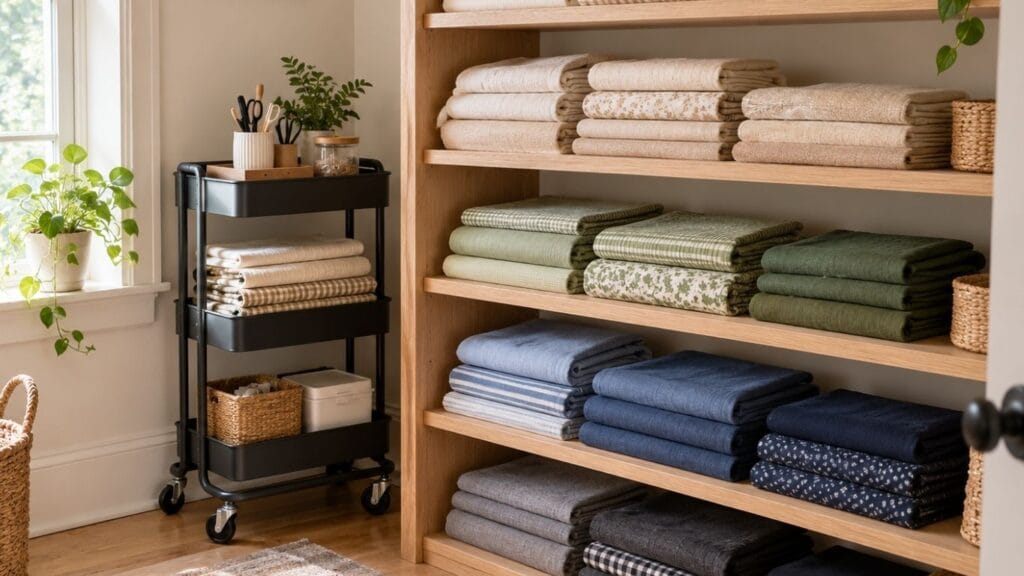
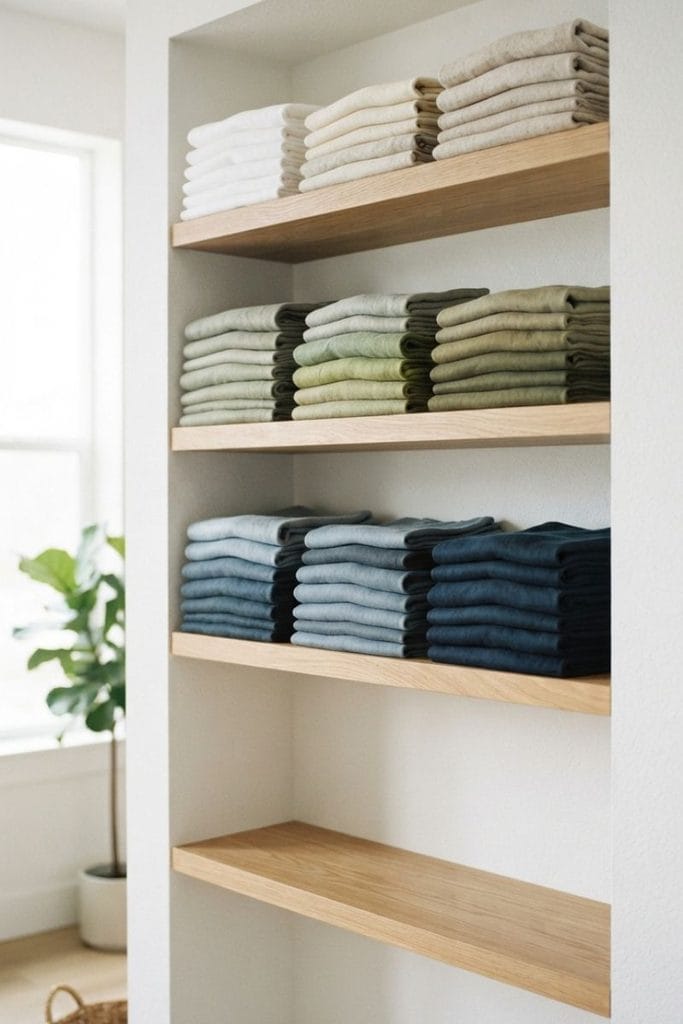
Shelves about 12 inches deep hold folded yardage without letting it slump over the edge. Fold each cut selvage to selvage, then down to roughly 10 by 12 inches, and keep every stack under eight pieces tall. Sort the rows from light to dark so the wall reads like a paint chip. Of all the fabric storage ideas here, this one costs the least and shows off the most color. It suits a spare room turning into a studio, much like the calm layouts in these yoga room ideas.
Keep heavy wool low and airy voile high, and hang a sheer curtain if the shelves face a sunny window, since daylight fades dye. Leave the bottom shelf empty for new purchases, because every stash grows. A 36 inch wide shelf fits three stacks side by side, which suits a starter collection. Start here if you’re new to fabric storage ideas, since the setup takes one afternoon and a stud finder.
Comic Board Wrapped Quilting Cotton
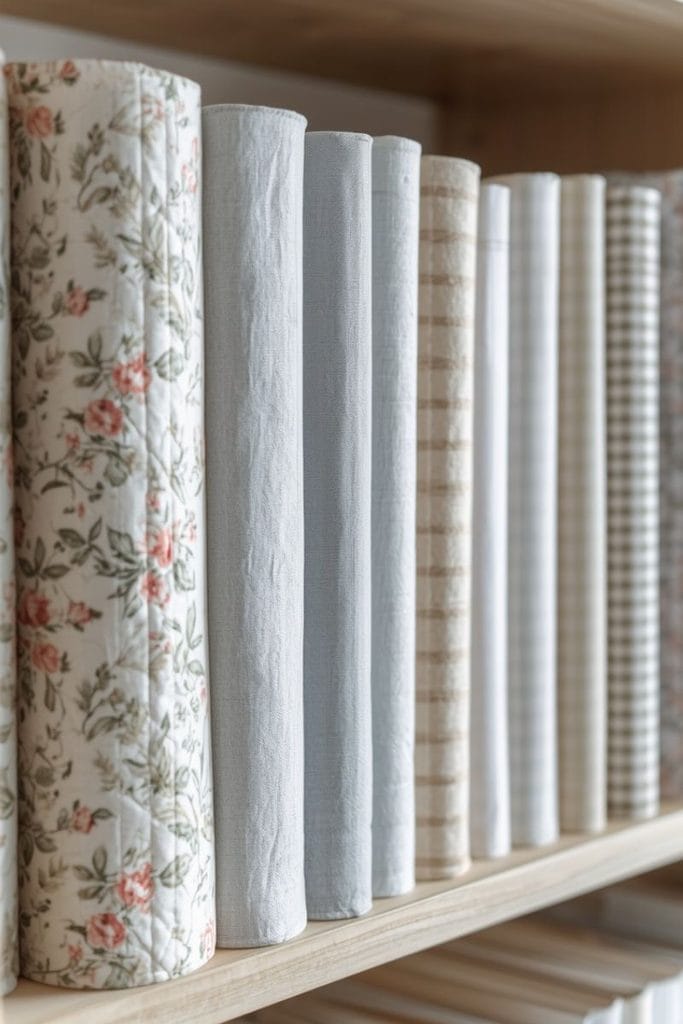
Acid free comic boards measure about 7 by 10 inches and turn floppy fabric into slim, upright bundles. Wrap each piece around a board, tuck the loose end under, and slide the row onto a shelf like books. Every print shows its edge, so a stack of twenty looks like a tidy library. Pencil the fiber and yardage on the top corner of each board. Quilters rank this among the smartest fabric storage ideas because folds stay soft and flat, and you pull out one print without toppling the rest. Choose boards labeled acid free and archival, since regular cardboard slowly yellows fabric. Wrap loosely, not tight, so cotton keeps its natural drape.
Glass Front Cabinet Display
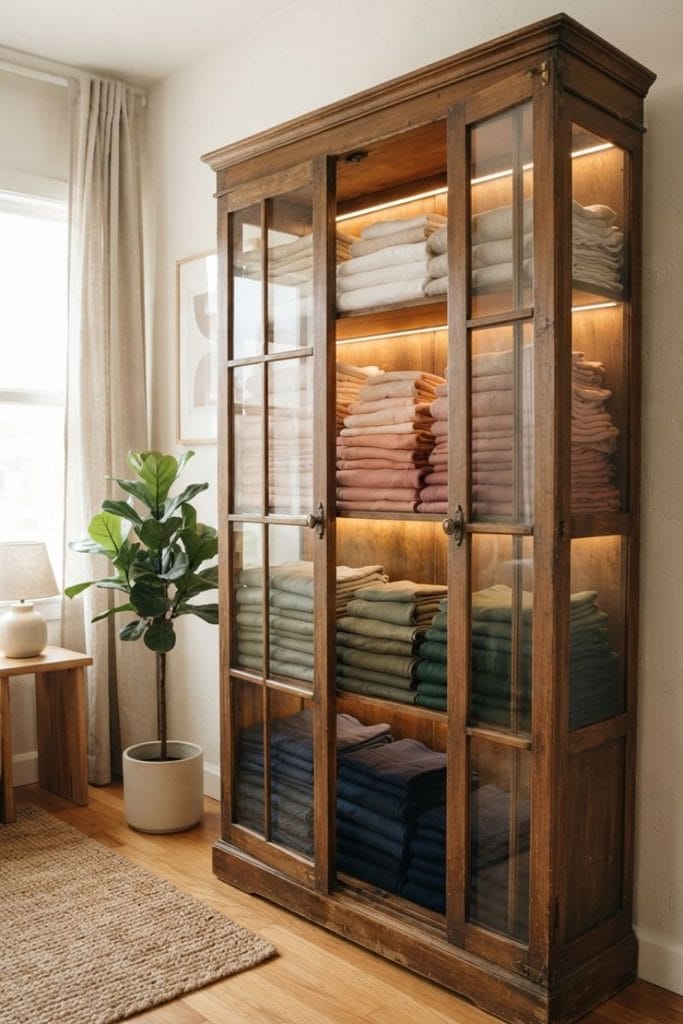
Glass doors keep dust off while every color stays on show. Stack the fabric from white through cream, blush, sage, and navy, finishing on charcoal, so the shelves look like a paint fan deck. Tuck a warm 2700K LED strip under each shelf edge and the whole cabinet glows at night. An old china hutch from a thrift store, in worn walnut, suits this idea perfectly.
It’s one of the prettiest fabric storage ideas for a living room corner, since guests see a styled display and not a supply closet. Place it on an interior wall so sunlight never reaches the glass. Doors protect delicate silks best, which makes these fabric storage ideas ideal for pricey cuts. If the doors feel too formal, swap one panel for oatmeal linen gathered on a thin rod. A small brass pull on each door adds a collected look.
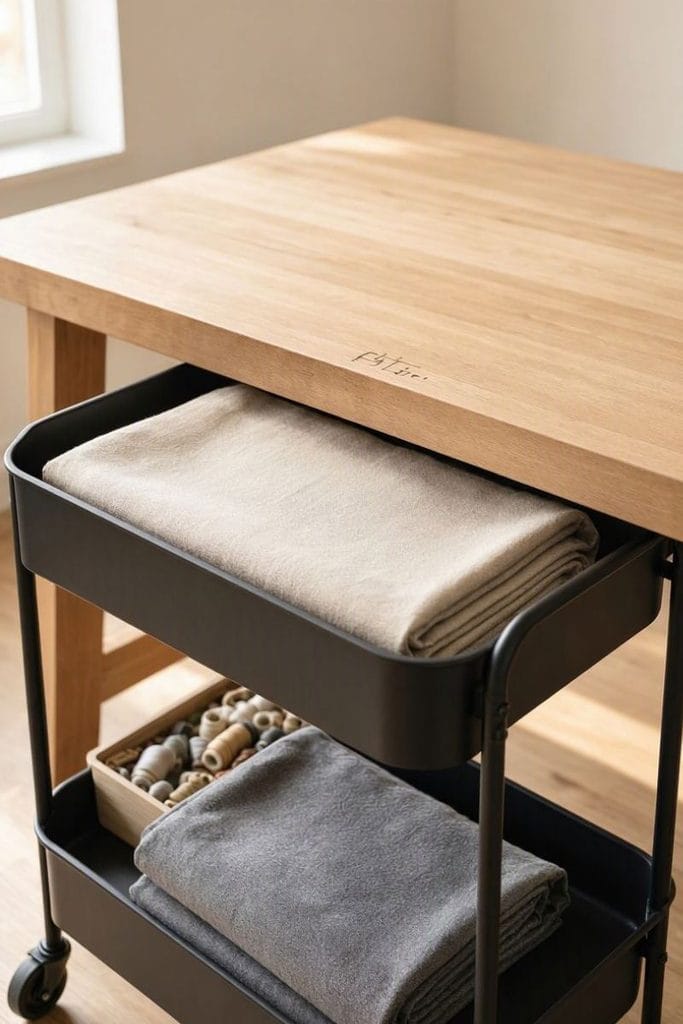
Rolling Cart Under the Cutting Table
A three tier cart in matte black steel slides under a 36 inch cutting table and rolls out on demand. Give the top tier to the project in progress, the middle tier to thread and notions, and the bottom tier to heavy wool or denim. Wheels mean you never kneel to dig through a back corner. The cart works like a small kitchen island, and the layout logic in these kitchen island ideas carries over nicely. Pick a model about 15 inches wide so it parks beside a sewing desk, and lock the wheels before you cut. Clip a small lamp to the top rail and the cart doubles as a project station for slow evenings. Among fabric storage ideas for tight rooms, this one earns its floor space.
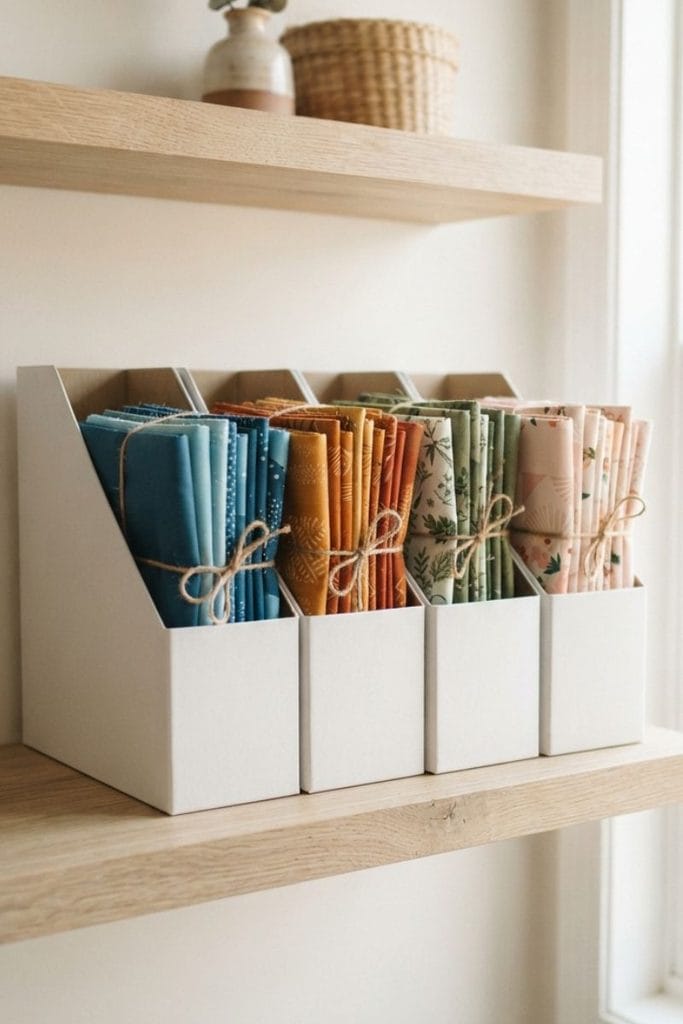
Magazine Files for Fat Quarters
A fat quarter measures about 18 by 22 inches, so it folds into a standard magazine file with room to spare. Pick matte white files with a cutout label slot and stand one coordinated bundle in each. Group them by palette, like ocean blues or harvest oranges, and line four side by side on a shelf. Flipping through them feels like browsing a record crate. Write a short color name on each spine in pencil, such as Moss or Dusk.
These budget friendly fabric storage ideas make gift bundles easy to grab. The files stack on a console table or bookcase, which suits a living room better than bulky bins. Matte white keeps the look light, while wood grain files bring a warmer farmhouse feel.
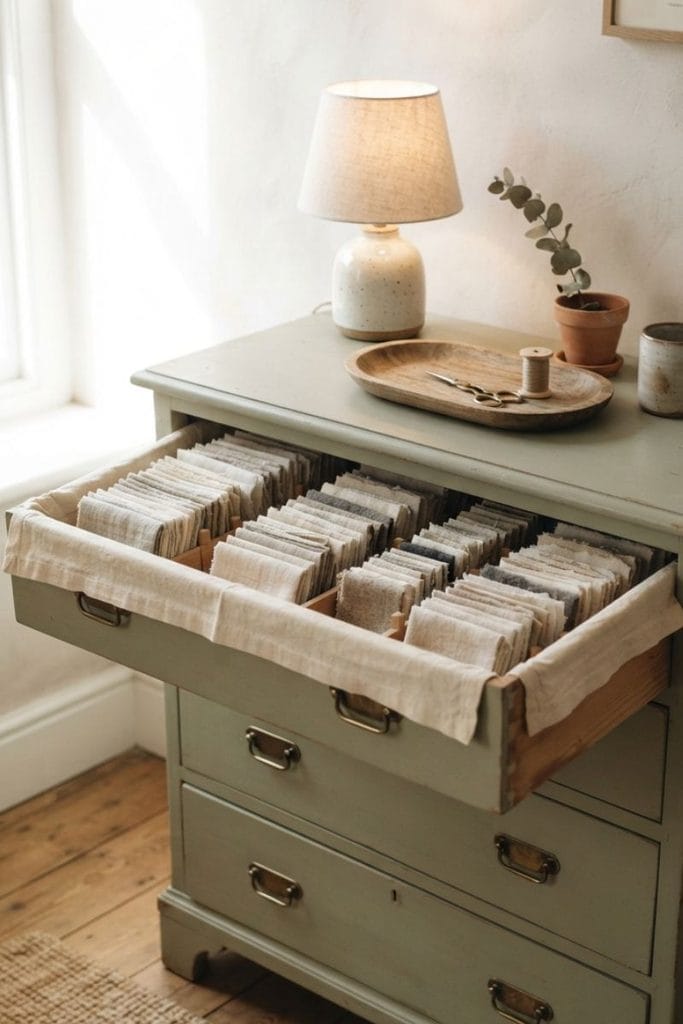
Dresser Drawers Filed Upright
Roll an old three drawer dresser into the studio and fold fabric into slim rectangles about 4 inches wide. Stand them upright in rows, like files, so one glance shows every print. Line each drawer with unbleached muslin to keep wood stains and snags off pale cottons. Style the top with a lamp and a small tray of scissors, borrowing the grouping rules from these aesthetic nightstand decor ideas. Paint the dresser sage or oatmeal and the piece reads as furniture, not storage. Few fabric storage ideas hold as much in so little floor space, and felt pads under the feet protect hardwood. Keep the top drawer for small cuts and the deep bottom drawer for big yardage and batting. Open one drawer at a time so the dresser stays steady.
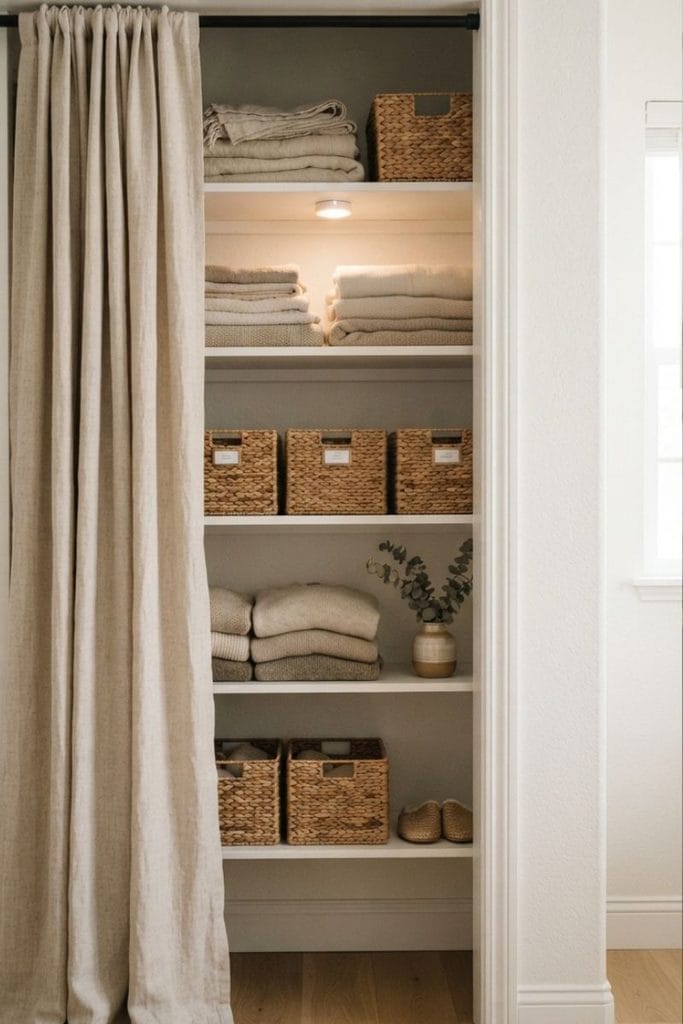
Closet Shelves, Floor to Ceiling
Pull out the hanging rod and add five adjustable shelves, each about 14 inches deep. Put daily fabrics between knee and shoulder height, seasonal prints up high, and heavy bins on the bottom shelf. Hang a plain linen curtain from a tension rod across the opening so the closet looks calm with the door open. Apartment renters love this setup, and the space saving thinking in these small apartment decor ideas on a budget pairs well with it. A battery puck light on the second shelf shows true colors at night. Label the shelf edges with removable white tape so the whole family knows where borrowed pieces go back. Keep the lowest shelf about 6 inches off the floor to dodge dust and spills. For a closet, fabric storage ideas like this cost far less than a built in wardrobe.
Over the Door Canvas Pockets
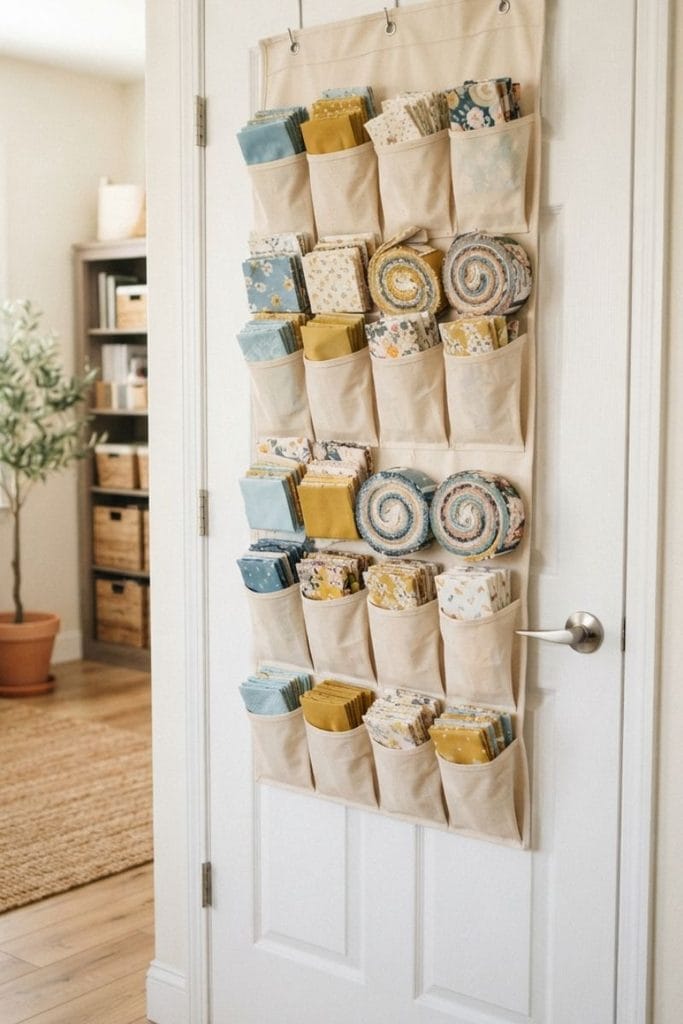
A natural canvas organizer with 24 pockets turns the back of a bedroom door into a shelf. Slide in precut squares, jelly rolls, and interfacing, with the brightest prints at eye level. Pick a hanger sized for a standard one and three eighths inch door and test the door still closes. Pockets hold fabric flat and visible, so nothing gets forgotten. It’s one of the easiest fabric storage ideas to try in a rental, since nothing needs drilling. Rinse and dry the canvas first so it won’t shrink around your fabric. Of all the fabric storage ideas in this list, this one needs the least money. Add a second organizer on the closet door for thread and tools, and the whole room tidies in one afternoon.
Glass Jars for Colorful Scraps
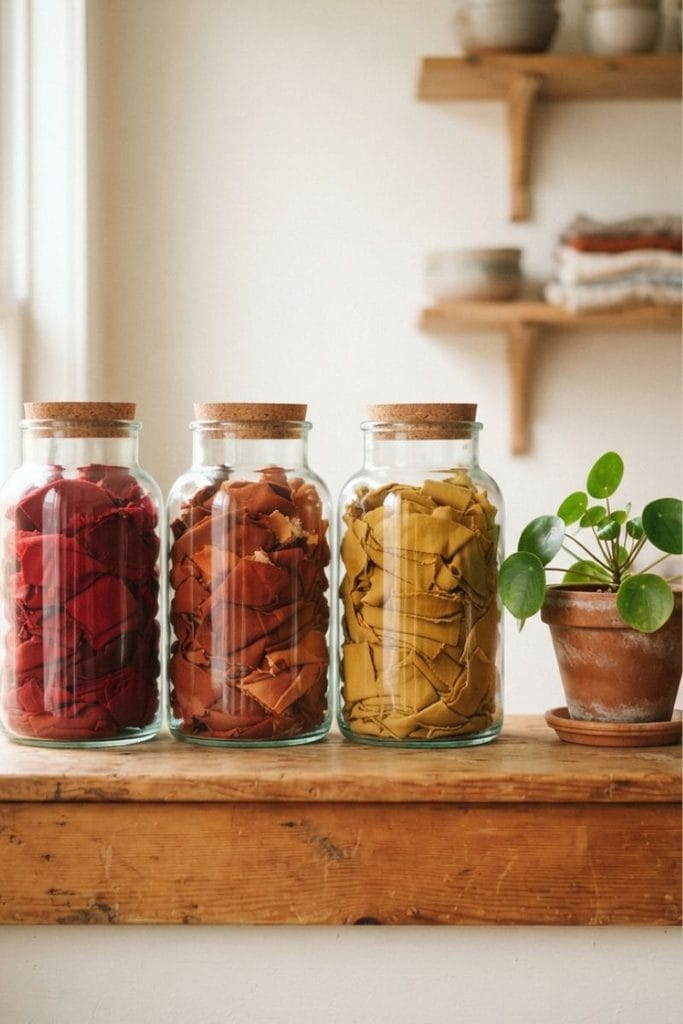
Fill one gallon apothecary jars with scraps sorted by shade, one color per jar. A trio of red, rust, and mustard on an open shelf looks like art. Cork or wood lids add a warm finish. Jars like these double as the canisters in these fall coffee bar ideas, so they feel at home on a kitchen shelf too. Drop trimmings in right after you cut, and scraps never pile up. Skip plastic here, since glass looks richer. As far as fabric storage ideas go, this is the quickest weekend upgrade. Match jar sizes in sets of three or five for a balanced shelf, then set them beside a small plant in a terracotta pot for a relaxed studio look.
Under Bed Bins for Seasonal Prints
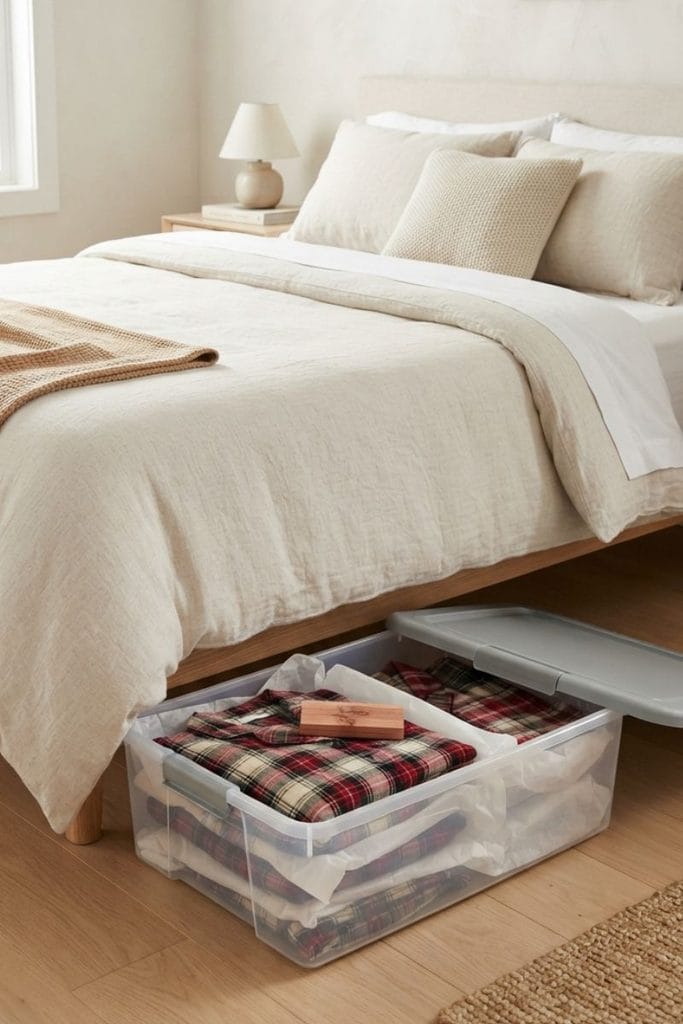
Low profile bins about 6 inches tall slide under a guest bed and hold Christmas flannel and summer seersucker until their season returns. Choose bins with snap lids and tuck a cedar block into each to keep moths away. Lay tissue paper between folded layers so prints don’t crease at the fold lines. In a shared kids room, rolling drawers under the lower bunk work the same way, as shown in these bunk bed ideas. Rotate the bins twice a year, in March and September. Seasonal fabric storage ideas like this free your shelves for the pieces you reach for weekly. Tape a small label card to the bin end so you read it without pulling anything out.
FAQs
What are the best fabric storage ideas for small spaces?
Over the door pockets, closet shelves, and under bed bins use space you already own. These fabric storage ideas keep fabric flat and visible without adding furniture. A single door organizer holds about two dozen precut bundles, and a closet with five shelves holds a full collection of folded yardage.
How do I protect fabric from dust and moths?
Use closed cabinets, lidded bins, or drawers, and tuck a cedar block into each. Wash new fabric before storing it, since food residue and body oils attract moths. Most fabric storage ideas here work well with a cedar block added.
Should I fold or roll fabric?
Fold for shelves, drawers, and files. Roll delicate silk or velvet so it doesn’t crease. Rolling also suits long lengths of upholstery fabric, which resist neat folding. Folded fabric storage ideas save the most space, while rolled fabric stays smoother.
How do I organize a large stash?
Pick one system, either color, fiber, or project, and stick with it. Fabric storage ideas work best when you keep the system going, so choose the one you’ll maintain. Color suits visual people, while project bins suit anyone sewing from patterns. Sort the whole stash once, then file every new piece the day it arrives.
Pick one shelf this weekend, fold your five favorite pieces, and start with the fabric storage ideas best suited to your room. The space settles fast, and your next sewing session starts with a clear table and a calm mood. Good fabric storage ideas turn a pile you avoid into a collection you love to open.
