
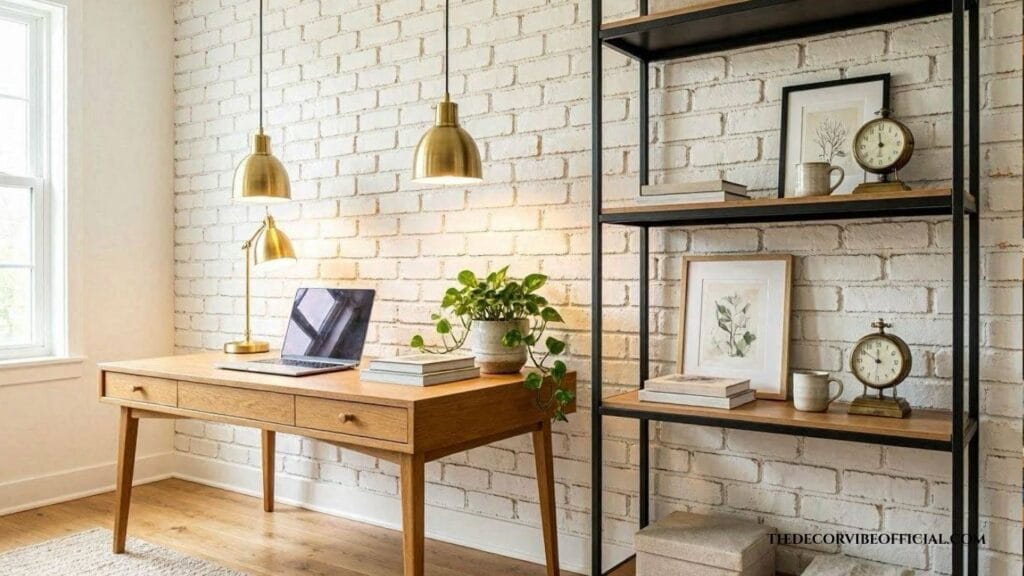
My brother spent three weekends convinced he was going to hire someone to install real exposed brick in his home office, until he priced it out and nearly fell off his chair. A quote north of a thousand dollars for one wall changed his mind fast. What he ended up with instead, a joint compound treatment he did himself over a single weekend, fooled every single person who walked into that room.
That’s the real appeal of faux brick wall DIY projects: most people genuinely cannot tell the difference once it’s finished, and the cost gap between real brick and a convincing fake is enormous.
If you’ve searched for faux brick wall DIY tutorials before, you’ve likely found a dozen individual blog posts, each showing one specific method, without ever comparing which approach actually fits your wall, budget, and skill level.
Prefer watching the technique instead of reading it? This video walks through the process step by step so you can see exactly how it comes together.
Below is a full breakdown of every major faux brick wall DIY method, 20 real ideas and applications, along with details most single-tutorial posts skip entirely: how the methods compare, what each one actually costs, where they tend to go wrong, and which rooms suit each technique best.
Which Faux Brick Wall DIY Method Fits Your Project
Before picking a specific look, it helps to understand the four main approaches, since each one suits a different budget, timeline, and skill level.
| Method | Estimated Cost | Skill Level | Best For |
|---|---|---|---|
| Joint compound texture | $30 to $60 | Beginner-friendly | Renters wanting a removable, low-cost option |
| Faux brick panels | $150 to $400 | Beginner to intermediate | A fast, consistent, one-weekend install |
| Thin brick veneer | $300 to $700 | Intermediate | The most convincing, most permanent option |
| Wallpaper or peel-and-stick | $40 to $100 | Beginner-friendly | Small accent areas, fully rental-safe |
Joint compound texture is the cheapest and most flexible faux brick wall DIY method, since it can be sanded down or painted over entirely if you change your mind later. Faux brick panels install the fastest and give the most uniform result, which matters if perfect consistency across a large wall is the goal. Thin brick veneer costs more and takes longer, but it’s real fired clay brick cut thin, so it holds up to touch and close inspection better than any faux method. Wallpaper and peel-and-stick versions work best for small spaces or fully rental-restricted apartments where nothing permanent is allowed.
This same accent-wall approach pairs beautifully with real wood texture too. Our wood slat accent wall ideas covers a different material with a similar impact.
20 Faux Brick Wall DIY Ideas And Applications
Joint Compound Texture Projects
1. Classic Whitewashed Brick Look Applying joint compound over a brick stencil, then whitewashing once dry, creates the aged, painted-over-decades look that’s currently one of the most requested styles in this category. This particular faux brick wall DIY approach costs the least of any method on this entire list.
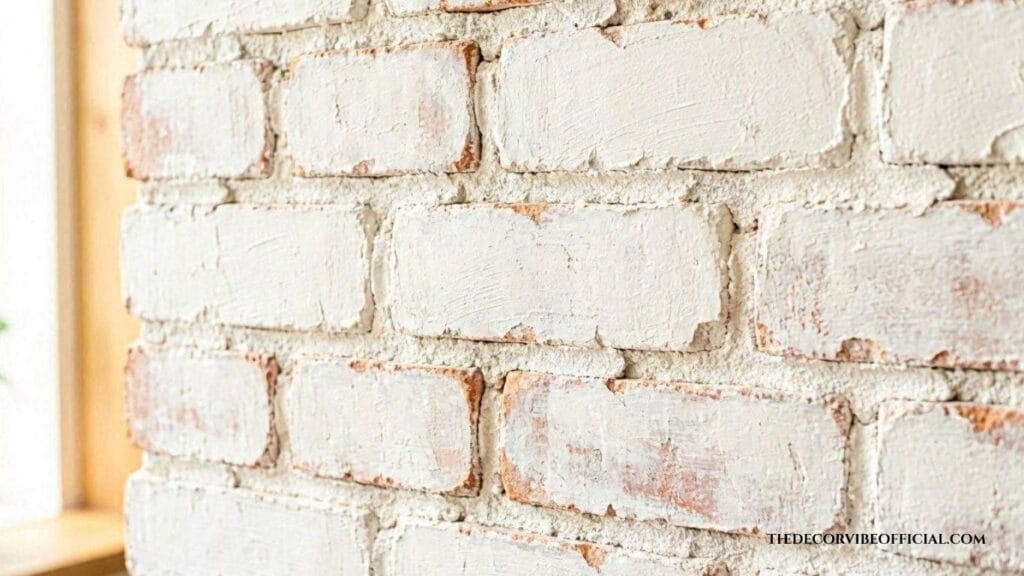
2. Distressed Antique Plaster Finish Layering the compound unevenly and sanding select high points afterward mimics genuinely old, crumbling brick with real depth and shadow. Working in small sections keeps the texture consistent across a larger wall.
3. Raw Concrete Gray Brick Skipping the whitewash step and leaving the compound in its natural gray tone creates an industrial, loft-style look that pairs well with black metal fixtures. A light sealant coat on top protects the finish from marking over time.
4. Half-Wall Brick Wainscoting Applying the technique only to the lower half of a wall, then painting above it, adds texture without the time commitment of a full wall. A simple trim strip at the transition point gives the two sections a clean, finished edge.
5. Brick Fireplace Surround This technique works especially well around an existing fireplace, since the smaller surface area makes it one of the fastest joint compound projects on this list. Heat-resistant compound formulas exist specifically for surfaces close to an active firebox.
Panel-Based Projects
6. Full Accent Wall Panel Install Installing faux brick panels across one full wall is the most common faux brick wall DIY project, and it remains popular because a single weekend delivers a dramatic, finished result. Pre-scored panel seams line up neatly if the wall is measured carefully before the first piece goes up.
7. Kitchen Backsplash Panels Thin, heat-resistant faux brick panels work as a backsplash alternative to tile, adding texture behind a stove or sink for a fraction of the cost of real tile installation. Choosing a panel rated specifically for kitchen use avoids warping near heat sources.
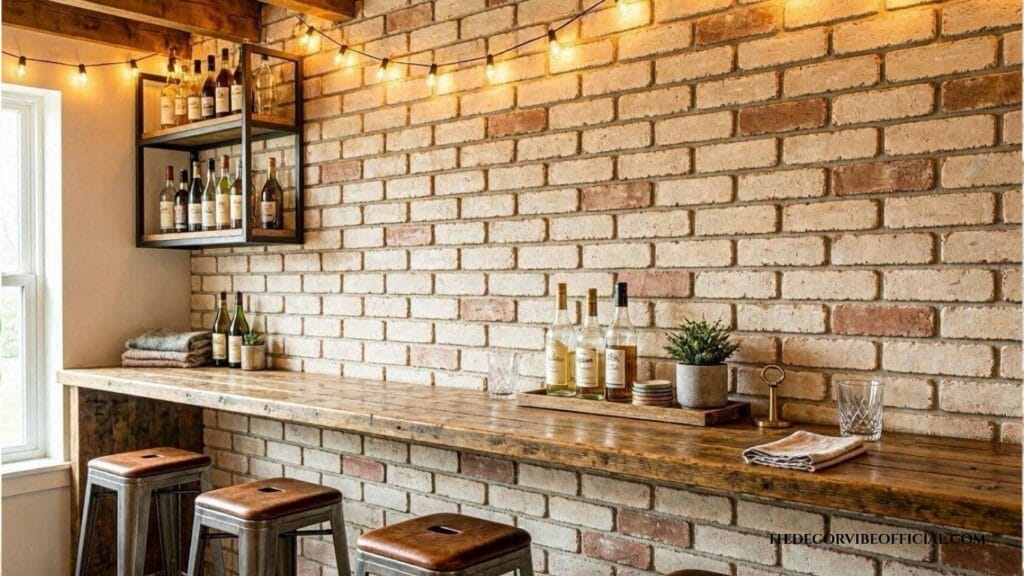
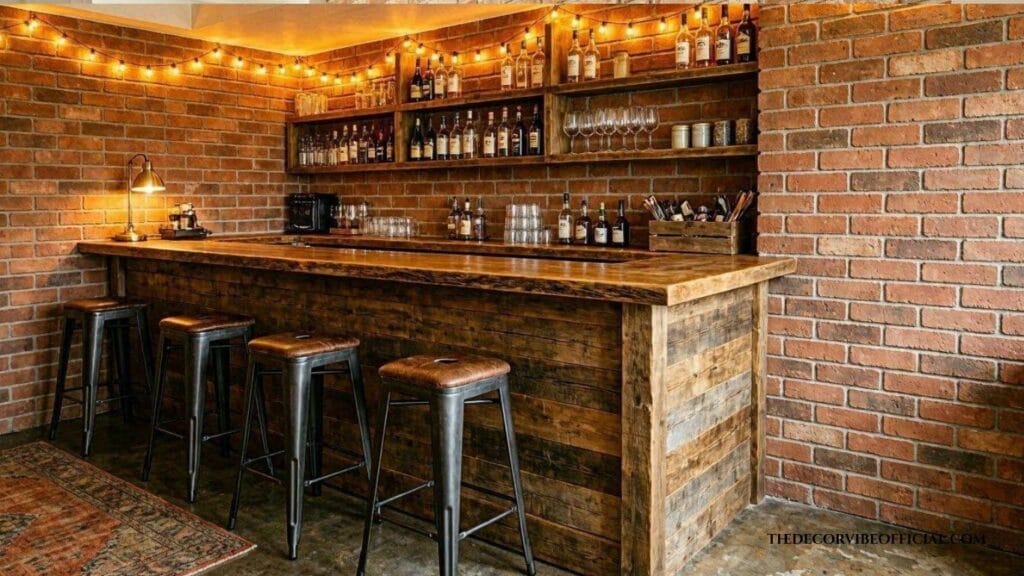
8. Basement Bar Backdrop Basements are one of the most popular rooms for this look, since faux brick panels hide imperfect poured concrete walls while adding genuine character to a home bar setup. The panels also help mask minor unevenness that’s common in unfinished basement walls.
9. Staircase Wall Accent Running panels along a staircase wall adds visual interest to a space that’s often left completely blank in most homes. This application pairs particularly well with a gallery wall layered on top of the brick texture.
10. Doorway or Archway Framing Framing just the sides of a doorway or archway in faux brick panels creates a bold architectural statement without covering an entire room. This smaller-scale application is one of the most budget-friendly panel projects on this list.
Thin Brick Veneer Projects
11. Real Fired Clay Veneer Wall For anyone wanting the closest possible match to genuine brick, thin veneer made from actual fired clay offers texture and color variation that painted methods can’t fully replicate. This is the only faux brick wall DIY method on this list that involves real masonry material rather than a simulated surface.
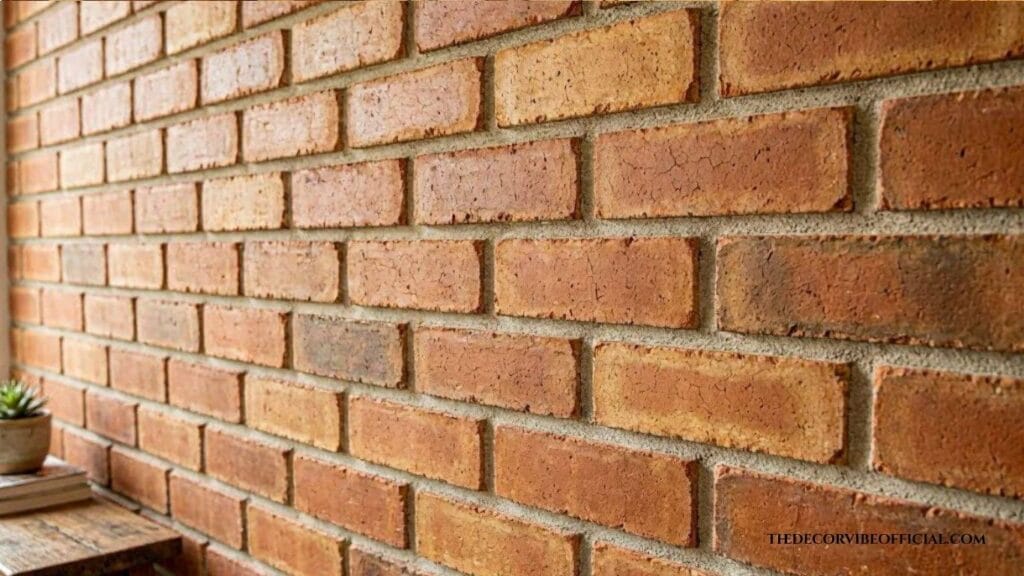
12. Herringbone Veneer Pattern Laying thin brick veneer in a herringbone pattern instead of a standard running bond adds a more custom, higher-end look for a modest cost increase. This layout takes noticeably longer to install than a straight pattern, so budgeting extra time matters.
13. Whitewashed Veneer Finish Applying a light whitewash over real thin brick veneer combines genuine texture with the popular pale, farmhouse-style finish many homeowners are after. Diluting the whitewash mixture more heavily lets more of the natural brick color show through underneath.
14. Exposed Interior Chimney Look Veneer works particularly well for recreating the look of an original, exposed interior chimney breast in homes that never had one to begin with. Extending the veneer slightly onto the ceiling near the top adds to the architectural illusion.
Wallpaper And Peel-and-Stick Projects
15. Removable Brick Wallpaper Accent A single roll of realistic brick-print wallpaper on one wall delivers a convincing faux brick wall DIY look with zero permanent installation, ideal for renters. Higher-resolution prints with visible texture variation look far more convincing than flat, repetitive patterns.
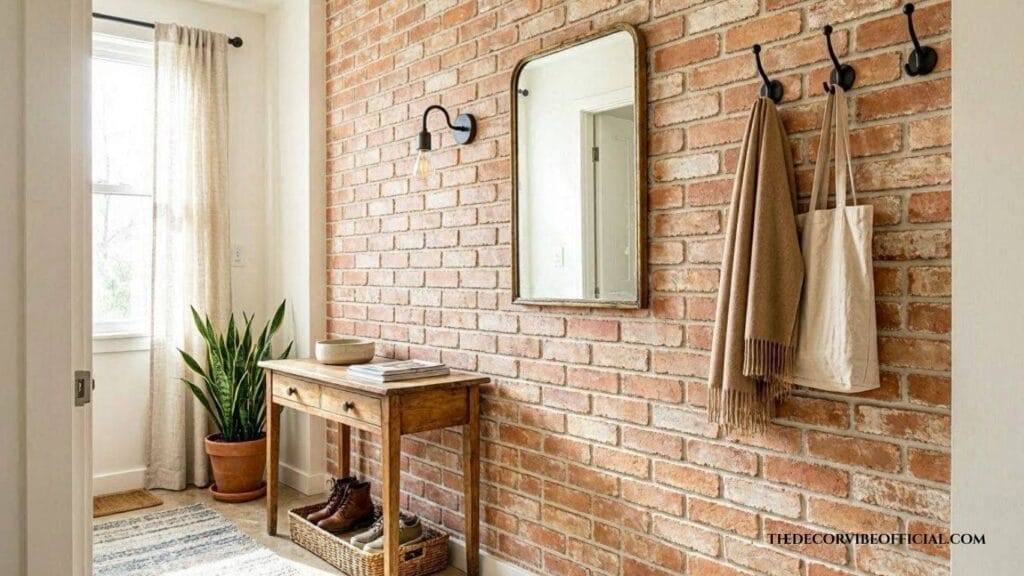
16. Small Nook Or Alcove Application Applying peel-and-stick brick paper to a small reading nook or built-in shelving alcove adds texture to a contained area without committing to a full room. The smaller surface area also makes this one of the fastest projects on this entire list to complete.
17. Behind Open Shelving Brick-print wallpaper placed behind open kitchen or living room shelving adds depth and interest that plain drywall can’t offer, all fully removable at move-out. This application works especially well since the shelving itself breaks up the pattern, making a printed surface read as more realistic.
Once the wall itself is finished, styling open shelving in front of it makes a real difference. Our aesthetic bookshelf styling guide covers exactly that next step.
18. Under-Stair Accent Panel A small section of peel-and-stick brick under a staircase pairs well with other under-stair storage or seating projects, adding texture to an often-overlooked corner. This combination turns two separate small upgrades into one cohesive, styled space.
If under-stair storage is already on your list, this same accent panel pairs naturally with our under stairs corner decor ideas for a fully coordinated look.
Mixed and Specialty Applications
19. Painted Two-Tone Brick Wall Combining a faux brick base with a bold paint color, rather than the traditional whitewash, creates a modern, unexpected take on the classic exposed brick look. Dry brushing the paint rather than fully saturating each brick lets the underlying texture stay visible through the color.
20. Outdoor-Rated Faux Brick Panel Weather-resistant faux brick panels extend this look to a covered porch or patio wall, bringing the same character outdoors where real brick installation would cost significantly more. Checking the product specifically for outdoor or exterior rating matters here, since standard interior panels will warp and fade quickly outside.
If you’re extending a similar textured, budget-conscious look to an outdoor space, our small porch ideas on a budget covers a lot of the same weather-rated material thinking.
Any of these 20 faux brick wall DIY projects can also be mixed within the same home, using panels in a basement bar and joint compound in a home office, for example, since the methods don’t need to match from room to room.
Common Mistakes To Avoid
A handful of missteps show up repeatedly across faux brick wall DIY projects that don’t quite land.
Skipping proper wall prep is the most frequent error, since paint, dust, or a glossy factory finish underneath any of these methods leads to peeling or poor adhesion within months. Rushing the texture step on joint compound projects produces a flat, obviously fake surface, while taking time to vary the depth and pattern creates the realistic shadow play that sells the illusion.
Choosing a stark white for the base color, rather than a warm off-white or cream, is another common misstep, since true brick rarely reads as pure white even when heavily whitewashed. Ignoring scale matters too. Oversized faux brick patterns on a small wall can look cartoonish, while properly scaled brick proportions blend naturally into the room. Finally, skipping a sealant or protective topcoat on any faux brick wall DIY project that sees regular contact, near a doorway or in a busy hallway, means the finish wears unevenly faster than it should.
For more small, styled touches that pull a basement bar or reading corner together, our dollar tree home decor hacks covers budget-friendly finishing pieces.
What This Actually Costs By Room
Most single-project tutorials don’t address how cost shifts depending on where in the home you’re applying this technique.
A small accent nook or fireplace surround typically runs on the low end of any method’s range, since the surface area is limited. A full living room or basement wall pushes toward the higher end, especially with panel or veneer methods where material cost scales directly with square footage. Kitchen backsplash applications sit in a unique middle ground, since the area is small but the material often needs to be heat and moisture resistant, which adds a modest premium over standard interior panels. Bathrooms follow a similar pattern to kitchens, where the smaller footprint keeps overall cost down even though the material itself needs to handle humidity well.
Small Room vs Large Room Strategy
The right faux brick wall DIY approach shifts depending on how much wall space you’re actually covering.
In a small room, a half-wall treatment or a contained accent area, like a fireplace surround or reading nook, delivers real visual impact without overwhelming the space. In a larger room, a full accent wall using panels or veneer has enough surface area to justify the material investment, and the scale of a bigger wall actually helps sell the illusion better than a small, isolated patch would.
This same restrained, budget-first approach shows up in our earthy living room ideas on a budget, if you want the rest of the room to match this wall’s warmth.
Real Room Examples
Seeing these methods applied to actual spaces makes the differences easier to picture.
Room One. A home office with a full joint compound accent wall behind the desk, whitewashed and paired with black metal shelving and warm brass lighting.
Room Two. A basement bar area using faux brick panels across the back wall, styled with a reclaimed wood counter and string lighting for a genuine pub feel.
Room Three. A small apartment entryway using removable brick wallpaper on one wall, paired with a vintage mirror and a single wall sconce, fully reversible at move-out.
Frequently Asked Questions
Which faux brick wall DIY method looks the most realistic?
Thin brick veneer, since it’s made from actual fired clay, offers the closest match to real brick in both texture and color variation, though joint compound techniques come impressively close when properly textured and finished. The right choice often comes down to budget and how much time you’re willing to invest, rather than realism alone.
Can I remove a faux brick wall if I change my mind?
Wallpaper and peel-and-stick versions remove cleanly with no wall damage. Joint compound can be sanded down and repainted, while panels and veneer are more permanent and harder to fully reverse without professional help.
Is faux brick wall DIY renter-friendly?
Wallpaper and peel-and-stick brick are the safest options for renters, since they require no adhesive beyond what’s specifically designed to remove without damage. Always check with a landlord before starting any project involving paint, joint compound, or panel adhesive.
How long does a faux brick wall DIY project usually take?
Panel installations typically take a single weekend, joint compound projects take a weekend plus drying time between coats, and veneer installations often take several days including grouting and curing time. Wallpaper projects tend to be the fastest of all, often finishing within a single afternoon.
Does faux brick wall DIY work in a bathroom or kitchen?
Yes, with the right material. Look specifically for moisture-resistant panels or sealed finishes in areas exposed to steam or splashing water, and avoid unsealed joint compound in high-humidity spots without a protective topcoat.
For more budget-friendly renovation ideas across every room in the house, browse our full collection of budget decor and DIY projects.
Wrapping Up
A faux brick wall doesn’t require a real mason or a budget that rivals a kitchen remodel, and these 20 faux brick wall DIY ideas show just how many directions this single technique can take, from a quick weekend accent to a full room transformation. The goal was never to fool a brick expert standing three inches away. It’s to bring genuine texture and character into a room for a fraction of what real brick installation would cost, using whichever method fits your timeline, budget, and comfort level with a paintbrush or trowel. Next time you walk into a room with brick that looks decades old, there’s a real chance it’s newer, and cheaper, than it looks.
