
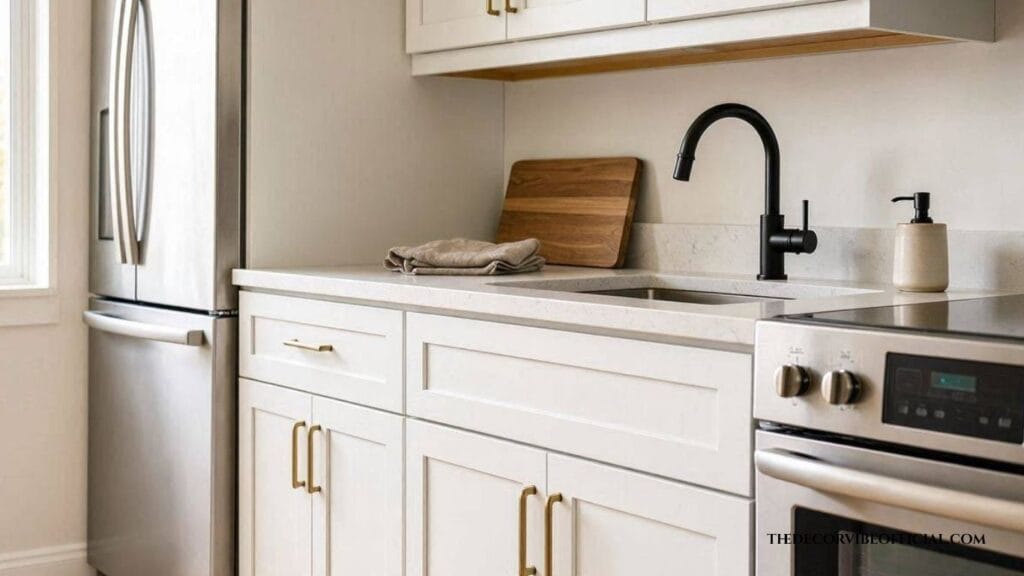
Mixing metals in kitchen design used to scare me. The first time I put brass cabinet knobs next to my chrome faucet, I stood back and panicked a little. It looked wrong, like I’d grabbed the wrong hardware box in a rush…
This trend has taken over kitchen design because it solves a problem most all-matching kitchens have: they can feel flat, sterile, almost like a showroom nobody actually lives in. When you mix metals with intention, the space feels layered and personal instead. Here’s the thing, you don’t need a full renovation to try it. A few swapped fixtures can completely shift how your kitchen feels.
Mixing Metals in Kitchen: What It Actually Means
The Basic Concept
Mixing metals in the kitchen means using more than one metal finish across your fixtures instead of matching everything to a single tone. Think brass drawer pulls next to a stainless steel range, or a matte black faucet under gold pendant lights. It sounds risky on paper, but done right, it reads as intentional rather than mismatched.
Where Mixed Metals Show Up
Cabinet hardware, faucets, lighting fixtures, appliances, and even small accents like utensil holders or bar stool legs all carry a metal finish. You don’t need to change every single one. Most kitchens that pull this off well pick two or three “hero” pieces and let everything else stay neutral around them.
Why This Trend Works So Well in a Kitchen
A kitchen finished entirely in one metal tone can start to feel cold after a while, almost like a display model rather than a real, lived-in space. Adding a second or third finish breaks up that sameness and gives the eye somewhere new to land. You might be wondering if this makes a kitchen look busy. It’s actually the opposite when it’s balanced well, since contrast in small doses reads as curated rather than chaotic.
This approach also mirrors how real homes get put together over the years. Nobody buys every fixture in their kitchen on the same day from the same store. A mix of finishes suggests a kitchen that evolved naturally, piece by piece, which is exactly the warm, collected feeling most homeowners are chasing right now.
see this before trying any tip warm white kitchen ideas
Key Metal Types and Where to Use Each One
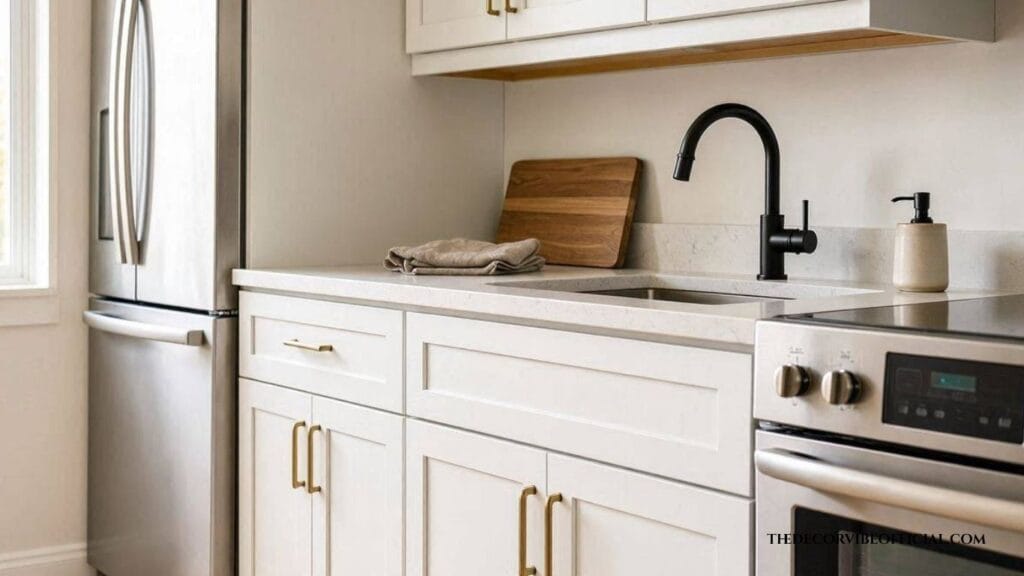
Before you start swapping hardware, it helps to know which finishes fall into which category. Metals generally split into three groups: warm, cool, and neutral.
| Metal Category | Finishes Included | Best Used For |
|---|---|---|
| Warm Metals | Brass, gold, copper, bronze | Hardware, pendant lights, faucet accents |
| Cool Metals | Chrome, polished nickel, brushed nickel, stainless steel | Appliances, sinks, everyday fixtures |
| Neutral Metals | Matte black, wrought iron, pewter | Grounding pieces, bar stools, light fixtures |
Quick Answer: If you’re not sure where to start, pick one warm metal and one neutral metal, then let your appliances stay in whatever cool finish they already are. That combination almost always looks intentional.
Warm metals bring a cozy, traditional feel and work beautifully in farmhouse or transitional kitchens. Cool metals keep things sleek and modern, which suits minimalist spaces. Neutral metals like matte black act as a bridge, since they pair with nearly anything without clashing.
Color Palette and Cabinet Pairing Guide
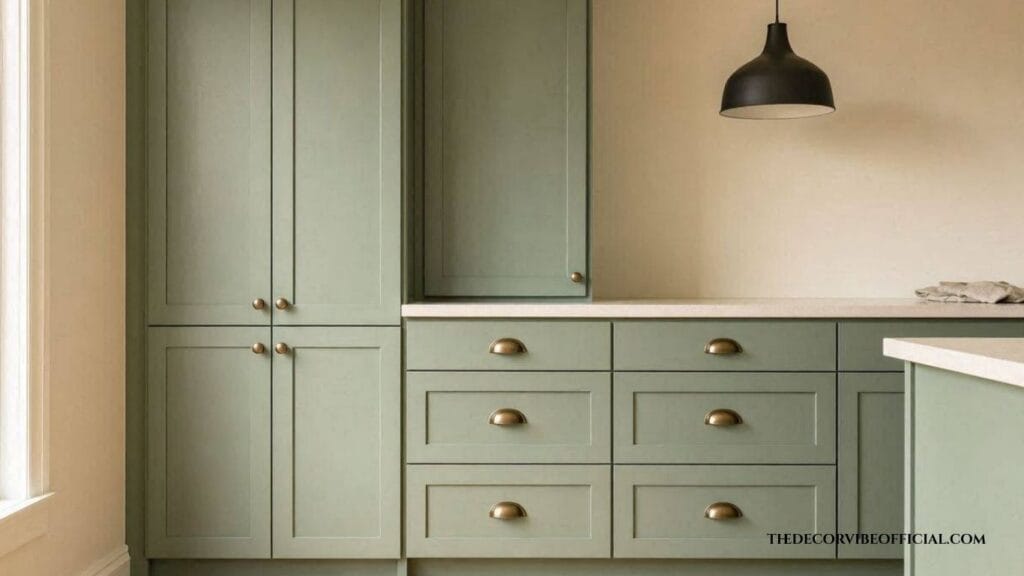
The metal finishes you choose should work with your cabinet color, not fight against it. A pairing that looks stunning in a white kitchen might feel off in a navy or wood-toned one.
| Cabinet Color | Metal Pairing That Works Best |
|---|---|
| White Cabinets | Brass or matte black for contrast |
| Sage Green Cabinets | Brass or brushed nickel for warmth |
| Navy Cabinets | Brass or polished nickel |
| Wood-Toned Cabinets | Matte black or aged bronze |
| Black Cabinets | Brass or chrome for brightness |
Cabinet color sets the mood, and your metal choice either softens it or sharpens it. A sage green kitchen with brass hardware leans warm and organic, while the same cabinets paired with chrome feel cleaner and more modern.
check this you will get many more brilliant ideas sage green kitchen cabinets
Budget-Friendly Ways to Try Mixed Metals
You don’t need a full kitchen remodel to test this look. Small, affordable swaps go a long way toward creating that layered feel.
- Swap cabinet knobs and pulls first, since this is the cheapest and fastest update
- Replace one pendant light over the island in a contrasting finish
- Add a matte black or brass faucet without touching your existing sink
- Use open shelving to display metal cookware or utensils in a second finish
- Change out barstool legs or frames for an easy, low-cost accent
Room: Small Apartment Kitchen Look: White cabinets, chrome faucet left as-is, brass cabinet knobs swapped in for under fifty dollars total
Spending your budget on hardware first gives you the biggest visible change for the least money. Save bigger purchases, like a new faucet or range hood, for later if you decide you love the look.
Common Mistakes to Avoid
Mixing metals goes wrong fast when there’s no plan behind it. The most common mistake is using too many finishes at once. Three metals in one kitchen already pushes the limit. Four or five starts to look cluttered and unplanned.
Another mistake is skipping repetition. If you introduce a metal finish only once, in one spot, it tends to look like a leftover piece rather than a deliberate choice. Repeating each finish at least twice across the room ties the whole look together. And be careful mixing undertones within the same metal family. Two different “golds” from two different manufacturers can clash more than two entirely different metals would.
How to Style This for Small vs Large Kitchens
Kitchen size changes how much mixing you can comfortably pull off without it feeling overwhelming.
Small Kitchens
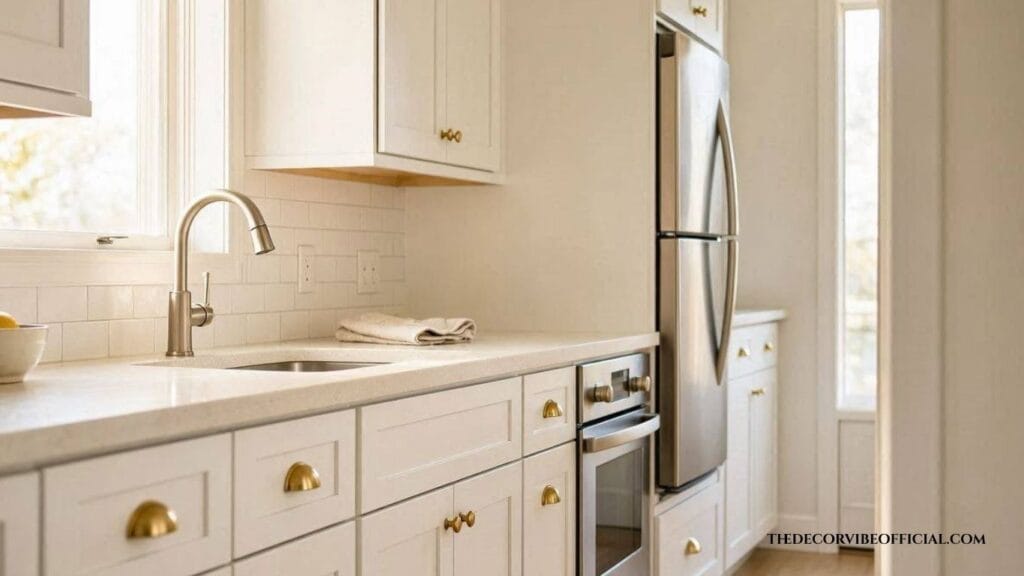
Stick to two metal finishes maximum. Keep your primary appliances and faucet in one finish, then bring in your second metal through hardware alone. This keeps the space feeling open instead of busy.
Room: Small Galley Kitchen Look: Stainless steel appliances, brushed nickel faucet, warm brass knobs on white shaker cabinets
small bathroom design ideas for 2026
Large Kitchens
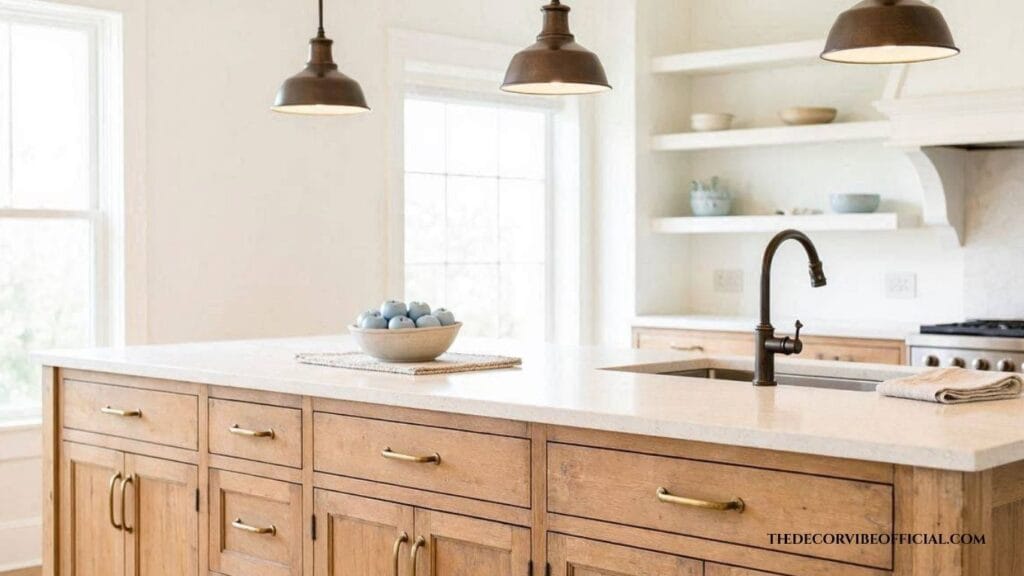
Bigger kitchens can handle three finishes comfortably, especially when the space includes an island that acts as a separate zone. This is where bolder combinations, like a matte black range hood with brass pendant lighting, really get to shine.
Room: Large Farmhouse Kitchen Look: Oil-rubbed bronze pendant lights, matte black faucet, brass drawer pulls on natural wood cabinetry
Room: Moody Dark Kitchen Look: Charcoal cabinets, aged brass hardware, brushed nickel appliances for contrast
Room: Sage Green Kitchen Look: Sage cabinets, brass hardware, black pendant lights for grounding
Where to Shop for the Right Fixtures
When shopping for mixed metal pieces, consistency matters more than brand names. Two products labeled “brass” from different manufacturers can look noticeably different in person, so it helps to order samples or check hardware in a showroom before committing.
Focus your bigger purchases, like faucets and light fixtures, on pieces you’re confident you’ll love long term, since these cost more to swap later. Save your experimenting for smaller, cheaper pieces like knobs and pulls, which you can change again in a year if your taste shifts. Home improvement stores, online hardware retailers, and even salvage or vintage shops all carry solid mixed metal options at a range of price points.
Frequently Asked Questions
How many metal finishes should I mix in a kitchen?
Two to three finishes is the sweet spot for most kitchens. Anything beyond that starts to feel busy rather than curated, especially in smaller spaces.
What metals go best together?
Brass and matte black is one of the most popular and forgiving combinations. Brushed nickel and brass also pair well if you want something softer and less contrasted.
Do all my kitchen fixtures need to match?
No, and that’s actually the point of this trend. A slightly varied mix of finishes across hardware, lighting, and faucets creates the layered look most designers are going for now.
Is mixing metals still in style for 2026?
Yes, designers consistently point to it as a lasting approach rather than a passing trend, since it’s rooted in contrast and balance instead of one specific finish going in and out of fashion.
Can I mix metals in a small kitchen without it looking busy?
Absolutely. Keep it to two finishes, use your second metal only through smaller pieces like hardware, and let your appliances and faucet stay in one consistent tone.
The next time you’re standing in your kitchen and it finally feels finished instead of forced, there’s a good chance a little contrast in the metal finishes is exactly what did it.
