
Some basements feel like forgotten storage rooms until one smart layout makes you wonder why you waited so long.
A basement living room often has different challenges from an upstairs space, including lower ceilings, less daylight, exposed columns, and awkward corners. The right layout helps the room feel like a comfortable part of the home rather than an afterthought. These basement living room ideas focus on practical furniture placement, warm finishes, useful storage, and lighting choices suited to below-grade spaces.
1. Warm Up a Neutral Sectional
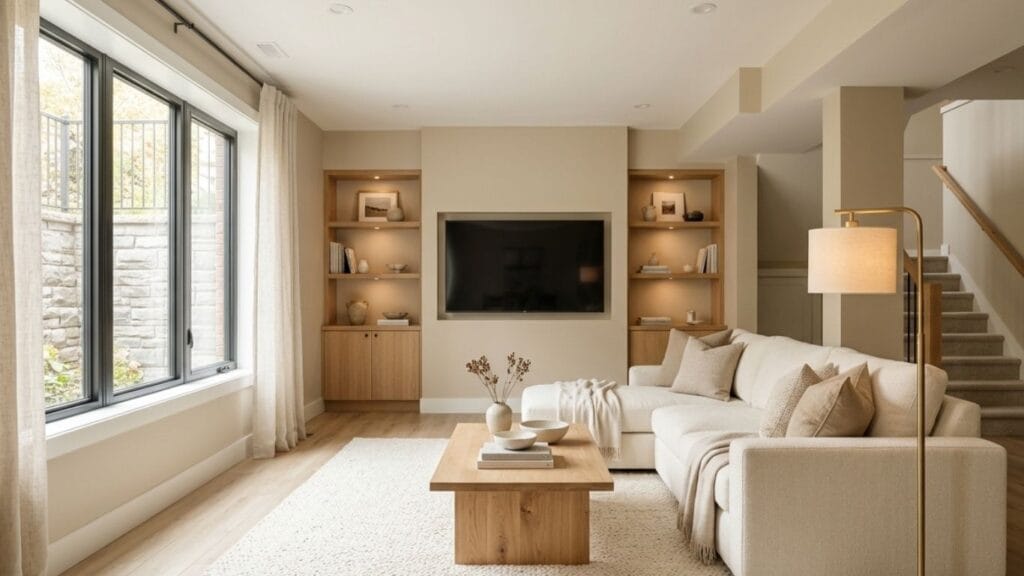
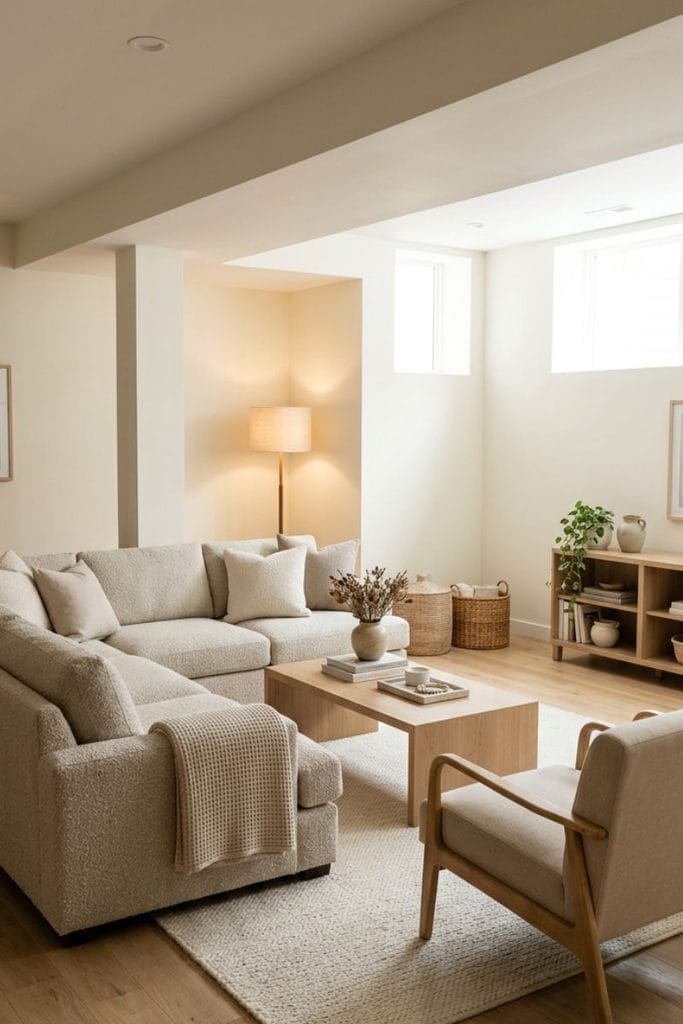
A large cream or oatmeal sectional gives a basement an inviting starting point without making the room feel visually heavy. Position the sofa about 12 inches away from the wall when the floor plan allows, leaving enough space behind it for a slim console or floor lamp.
Choose a 5-by-7-foot or 6-by-9-foot rug based on the seating area, with enough rug depth for at least the front legs of the sofa and chairs to sit on it. A natural jute-blend rug paired with an oak coffee table brings warmth without filling the room with dark furniture.
For another wall treatment option, see the site’s 25 Modern Wall Art Ideas That Instantly Make Your Home Look More Expensive for ways to finish the large wall behind the seating area.
2. Build a Low TV Wall
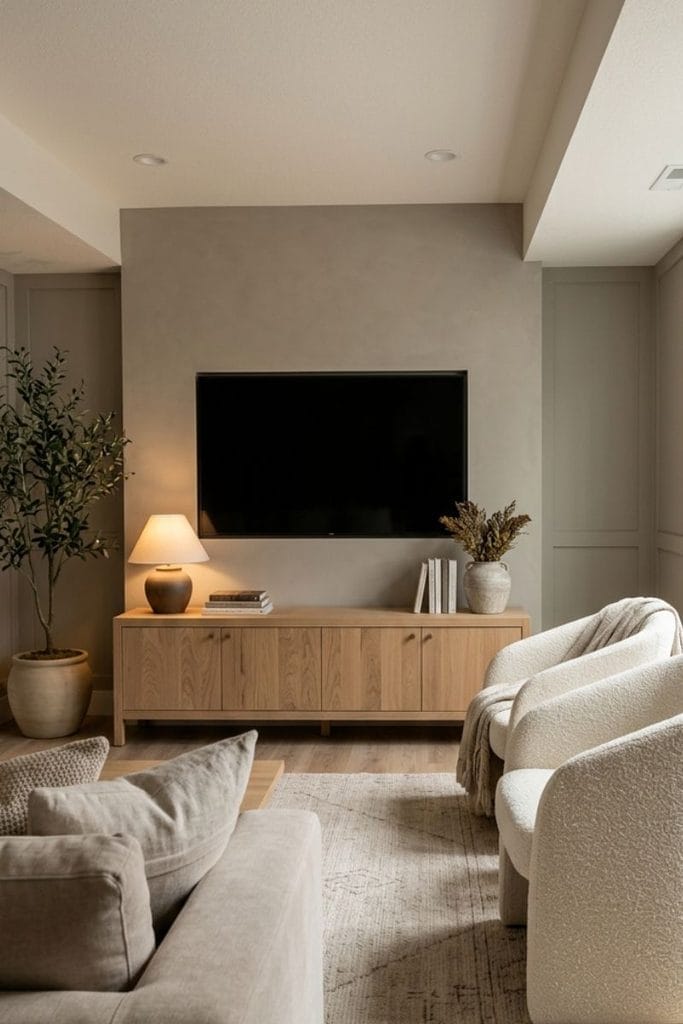
A low TV wall works especially well when basement ceilings sit below the height found on the main floor. Mount the television so its center sits close to seated eye level, then use a low oak media console beneath it instead of a tall cabinet.
Paint the wall behind the television a soft mushroom beige or warm greige. This keeps the screen from feeling disconnected from the rest of the room and gives the wall a finished look without adding visual bulk.
A 72-inch media console works well beneath a larger television, while two smaller cabinets joined together offer flexibility in a wider room. Leave several inches of open space around the television so the wall does not feel packed.
If you like wood detailing, the site’s 30 Gorgeous Wood Slat Accent Wall Ideas includes a basement media-room approach using charcoal slats around a mounted TV.
3. Create a Small Reading Nook
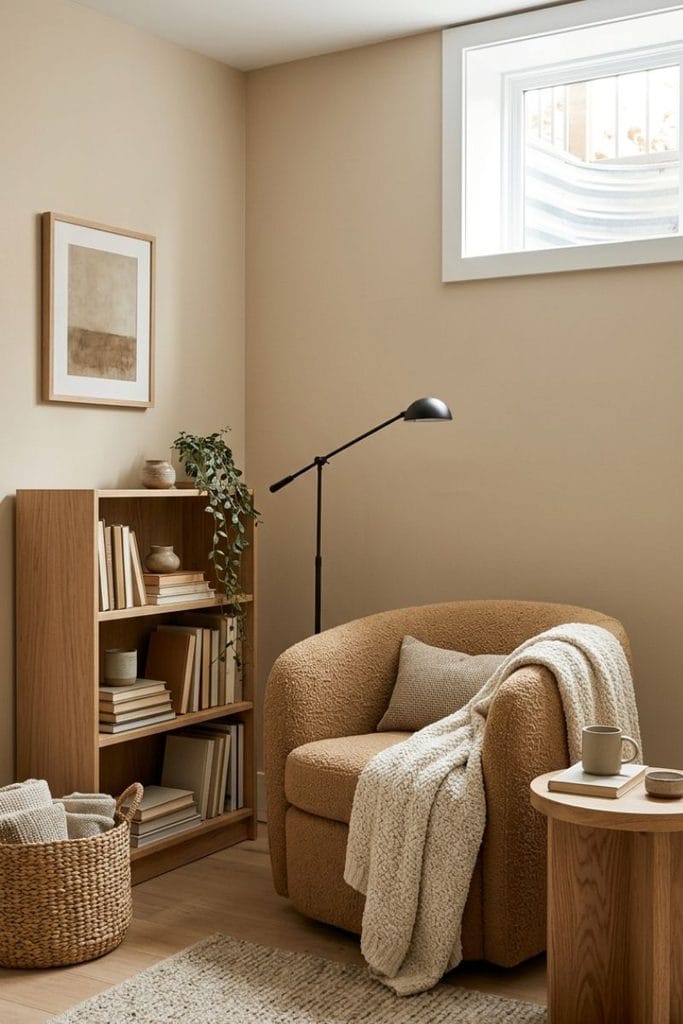
An unused basement corner often needs only a comfortable chair and focused lighting to become useful. Place a camel-colored upholstered chair about 6 inches from the corner, with a small round oak side table beside it.
A 12-inch-wide floor lamp beside the chair gives the nook its own light source without taking up much floor space. Add one cream lumbar pillow and a folded taupe throw for comfort while keeping the color palette connected to the main seating area.
A narrow bookcase measuring around 24 to 30 inches wide fits beside many chairs without making a walkway feel tight. Keep the bottom shelf open for a woven basket instead of filling every shelf with books.
4. Add Built-In Storage Seating
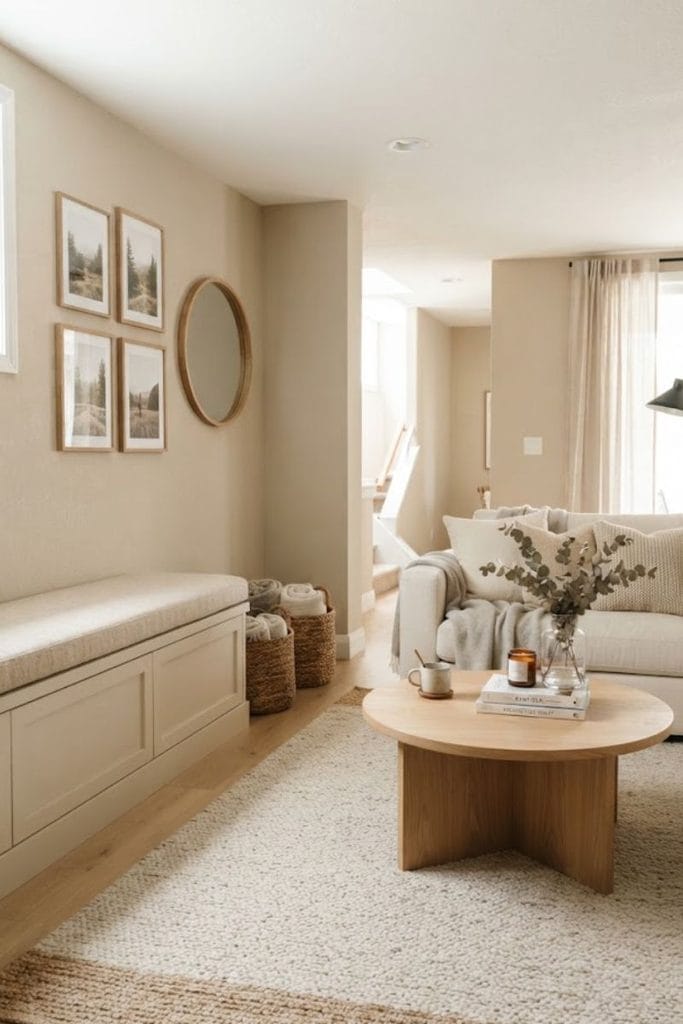
Basement living rooms often need hidden storage for blankets, games, electronics, and seasonal items. A built-in bench along one wall solves two problems at once by adding seating and keeping clutter behind closed doors.
A bench around 18 inches high works comfortably as seating, while drawers or lift-up compartments underneath provide practical storage. Paint the base a warm white and add a 3-inch-thick oatmeal cushion across the top.
If the basement doubles as a family room, storage baskets inside the bench give children an easy place for toys and games. The site’s 10 Smart Toy Storage Ideas for a Tidy Home offers another useful direction for keeping shared spaces organized.
5. Use Layered Floor Lighting
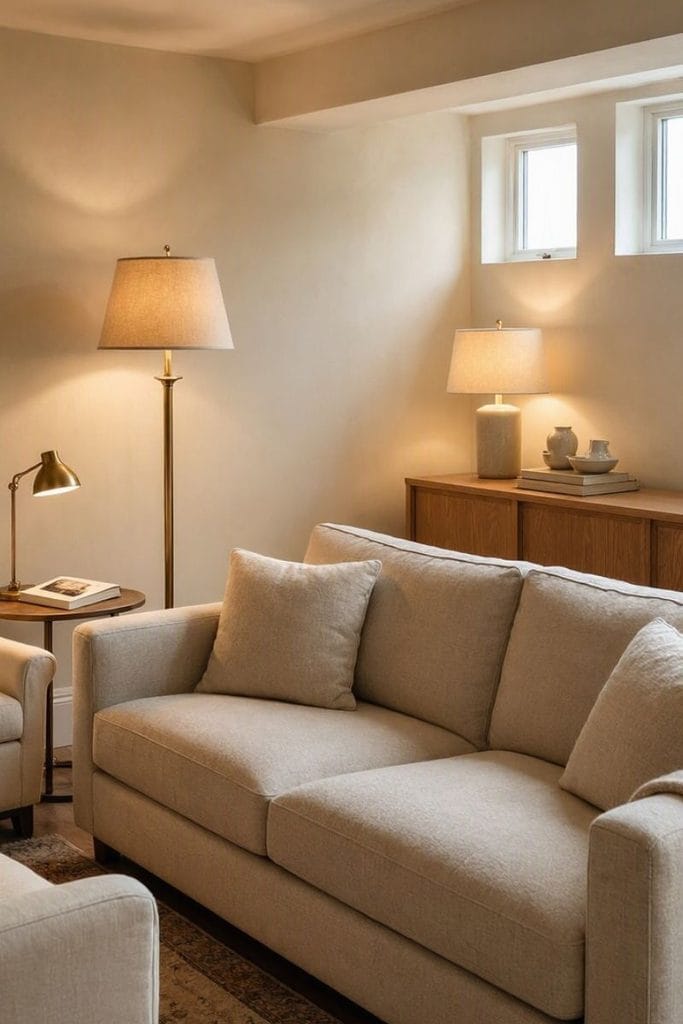
Lighting matters even more in a basement where natural daylight often feels limited. Instead of depending on one ceiling fixture, use three light levels around the seating area.
Place a tall floor lamp beside the main sofa, a table lamp on a nearby console, and a smaller lamp beside a reading chair. Choose bulbs around 2700K for a warm residential glow rather than cool white light.
A brass floor lamp beside an oatmeal sofa adds a small amount of contrast without introducing another strong color. Keep the shades in linen, ivory, or warm white so the light feels soft rather than harsh.
6. Frame the Fireplace
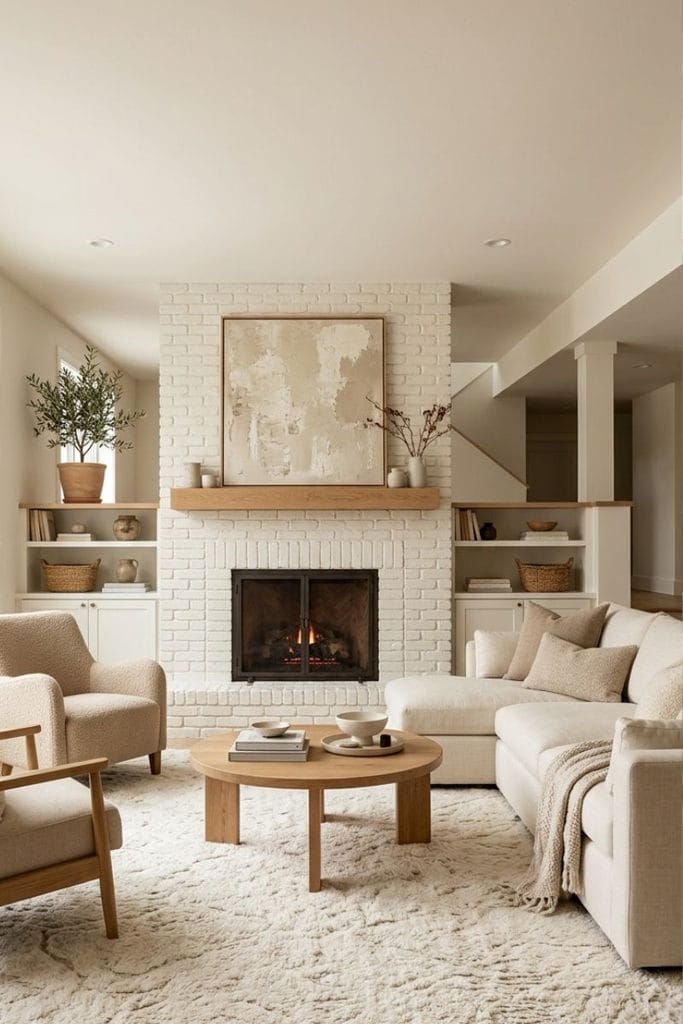
A fireplace gives a basement an instant focal point, so let it anchor the furniture instead of competing with the television. A simple limestone, painted brick, or warm white surround works well with neutral seating.
Arrange the sofa and two chairs in a loose U shape facing the fireplace, leaving roughly 30 to 36 inches between the main furniture pieces where the walkway needs to pass. A 36-inch round coffee table keeps the center practical while softening the straight lines of the room.
For a more modern look, use a simple mantel with one oversized framed artwork instead of several small objects. Keep the wall treatment restrained so the fireplace remains the visual focus.
7. Turn a Long Wall Into Storage
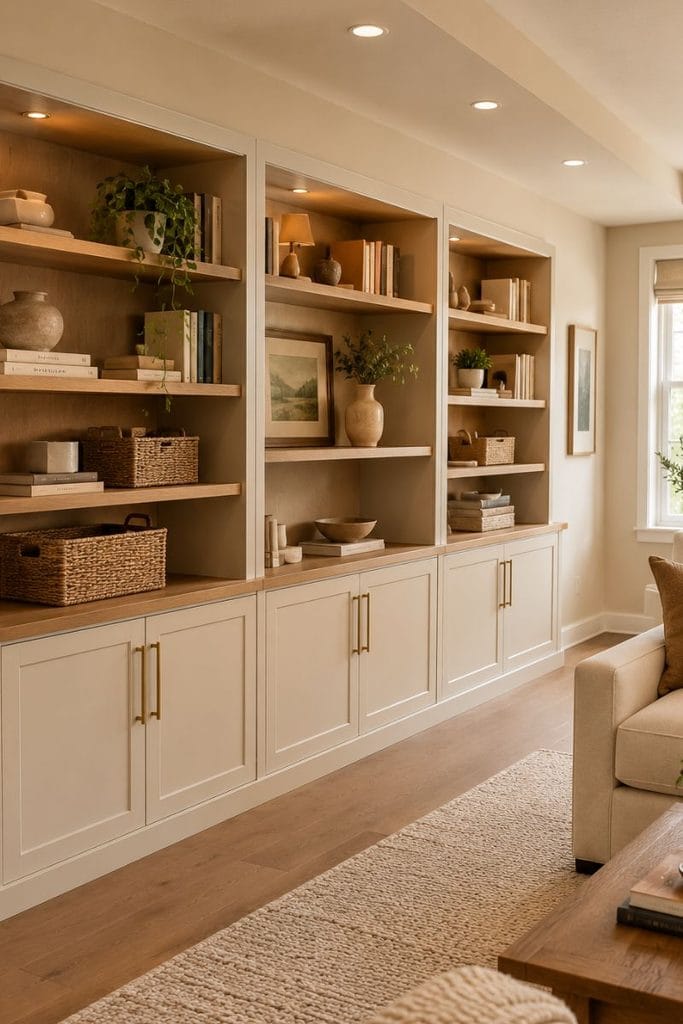
A long basement wall offers an opportunity for storage without adding several separate furniture pieces. A row of low cabinets in natural oak, matte white, or soft greige gives the room a clean visual line.
For a wall around 10 feet long, consider three cabinets close to 36 inches wide each. Leave a few inches between the cabinet run and nearby door trim so the furniture does not look squeezed into the architecture.
Use closed doors for electronics, board games, and spare blankets. Open one small section for books, framed photos, or a woven basket so the wall still feels lived-in without becoming crowded.
The site’s 10 Smart Fabric Storage Ideas for a Tidy Home also offers storage inspiration for keeping bulky soft goods organized.
8. Make a Dark Basement Feel Lighter
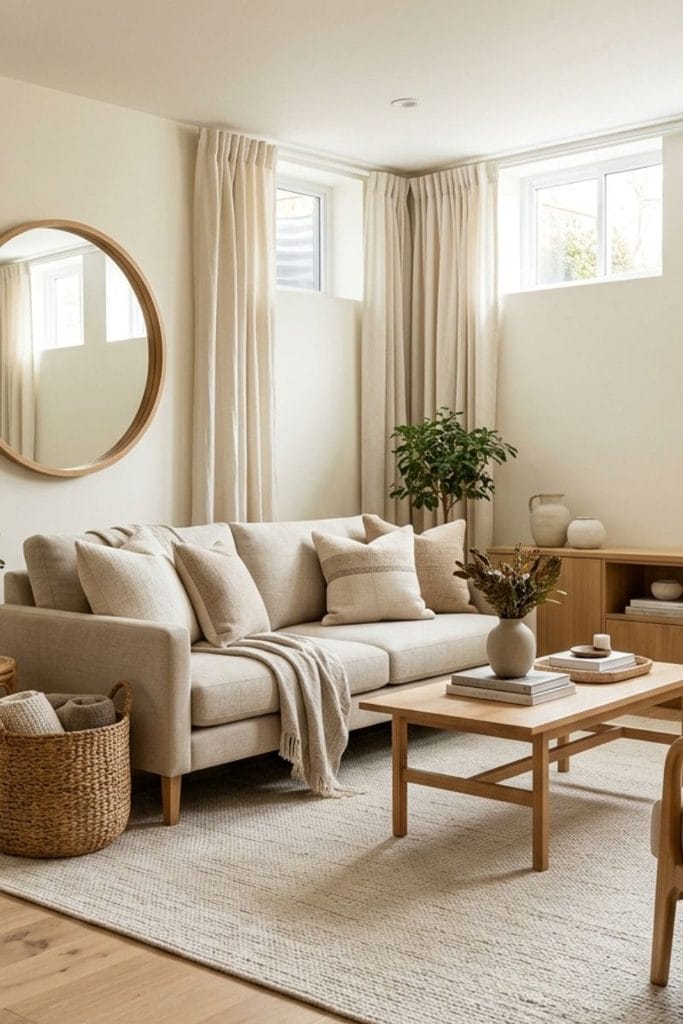
Dark basement walls do not always require bright white paint. A warm ivory such as creamy off-white paired with light oak flooring helps bounce available light while keeping the space comfortable.
Use curtains in a natural linen shade if the windows need privacy. Hang the rod about 4 to 6 inches above the window frame and extend it several inches past each side so the fabric does not block the glass when open.
A large mirror opposite the brightest window also helps spread daylight across the room. Choose a simple 30-to-36-inch round frame in oak or aged brass rather than a heavy dark frame.
9. Add a Flexible Game Corner
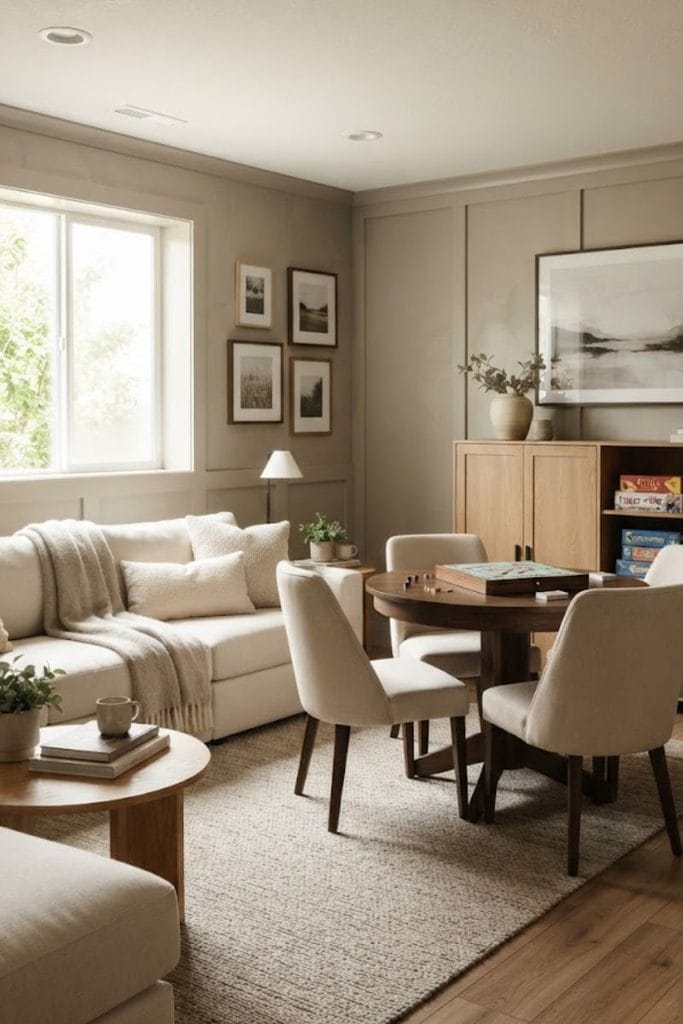
A basement living room often needs to work harder than an upstairs sitting room. A compact game corner beside the main sofa gives the family a separate activity zone without splitting the room into disconnected spaces.
Place a 48-inch round table with four upholstered chairs in one corner, leaving at least 30 inches around the table for comfortable movement. Use a closed cabinet nearby for cards, puzzles, controllers, and other small items.
Keep the game zone visually connected to the living room with the same wood finish or upholstery color. A walnut table with beige chairs works nicely beside a cream sectional and oak media console.
10. Soften Concrete and Hard Floors
Hard basement flooring often makes the room feel colder than an upstairs living area. A large area rug under the main seating group adds softness while also helping define where the living room begins.
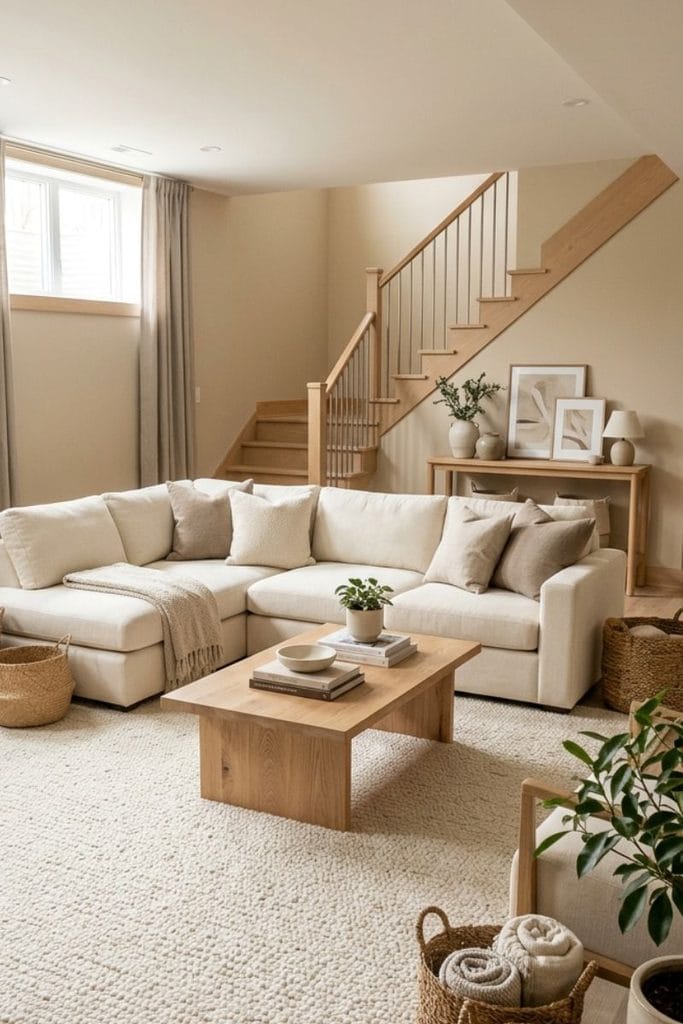
For a sectional measuring around 100 inches wide, an 8-by-10-foot rug gives enough coverage for the front legs of the seating and coffee table. Choose a low-pile wool blend in ivory, oatmeal, or muted taupe for a comfortable surface and easier cleaning.
Add a few woven baskets in natural seagrass beside the media console to repeat the rug’s texture. If the basement floor stays cool, layer the rug with a dense felt pad underneath for extra cushioning.
Ending
The best basement living room ideas do not depend on filling every corner with furniture. Start with the way your family uses the room, then build around the strongest feature, whether it is a fireplace, television wall, reading corner, or large sectional.
Keep the palette connected through warm ivory, oatmeal, natural oak, camel, and muted taupe. Add practical storage where clutter tends to collect, then use rugs, curtains, and layered lighting to make the basement feel as comfortable as the rest of the home.
FAQ
How do I make a basement living room feel cozy?
Start with warm lighting, a large soft rug, comfortable seating, and a warm neutral palette. Oatmeal, cream, camel, and natural wood work well together without making the room feel dark.
What color works best for a basement living room?
Warm off-white, creamy ivory, soft greige, and light taupe are useful choices for many basements. Test a paint sample on the wall first because artificial lighting and limited daylight affect how colors look.
How do I arrange furniture in a basement living room?
Begin with the main focal point, such as a fireplace or television. Place the sofa facing it, then add chairs or a loveseat while leaving clear walking paths around the seating group.
How do I brighten a dark basement living room?
Use light wall colors, pale flooring or rugs, mirrors, warm lamps, and window treatments in light linen. Keep bulky furniture in cream, oatmeal, or light beige instead of deep charcoal or black.
