
I painted my kitchen four different whites before I landed on Shoji White. The first one looked pink by 3 p.m. The second turned gray under my LED bulbs. Then a friend who works in home staging mentioned this soft, warm shade from Sherwin Williams, and I saw it in her client’s living room the following week. It sat somewhere between cream and white without leaning too far in either direction, and I knew it was the one.
If you’re standing in the paint aisle with five white swatches fanned out in your hand, wondering which one won’t fight your lighting or your wood floors, this guide walks through everything I wish someone had told me before I picked up a brush.
I’ve since used this color in a hallway repaint, a rental unit refresh, and a friend’s nursery, so the notes below come from watching it behave in real rooms across different seasons, not from a single swatch held up to a window for five seconds.
What Is Shoji White by Sherwin Williams?
Shoji White (SW 7042) sits in the warm neutral family, named after the paper screens used in traditional Japanese architecture. It reads as a soft, creamy off-white rather than a stark, cool white, which is why so many decorators reach for it on trim, cabinets, and walls alike.
The color code is SW 7042, and its Light Reflectance Value (LRV) sits at 74. A higher LRV means a color bounces more light around a room, so this shade brightens a space without the harsh, clinical feel of a pure white like Extra White.
Here’s a quick snapshot:
| Detail | Value |
|---|---|
| Color Name | Shoji White |
| Color Code | SW 7042 |
| LRV | 74 |
| Undertone | Warm, slightly gray-beige |
| Best Use | Walls, trim, cabinets, exteriors |
A Short Note on Where the Name Comes From
Sherwin Williams named this shade after shoji screens, the translucent paper panels used in traditional Japanese homes to filter and soften daylight. That connection makes sense once you see the color in person, since it carries that same soft, filtered glow rather than a flat, opaque white.
Undertones: What Shoji White Actually Looks Like in Person
This is where most guides fall short. This shade carries warm undertones with a touch of gray and a whisper of beige underneath. It won’t turn yellow the way some cream whites do, and it won’t go cold and blue-gray the way some greige shades do either.
In my own home decor projects, I’ve noticed the undertone shift depending on what sits next to it:
- Next to warm wood tones (oak, walnut), it leans creamier.
- Next to cool metals (chrome, brushed nickel), it reads a bit more neutral and balanced.
- Next to black or charcoal accents, it appears brighter and cleaner than it does on its own.
- Next to bold color, like navy cabinetry or a deep green front door, this shade settles into a soft, quiet backdrop instead of competing for attention.
In my experience, this shade behaves best when you already have warm elements in the room, such as wood floors, brass fixtures, or natural fiber rugs. It grounds those warm tones instead of clashing with them, and it avoids the flat, chalky look some budget whites give off in person.
How Lighting Changes the Way Shoji White Looks
Paint color never looks the same in two rooms, and this shade is no exception. Here’s what to expect based on your light exposure.
North-Facing Rooms
North light stays cool and flat throughout the day. This shade holds up well here since its warm undertone counters the cooler daylight, keeping the room from feeling gray or dull.
South-Facing Rooms
South-facing rooms get strong, warm sun most of the day. This shade brightens further in this light and edges closer to a soft cream, especially in the afternoon.
East and West-Facing Rooms
Morning sun (east) makes the color glow warmer for the first half of the day, then it settles into a neutral, balanced tone by afternoon. West-facing rooms flip that pattern, staying neutral in the morning and warming up as the sun sets.
Artificial Lighting
Under warm-toned LED or incandescent bulbs, this color leans creamier at night. Under cool-toned or daylight bulbs, it stays closer to true white. If you’re painting a room used mostly after dark, test a swatch under your regular bulbs before committing to a full gallon.
Designer Secret: Paint a large sample board, at least two feet square, and move it around the room at different times of day instead of painting a small patch directly on the wall. A movable board shows you how the color shifts with morning, midday, and evening light without leaving four different test patches on your walls.
Best Rooms for Shoji White
Shoji White works in nearly every room, but it shines brightest in a few spots.
Living Rooms
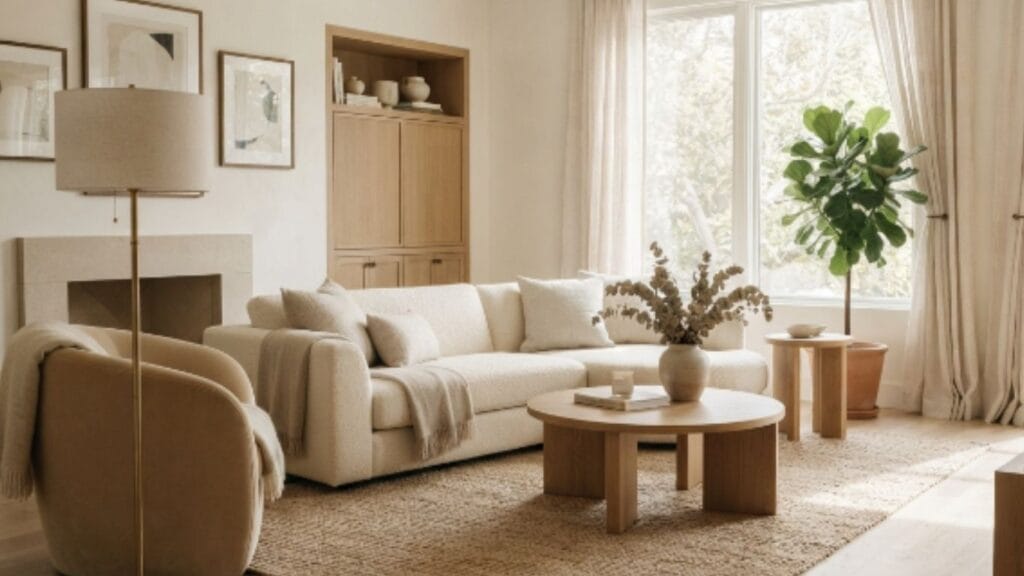
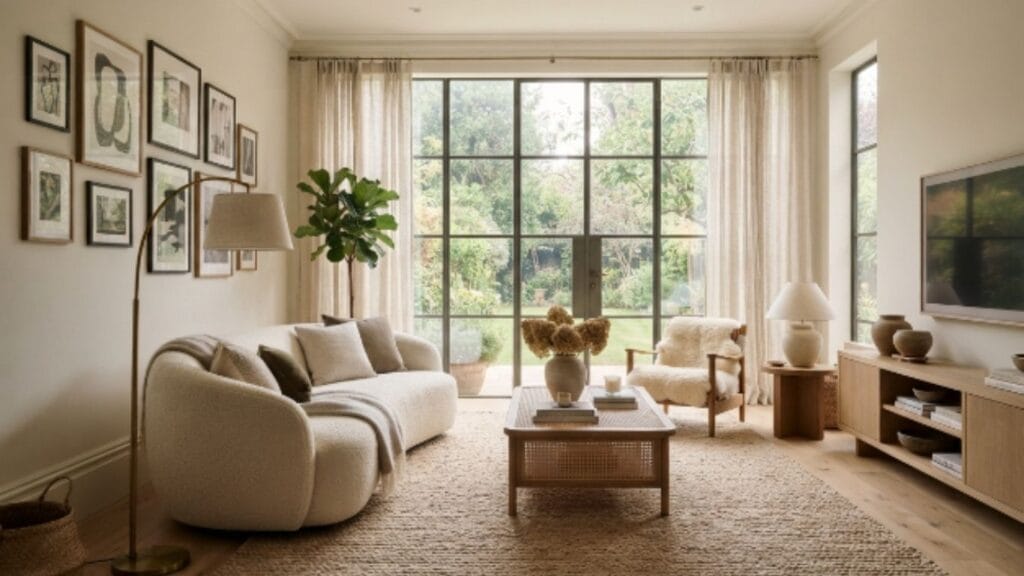
A living room painted in this shade feels open and calm without turning sterile. Pair it with a mix of textures, such as a boucle sofa, linen curtains, and a jute rug, for a layered, collected look. Because the LRV sits in the mid-70s, the walls stay soft and diffused rather than glaring, even in a room with large south-facing windows.
Kitchens
On cabinets, this shade softens a kitchen compared to a stark white, and it pairs beautifully with brass or unlacquered hardware. On walls, it gives white subway tile and butcher block counters room to stand out. Home cooks who spend hours under bright task lighting tend to prefer it over a cooler white, since it feels less sterile under bright overhead fixtures.
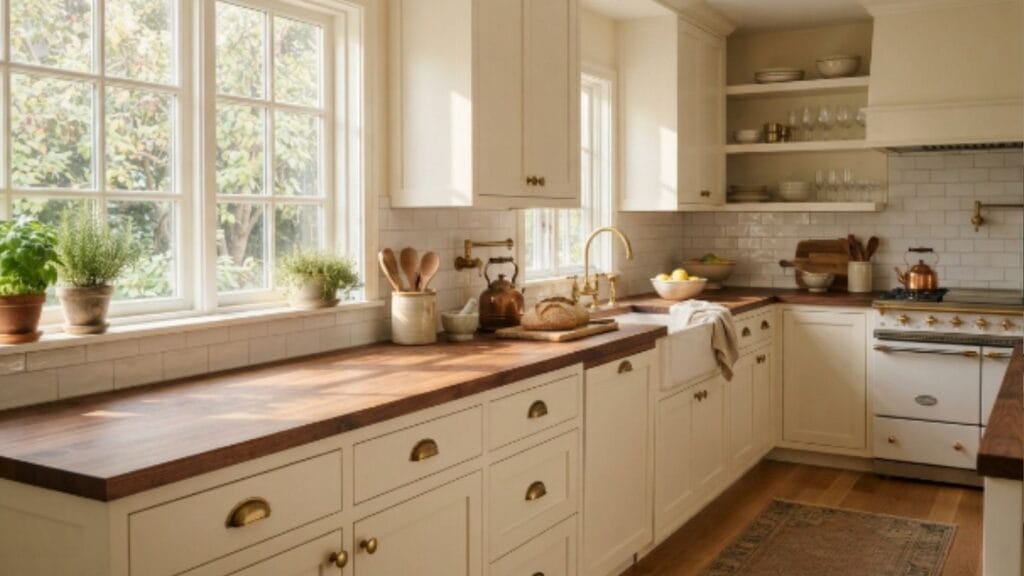
shoji White cabinets pair beautifully with brass or unlacquered hardware, and if you’re mixing metals elsewhere in the kitchen, our guide on mixing metals in the kitchen shows how to get that layered look right.
Bedrooms
Because it leans warm, this shade supports a restful, cocoon-like bedroom, especially paired with warm bedding tones like terracotta, sage, or soft camel. It reads soft and calm at night under lamp light, which matters for a room meant for winding down.
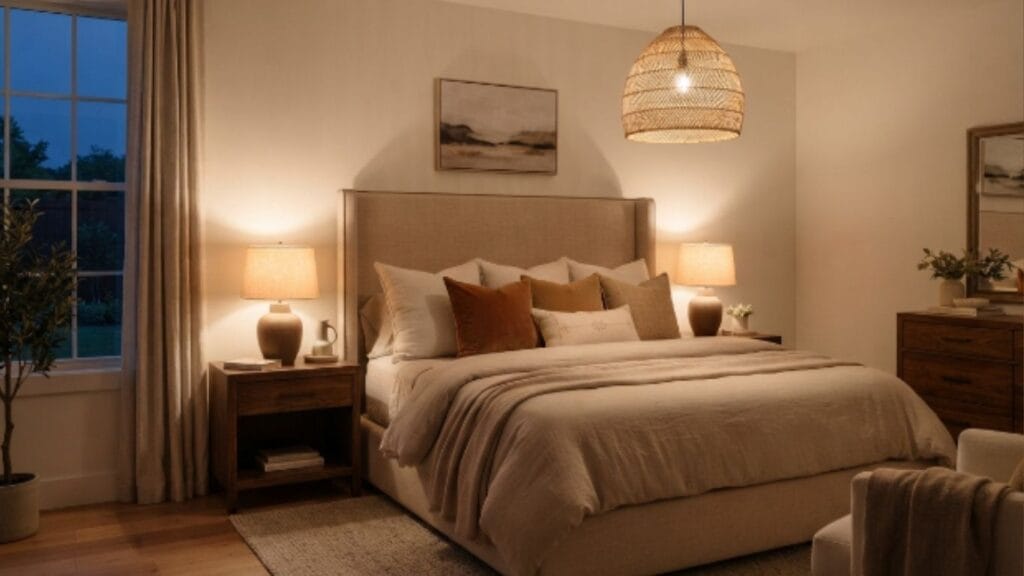
For more ideas on layering a bold accent wall against a soft neutral like this one, check out our guide to accent wall paint colors for a bedroom.
Trim and Millwork
Many decorators use this shade as a trim color against a bolder wall shade. It softens the contrast compared to a stark white trim and still reads crisp against darker paint, giving moldings and door frames a defined, finished edge without feeling harsh.
If you love the crisp look of Shoji White trim, our guide to board and batten wall ideas shows how to take that trim detail even further.
Exteriors
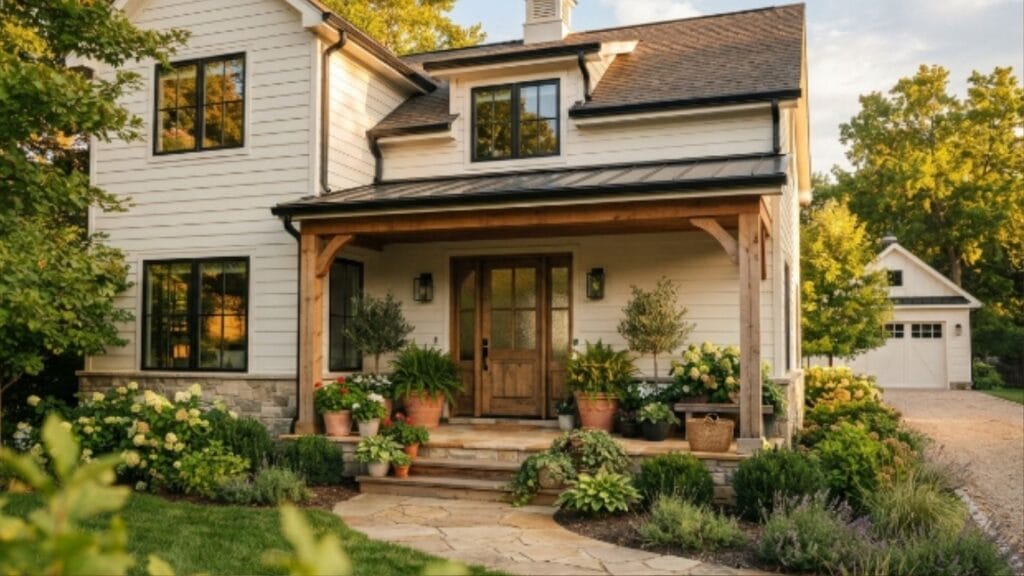
On siding or a front door surround, this shade gives a farmhouse or coastal home a soft, welcoming look without the flat, cold feel of a pure white exterior. It also hides dust and pollen streaks a little better than a bright white finish, an underrated perk if your home sits near a busy road or a lot of trees.
Bathrooms
Steam and bright vanity lighting expose every flaw in a paint job, so bathrooms need a shade that stays soft under close-up scrutiny. This warm off-white pairs naturally with brushed brass faucets, marble-look tile, and warm wood vanities, and a satin or semi-gloss sheen holds up to moisture far better than flat paint.
If you want to bring more color into the rest of the bathroom beyond the walls, our full guide to bathroom paint colors covers every trending shade for 2026.
Home Offices and Nurseries
A home office or nursery benefits from a calm, non-distracting backdrop, and this shade delivers exactly that. It reads soft during long work sessions under a desk lamp, and it plays well with wallpaper accent walls, gallery frames, or a bold rug without competing for attention.
Shoji White in Different Home Styles
A single paint color reads differently depending on the design style around it, so here’s how this shade fits a handful of popular looks.
Modern Farmhouse Paired with shiplap, black window frames, and warm oak floors, this warm off-white gives a farmhouse room its soft, lived-in warmth without tipping into a dated cream.
Coastal and Cottage Layered with woven textures, driftwood tones, and soft blue accents, this shade keeps a coastal room airy while avoiding the cold, sterile edge of a stark white.
Transitional In a transitional space that blends traditional furniture with cleaner modern lines, this color works as a quiet backdrop that lets furniture silhouettes and textiles carry the visual interest.
Minimalist Paired with matte black fixtures, natural stone, and simple linear furniture, this shade softens a minimalist room just enough to keep it from feeling cold or clinical.
Traditional Against crown molding, wainscoting, and classic furniture silhouettes, this warm off-white reads timeless rather than trendy, which matters if you plan to keep the color for a decade or more.
Colors That Pair Well With Shoji White
Pairing colors correctly makes or breaks a room, so here’s a breakdown by style.
Warm and Earthy Palette
- Terracotta accents
- Warm caramel wood tones
- Sherwin Williams Kilim Beige for deeper walls
Coastal and Airy Palette
- Soft blue-gray textiles
- Natural rattan and wicker
- Sherwin Williams Sea Salt for an accent wall
Moody Contrast Palette
- Sherwin Williams Iron Ore on trim or doors
- Black matte hardware
- Deep green cabinetry in a connected space
Soft Neutral Layering
- Sherwin Williams Kilim Beige or Accessible Beige on adjoining walls
- Warm taupe upholstery
- Woven wood blinds instead of metal ones
Trim Pairings If you’re using this shade on walls, both Extra White and Pure White work as brighter trim options, while sticking with the same color on the trim too creates a soft, monochromatic look throughout the room.
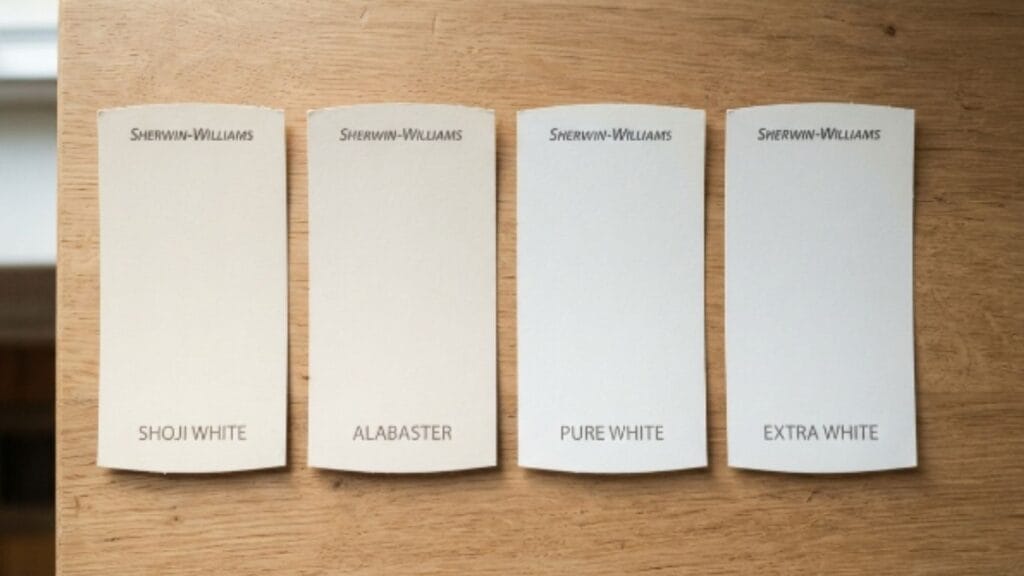
Shoji White vs Similar Sherwin Williams Whites
People often confuse this shade with a handful of other popular shades, so here’s a side-by-side comparison to clear things up.
| Color | LRV | Undertone | Best For |
|---|---|---|---|
| Shoji White (SW 7042) | 74 | Warm, gray-beige | Whole-home warmth |
| Alabaster (SW 7008) | 82 | Warm, slightly yellow | Brighter, softer rooms |
| Pure White (SW 7005) | 84 | Neutral, cool-leaning | Modern, crisp spaces |
| Extra White (SW 7006) | 86 | Cool, bright | Trim, high-contrast looks |
This shade sits lower on the LRV scale than these other three, giving it a cozier, more grounded feel rather than the brighter, airier look of Alabaster or Pure White. If your room already gets plenty of natural light, that lower LRV keeps the space from feeling washed out the way a brighter white sometimes does.
How Much Paint You’ll Need and What It Costs
A gallon of Sherwin Williams paint covers roughly 300 to 400 square feet with one coat, depending on the wall texture and the paint’s sheen. Most rooms need two coats for even coverage, especially over a darker existing color.
For a standard 12-by-12-foot room with 8-foot ceilings, plan on one gallon for two coats of trim paint and one to two gallons for the walls. Sherwin Williams paint in this line typically runs in the mid-range to premium price bracket compared to big-box store brands, though prices shift with promotions throughout the year.
A short cost-saving tip: buy a sample pot first, test it properly, then order your full gallons once you’re confident in the sheen and finish you want. It costs less than repainting an entire room twice.
Choosing the Right Finish and Paint Line
Sherwin Williams sells this shade across several product lines, and the finish you pick matters as much as the color itself.
- Duration or Emerald (walls): A washable, self-priming option that works well in high-traffic rooms like kitchens and hallways.
- ProClassic (trim and cabinets): A durable, smooth finish built for surfaces that get touched and bumped often.
- SuperPaint (walls, budget-friendly): A solid mid-range option for bedrooms or living rooms with lower foot traffic.
For walls, a matte or eggshell sheen hides small dents and rolling marks. For trim, cabinets, and doors, a satin or semi-gloss sheen wipes clean and holds up to daily contact.
How to Test Shoji White Before You Commit
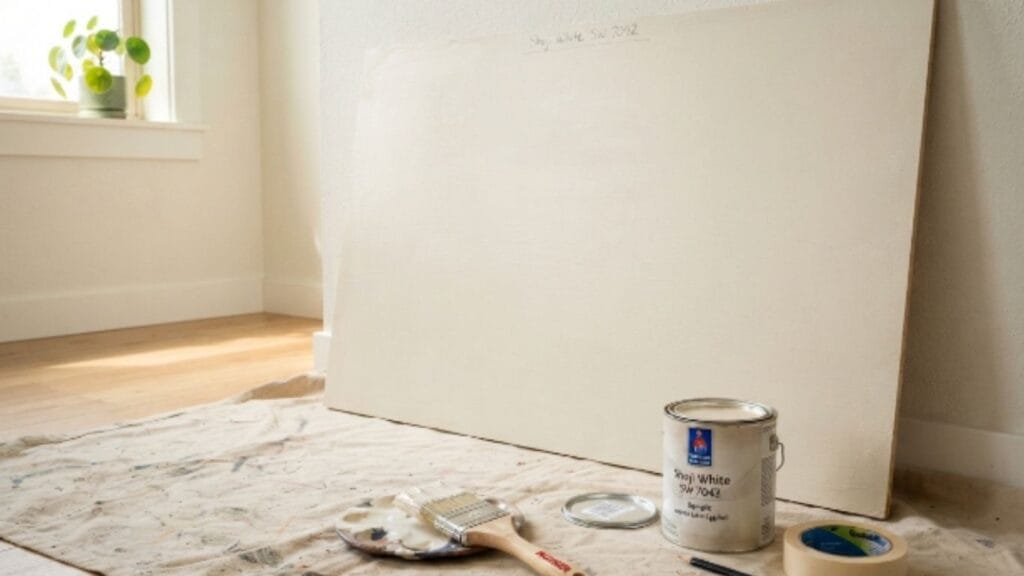
Skipping a test swatch is the most common decorating mistake I see. Here’s a short process to follow before you buy a full gallon:
- Order a peel-and-stick sample or a sample pot directly from Sherwin Williams.
- Apply it to at least two walls in the room, since light hits each wall differently.
- Check the color at 9 a.m., 1 p.m., and 8 p.m. with your regular lights on.
- Hold your flooring sample, cabinet finish, or fabric swatches next to the paint to check for clashing undertones.
- Live with the sample for two to three days before painting the full room.
For an even easier preview, the Sherwin Williams color visualizer lets you upload a photo of your own room and preview this shade digitally before you buy a single sample pot.
Common Mistakes to Avoid With Shoji White
- Skipping the primer step: Warm whites show old wall colors bleeding through more easily than a pure white does, so prime dark or bold walls before applying this shade.
- Ignoring the sheen: A flat or matte sheen on walls hides imperfections better, while a satin or semi-gloss sheen on trim holds up to cleaning.
- Pairing it with the wrong cool tones: Cool gray stone counters or icy blue accents fight against this shade’s warmth, so lean toward warm or neutral materials instead.
- Painting only one wall as a test: A single test patch won’t show how the color behaves across the whole room’s lighting, so always test on more than one wall.
- Rushing the drying time between coats: Recoating too soon traps moisture and leads to an uneven, streaky finish, so follow the label’s dry-time guidance closely.
Does This Color Hold Up for Resale?
Buyers touring a home tend to respond well to warm, soft neutrals over stark, cold whites, since a warm wall color photographs well and feels welcoming during a walkthrough. Real estate agents often recommend a neutral warm white for exactly this reason, since it appeals to a wide range of buyer tastes without pushing a strong design opinion onto the space.
A soft warm off-white also gives the next owner room to layer in their own furniture and art without a jarring wall color to work around first. If you’re prepping a home for sale, this shade is a safe, broadly appealing pick for main living areas, hallways, and bedrooms.
Working With a Professional Painter
If you’re hiring a painter instead of doing the work yourself, bring the exact color code, SW 7042, along with the sheen you want for each surface. Ask your painter about a tinted primer for any wall coming from a dark or bold existing color, since that step alone prevents most of the streaking and shadowing issues homeowners run into later.
It also helps to ask for a small test patch painted directly by your painter’s crew, since the sprayer or roller they use might apply slightly differently than a DIY brush-and-roller job. A five-minute test patch from the actual crew catches inconsistencies before they cover an entire room.
Quick Recap
- Shoji White (SW 7042) is a warm, soft off-white with an LRV of 74.
- It holds warmth in cool north-facing rooms and brightens further in sunny south-facing rooms.
- It works well in living rooms, kitchens, bedrooms, trim, and exteriors, and it suits farmhouse, coastal, transitional, and minimalist styles alike.
- It pairs naturally with warm wood, brass hardware, and earthy or coastal palettes.
- Testing a large sample board across different times of day prevents costly repainting.
Frequently Asked Questions About Shoji White
Is Shoji White a warm or cool white?
Shoji White carries warm undertones with a touch of gray and beige, so it reads as a warm white rather than a cool or stark white.
What is the LRV of Shoji White?
The Light Reflectance Value of Shoji White is 74, which places it in the mid-to-high range for brightness among Sherwin Williams whites.
Does Shoji White work in a room with little natural light?
Yes. Its warm undertone helps a dim or north-facing room feel less flat and gray compared to a cooler white shade.
What trim color works best with Shoji White walls?
Extra White or Pure White both create a soft contrast against these walls, while matching the same color on the trim gives a quiet, monochromatic finish.
Is Shoji White similar to Alabaster?
They sit close together, but Alabaster has a higher LRV and a slightly softer, more yellow-leaning warmth, while Shoji White leans a bit more gray-beige and grounded.
Is Shoji White a good choice for kitchen cabinets?
Yes, it works well on cabinets, especially paired with brass, unlacquered hardware, and butcher block or wood counters. A satin or semi-gloss finish holds up best to daily wear in a kitchen setting.
How many coats of Shoji White do I need?
Most rooms need two coats for even, solid coverage, especially over a darker existing wall color or bare drywall. A tinted primer under the first coat cuts down on streaking and reduces how much paint you use overall.
