
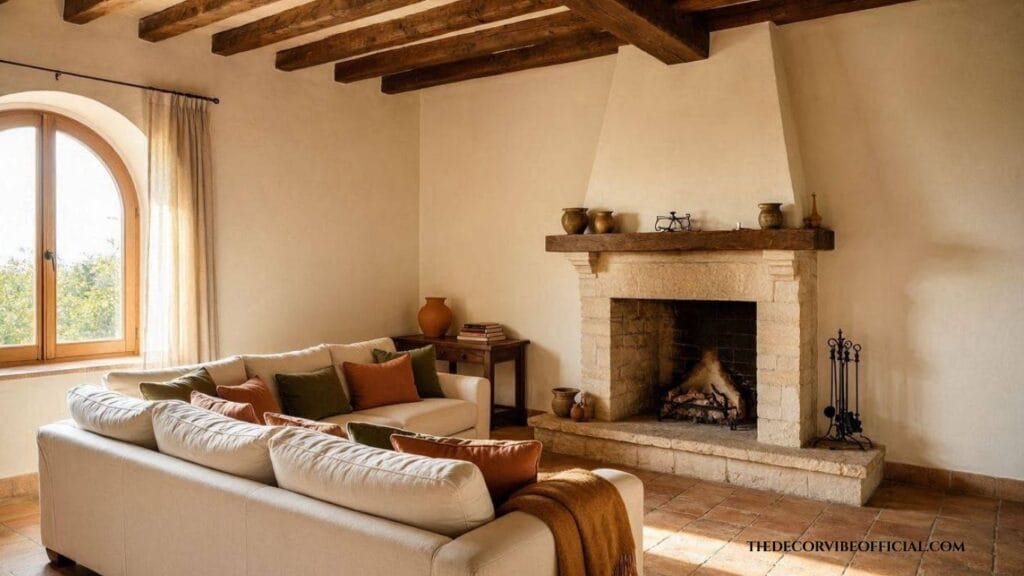
Our first house had a living room that looked like every other living room on the block. White walls, a gray sofa, a coffee table from a box store. Nice enough, but it had no soul. Then we spent a week in a rented farmhouse outside Siena, and something clicked.
The living room there had cracked plaster walls the color of warm honey, a stone fireplace big enough to sit inside, and furniture that looked like it had been in the family for generations. We came home and spent the next year chasing that feeling, one piece at a time. That’s how we landed on Tuscan living room ideas as our style, and it’s the warmest a room in our house has ever felt.
If you’ve ever walked into a space and felt instantly settled, like you could kick your shoes off and stay a while, there’s a good chance it borrowed something from Tuscany. People love this look because it doesn’t chase trends. It leans on texture, warmth, and things that age well instead of things that look perfect on day one. This guide covers everything you need, from the elements that actually define the style to the mistakes that make a room look staged instead of lived-in.
What Defines Tuscan Living Room Style
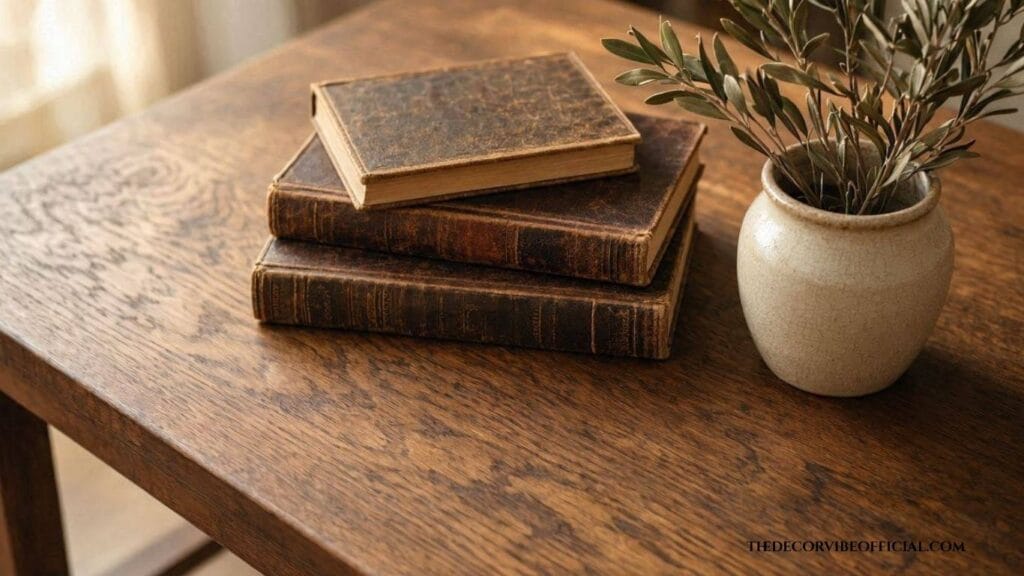
Tuscan living room ideas all share a few things in common: warm color, natural material, and a sense that the room grew over time instead of arriving in one delivery truck. Think rustic Italian countryside, not a hotel lobby trying to look Italian.
The style borrows from Tuscany’s farmhouses and villas. Rooms feel grounded and a little imperfect on purpose. A wall doesn’t need to be perfectly smooth. A table looks better with a few nicks in it.
Old-World Charm Over Polish
This is the detail people miss most. A true Tuscan living room isn’t shiny or new-looking. Wood shows grain, stone shows texture, and metal is allowed to darken with age.
Layered, Not Matched
Nothing in a Tuscan room matches perfectly, and that’s the point. A leather chair sits next to a linen sofa. A carved wood side table sits under an iron lamp. The mix is what makes it feel collected rather than bought as a set.
Why Tuscan Living Room Ideas Work So Well
A living room carries more daily use than almost any other room in the house. This style works there because it’s built around comfort first, decoration second.
Warm tones make a room feel smaller and cozier, which is exactly what you want in the space where you unwind. Natural materials like stone and wood also hold up to real life, kids, pets, spilled coffee, better than delicate finishes do.
There’s also a psychological piece here. Rooms full of natural texture and warm light tend to lower stress, according to interior design research on biophilic spaces. A Tuscan living room leans into that naturally, since it’s built from materials pulled straight from the earth.
It also works because it forgives imperfection. An older home with uneven walls or a slightly crooked doorframe doesn’t fight this style, it supports it. That’s a big reason this look has stayed popular in older homes long after sleeker trends have come and gone, the same way our board and batten wall ideas work well in imperfect hallways rather than against them.
Key Elements and Must-Have Pieces
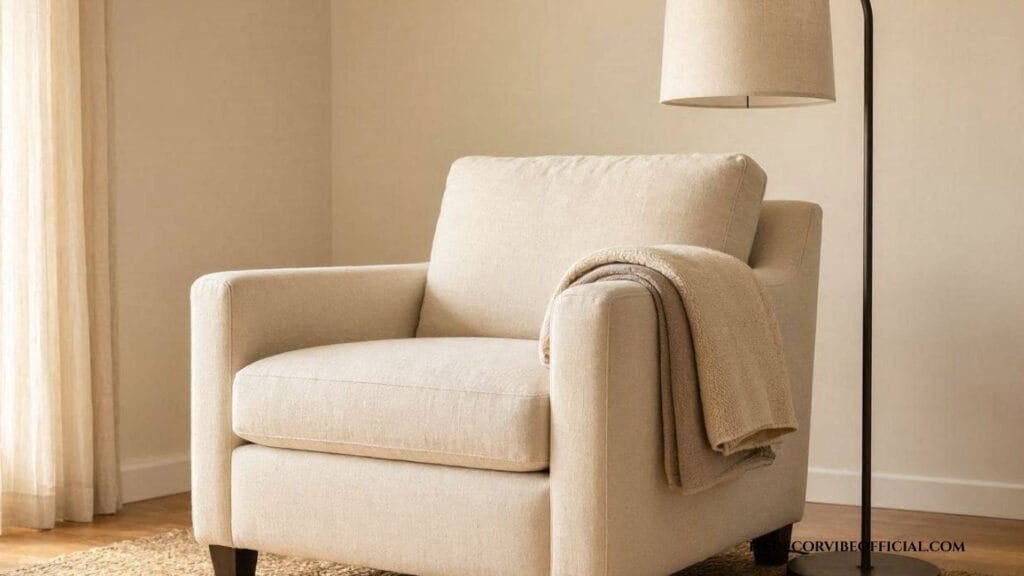
Every strong Tuscan living room shares a handful of anchor pieces. You don’t need all of them at once, but the more you layer in, the more authentic the room feels.
A short list before the table below, since these are the pieces worth prioritizing first if you’re starting from scratch.
- A substantial wood coffee table with visible grain
- An exposed or faux wood beam ceiling detail
- A stone or plaster-finish fireplace surround
- Wrought iron light fixtures or curtain rods
- A large woven or Persian-style area rug
- Deep-seated upholstered furniture in linen or leather
| Element | What to Use / How It Looks |
|---|---|
| Fireplace | Stone or textured plaster surround, often the visual anchor of the room |
| Ceiling | Exposed wood beams, real or faux, stained a warm walnut tone |
| Flooring | Terracotta tile, wide-plank wood, or a rug layered over stone-look flooring |
| Seating | Deep sofas in linen or leather, often with turned wood legs |
| Lighting | Wrought iron chandeliers, lantern-style sconces, warm bulb temperature |
| Accents | Olive branches, dried florals, ceramic urns, aged brass |
Fabric and Texture Choices
Linen and leather carry most of the seating in a Tuscan living room, and both age better than synthetic blends. Linen wrinkles a little and softens with wash, which fits the lived-in feel this style is after.
Wool rugs, woven baskets, and rough-hewn wood round out the texture story. If you already have smooth, flat surfaces from another style, like the mixed metal finishes we cover in mixing metals in the kitchen, the living room is a good place to introduce more texture instead of repeating that same polish.
Color Palette and Materials
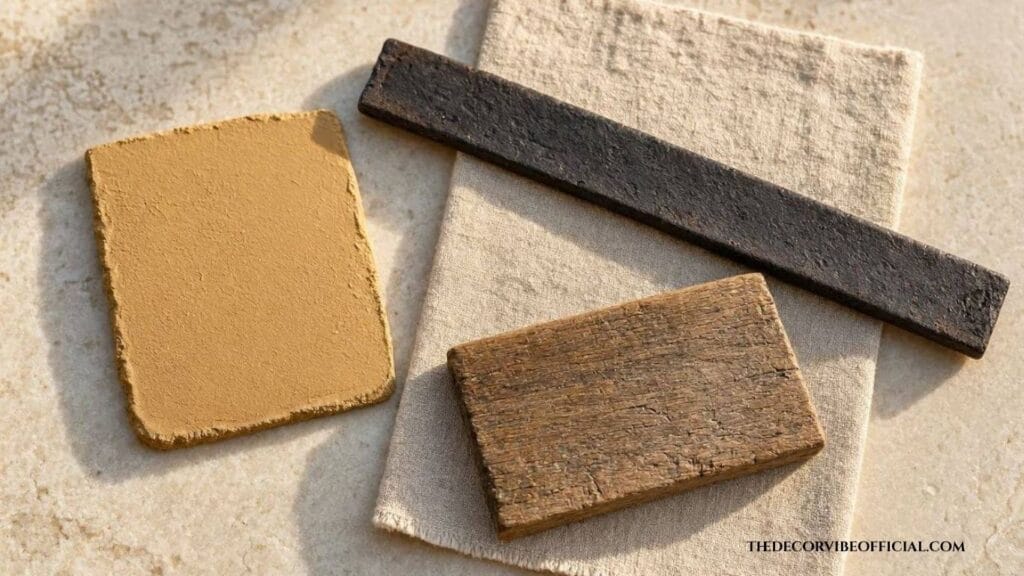
This is where a lot of Tuscan living room ideas go wrong. People reach for orange and red and end up with something closer to a pizza restaurant than a countryside villa.
The real palette is quieter than that. Think warm neutrals first, with color used as an accent rather than the main event.
Base Colors
Lean on warm cream, ochre, terracotta, olive, and deep browns. Walls often use a limewash or plaster-effect paint, which adds texture even before you hang a single piece of art.
Materials That Carry the Look
Stone, aged wood, wrought iron, linen, and leather do most of the work here. Avoid anything glossy, chrome finishes, high-shine lacquer, or bright white walls fight against the whole point of the style.
Budget-Friendly Ways to Get the Look
You don’t need a villa budget for this. Some of the most convincing Tuscan living rooms we’ve seen came together with paint, secondhand furniture, and patience.
Start with the walls. A limewash-effect paint in a warm ochre or terracotta tone costs about the same as any premium paint and instantly sets the mood. If you’re not ready to commit to a full wall, try it as an accent on one wall first, similar to the approach in our accent wall ideas.
Secondhand and estate sale furniture is your best friend here. A worn leather chair or a carved wood table looks more authentic used than new, and it costs a fraction of the price.
A few more budget moves worth trying:
- Swap out lampshades for woven or linen ones instead of buying new lamps
- Add faux wood beams made from lightweight polyurethane instead of real timber
- Layer thrifted rugs instead of one large new one
- Use dried olive branches or wheat stems instead of fresh florals that need replacing
For more low-cost styling tricks that apply across rooms, our budget decor and DIY ideas cover a lot of the same approach.
Common Mistakes to Avoid
A few missteps show up again and again in Tuscan-style rooms, and they’re easy to fix once you know what to look for.
Everything matching. A living room where the sofa, chairs, and tables all come from one collection loses the collected-over-time feel that makes this style work.
Cold lighting. Bright white LED bulbs clash hard with warm plaster and wood tones. Stick to warm white, closer to candlelight than daylight.
Too much orange. Terracotta is a warm neutral, not a bright accent color. Used everywhere, it starts to look more like a themed restaurant than a home.
Skipping texture. A room with warm colors but flat, smooth surfaces still feels a little off. Rough plaster, woven rugs, and grainy wood are what sell the look.
Stopping at the living room. Tuscan style loses some of its impact if the living room feels warm and rustic but the entryway or kitchen next to it is stark white and modern. Carrying even a small amount of the same warmth into your entryway decor or kitchen and dining space helps the whole home feel intentional instead of like one themed room in an otherwise different house. <blockquote> <strong>Designer Secret:</strong> Layer at least three textures in every seating area, wood, wrought iron, and woven fabric. That combination is what separates a real Tuscan living room from one that just uses the right paint color. </blockquote>
How to Style Tuscan Living Room Ideas for Different Home Sizes
This style is often shown in sprawling villas, which can make it feel out of reach in a smaller home. It’s not. The proportions just need to shift.
Small Living Rooms and Apartments
Keep the beams, the warm wall color, and the wrought iron accents, but scale down the furniture. One substantial wood coffee table is plenty. Skip the oversized sectional in favor of a smaller sofa paired with a single accent chair, similar to how we approached scale in small-space home office decor.
A pale terracotta or warm cream on the walls, rather than a deep ochre, also helps a small room breathe. Save the darker, richer tones for a single accent wall.
Layering also matters more in a small room, since there’s less floor space to fill with big statement pieces. The same layering approach we recommend for arranging bedroom pillows without a headboard applies here too: a few well-chosen textures do more work than a lot of small accessories.
Mid-Size Living Rooms
This is where the style has the most room to work. A stone fireplace surround, a large area rug, and a mix of leather and linen seating all fit comfortably without crowding the space.
You have enough square footage here to add one true statement piece, an oversized armoire, a carved wood bench at the foot of the seating area, or a large botanical print in a distressed frame, without the room feeling stuffed. Just resist the urge to add a second statement piece right next to it. One anchor per zone keeps the room feeling curated instead of cluttered.
Large or Open-Concept Living Rooms
Bigger rooms can handle the full villa treatment: exposed beams across the whole ceiling, a large iron chandelier, and furniture grouped into two conversation areas instead of one. Anchor each grouping with its own rug so the space doesn’t feel like one giant, unbroken room.
Where to Shop for Tuscan Living Room Pieces
You don’t need a specialty Italian furniture store to pull this off. A mix of sources usually gets you closer to the authentic look than buying an entire matching set from one retailer.
Estate sales and antique shops are worth checking first for wood tables, iron light fixtures, and carved accent pieces. Facebook Marketplace and local thrift stores are good for large upholstered pieces like sofas and armchairs, especially leather ones that already have some worn-in character.
For new pieces, look for retailers that carry limewash paint, linen upholstery, and wrought iron lighting specifically, rather than general big-box furniture stores. Search terms like “rustic Italian” or “old-world” tend to surface the right style faster than “Tuscan” alone, since that word gets used loosely online.
If you want more room-specific shopping guidance, our living room decor category has additional breakdowns by piece type.
Don’t overlook lighting shops and hardware stores for the small details either. Wrought iron curtain rods, aged brass drawer pulls, and lantern-style sconces do more to sell the style than another throw pillow. If you’re furnishing a home office nearby, the same warm, natural approach we use in home office wall decor ideas carries over well, so the two rooms feel connected instead of like two different homes.
Real Rooms Using Tuscan Living Room Ideas
Seeing the style applied helps more than any list of rules. Here are five real-feeling examples pulled together from different budgets and home sizes.
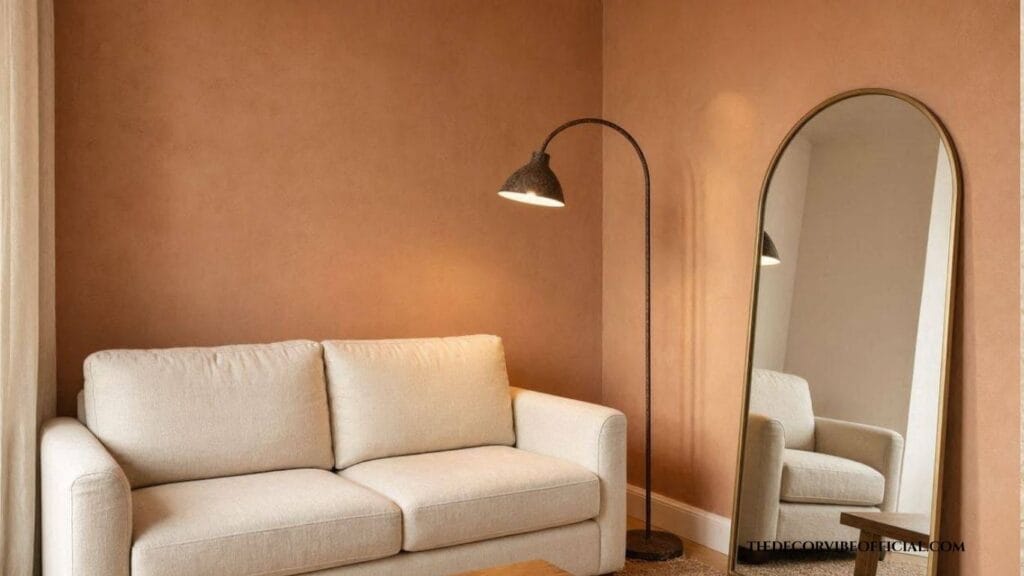
Room: Small city apartment living room Look: Cream linen sofa, walnut coffee table with turned legs, single arched-top mirror leaning against the wall, one wrought iron floor lamp in the corner
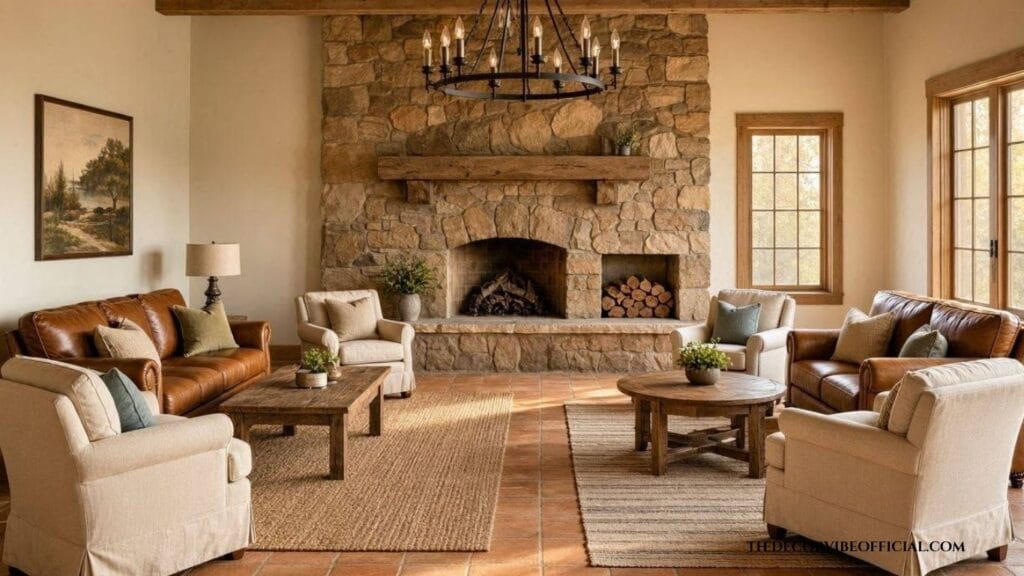
Room: Mid-size suburban living room Look: Stone-surround fireplace, deep leather armchair paired with a linen loveseat, layered vintage rug over wide-plank flooring, dried olive branches in a ceramic urn
Room: Open-concept living and dining space Look: Full exposed wood beam ceiling, two seating groups anchored by separate rugs, large iron chandelier over the main grouping, terracotta tile flooring throughout
Room: Rental-friendly living room Look: Removable limewash-effect wallpaper on one accent wall, faux wood beam mounted above the sofa, thrifted brass table lamps, woven jute rug layered under a smaller vintage runner
Room: Farmhouse-style great room Look: Reclaimed wood coffee table, oversized stone fireplace as the room’s anchor, mixed leather and linen seating, wrought iron curtain rods with linen drapery
Frequently Asked Questions
What colors work best for Tuscan living room ideas?
Warm neutrals lead the way: cream, ochre, terracotta, and olive. Use deeper tones like rust or espresso brown as accents rather than covering the whole room in one saturated color.
Can I get a Tuscan living room look if I rent my home?
Yes. Removable limewash-effect wallpaper, faux wood beams that mount without drilling into the ceiling, and secondhand furniture let you build the look without touching a landlord’s walls.
Is Tuscan style the same as Mediterranean style?
They overlap but aren’t identical. Tuscan design pulls specifically from the Italian countryside with warm terracotta and rustic wood, while Mediterranean style pulls in more coastal blue and white influences from Greece and southern Spain.
How much does it cost to redo a living room in this style?
A full remodel with real stone and beams can run several thousand dollars, but a paint refresh, secondhand furniture, and a few new accents can update a room for a few hundred dollars.
What lighting works best for this style?
Warm-toned bulbs in wrought iron or aged brass fixtures. Skip cool white LEDs and anything with a bright chrome or glass finish, since both clash with the room’s warm, textured feel.
Final Thoughts
The best Tuscan living room ideas aren’t about buying an entire matching collection in one weekend. They come together slowly, one warm-toned wall, one worn leather chair, one iron lamp at a time. Next time you walk into a room and feel that instant, settled calm, you’ll know exactly what made it work.
