
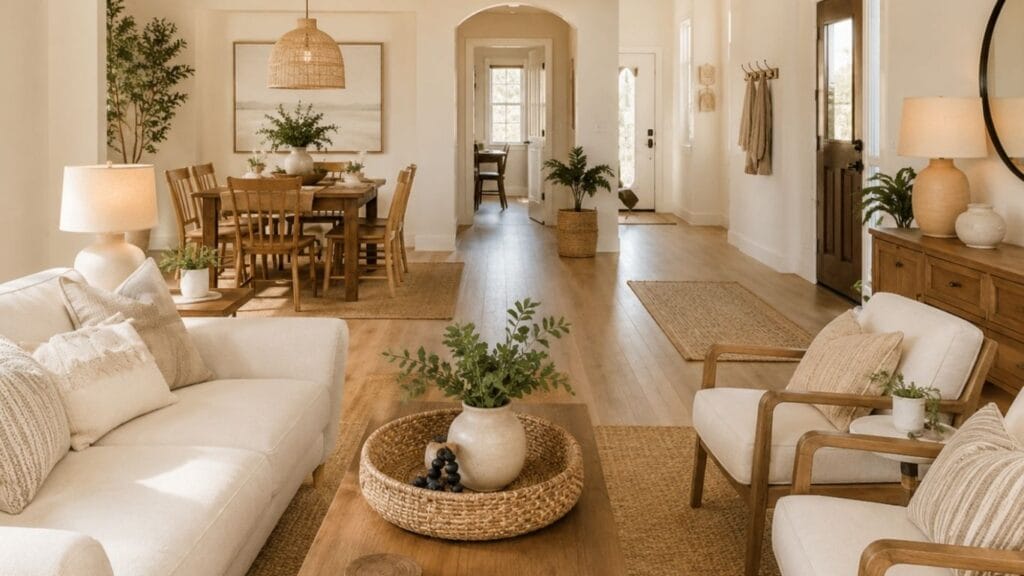
A beautiful home doesn’t need more stuff. It needs a few smart choices in the right places.
Your home should feel good before it looks perfect. The right interior design ideas help you create rooms with better flow, useful storage, comfortable lighting, and a style you’ll still enjoy years from now. I think the secret is choosing a few strong design details and repeating them naturally throughout your home.
1. Start With a Warm Neutral Base
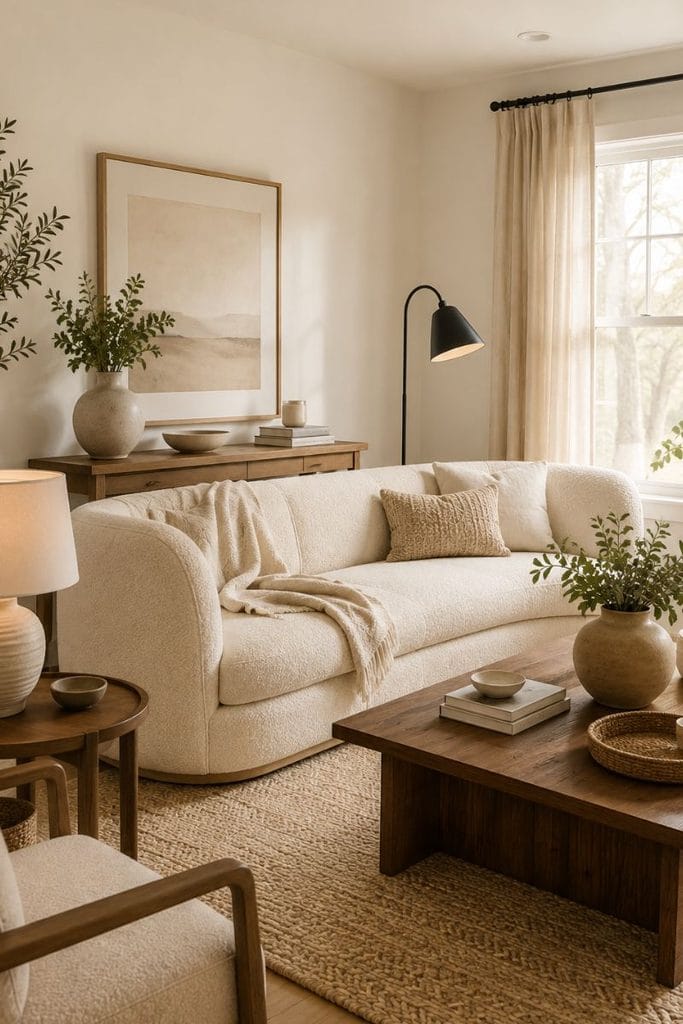
Warm white walls give almost any room a calm starting point. Try a creamy white with a soft beige undertone instead of a cold blue-white, especially in rooms with north-facing windows. Pair the walls with light oak furniture, oatmeal linen curtains, and a 6-by-9-foot textured rug to create a relaxed foundation.
In my experience, a neutral base makes decorating much easier because artwork, plants, wood tones, and accent colors have room to stand out. You also get more freedom to change pillows, throws, and smaller accessories without repainting the whole room.
For a little contrast, bring in one darker element such as a walnut coffee table or a matte black floor lamp. Keep the larger furniture pieces light and simple so the room still feels open.
Explore our Cozy Minimalist Bedroom Ideas for another example of how warm neutrals, natural wood, and soft fabrics work together.
2. Create One Strong Focal Wall
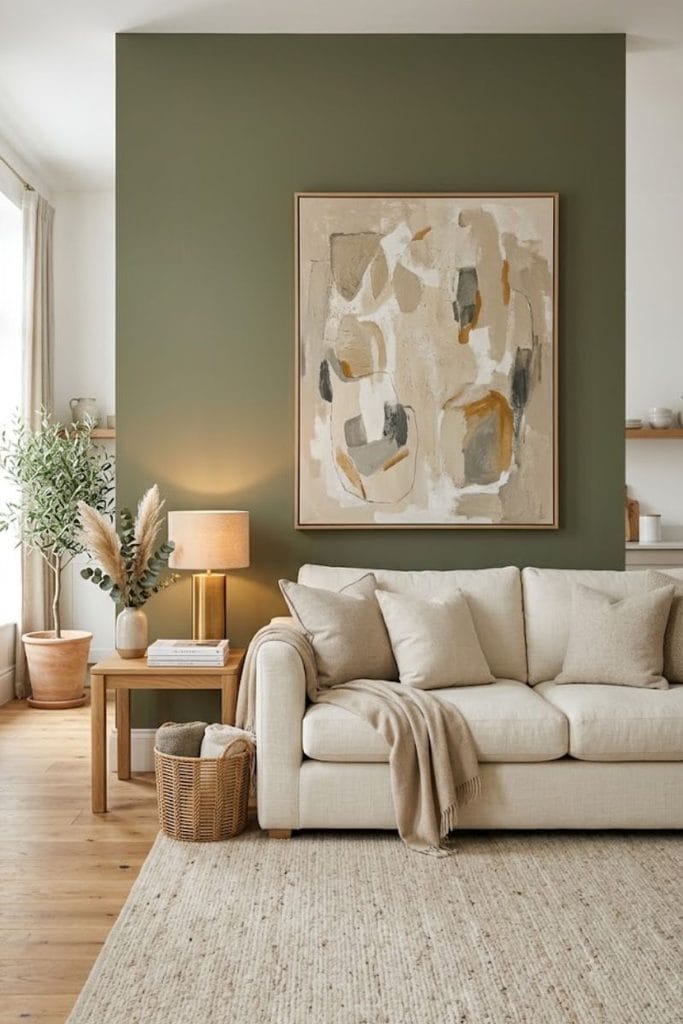
A room often feels unfinished when every wall receives the same amount of attention. Pick one wall and give it a clear purpose. A living room wall behind the sofa works well with oversized abstract artwork, while a bedroom wall behind the headboard suits vertical wood slats or a muted limewash finish.
For a softer look, paint one wall in a shade such as dusty olive, mushroom beige, or muted clay. In a room with 8-foot ceilings, keep the artwork large enough to fill roughly two-thirds of the available wall width.
I think one strong focal point makes interior design ideas feel much easier to apply. Instead of buying ten small decorations, you create one memorable feature and let the surrounding pieces support it.
For bedrooms, a warm oak slat wall paired with cream bedding gives the room depth without making it feel dark. In a living room, a large framed canvas above a low-profile sofa creates a similar effect.
See our Modern Wall Art Ideas for more ways to make a blank wall feel intentional.
3. Mix Wood Tones With Care
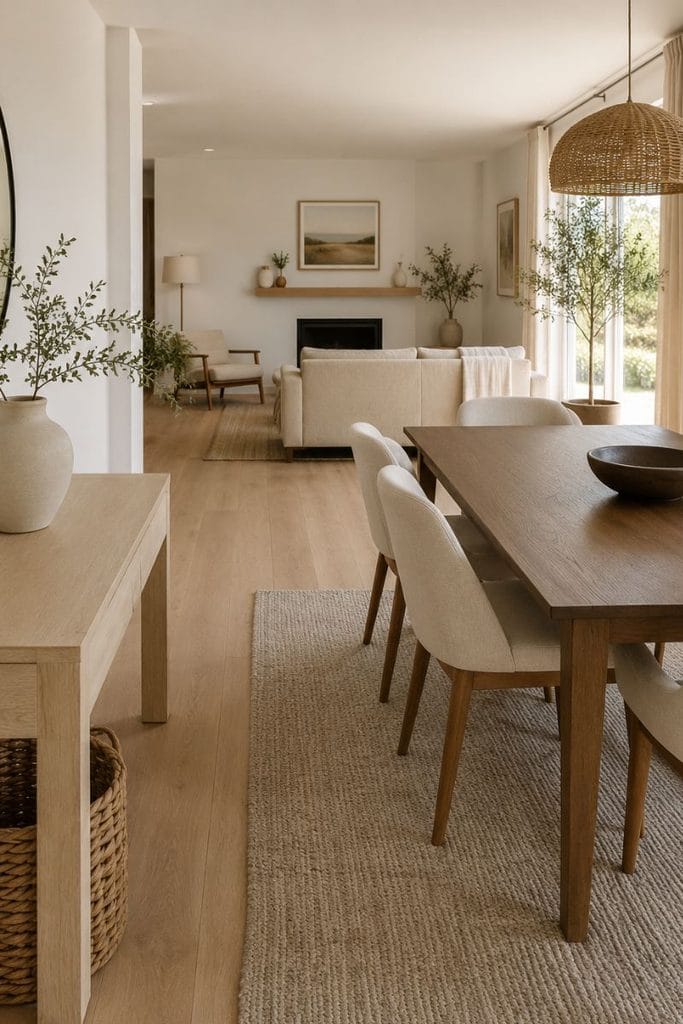
Matching every wood finish often makes a room feel more like a showroom than a home. A better approach is to combine two or three related wood tones. Try light oak flooring with a medium walnut coffee table and a pale ash console.
The trick is repetition. If you use walnut on one table, repeat a similar brown tone in a picture frame or small accent piece. This creates a visual connection without forcing every item to match.
I personally love this approach in open-plan homes because wood helps connect separate zones. A walnut dining table, oak kitchen stools, and a medium wood console near the entryway can sit together beautifully when the fabrics and wall colors remain consistent.
Keep the strongest wood tone on one or two larger pieces. Smaller wood accessories should support the palette rather than compete with it.
Browse our Small Console Table Ideas for a practical way to bring wood furniture into an entryway or living space.
4. Make Lighting Part of the Decor
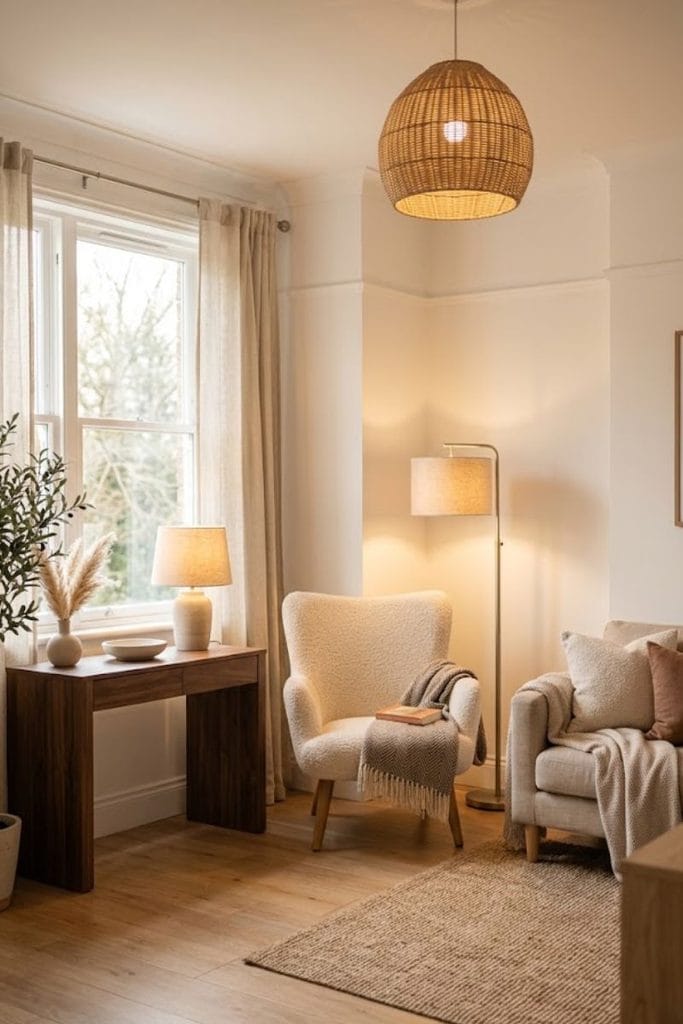
Good lighting changes the entire mood of a room. Instead of depending on one ceiling fixture, create three levels of light using an overhead fixture, a table or floor lamp, and a lower accent light.
For a living room, try a 2700K warm LED floor lamp beside a reading chair. Add a table lamp on a console or side table, then use the ceiling fixture for brighter moments such as cleaning or entertaining.
This is one of my favorite interior design ideas because lighting improves both style and everyday comfort. A linen-shaded lamp gives a softer glow than a bare bulb, while a ceramic lamp base adds another layer of texture.
In bedrooms, place matching lamps on both nightstands or use wall sconces about 18 to 24 inches above the mattress surface. In a dining area, a pendant centered over the table gives the eating zone a clear visual anchor.
Explore our Aesthetic Nightstand Decor Ideas for simple bedroom lighting and surface styling inspiration.
5. Give the Entryway a Purpose
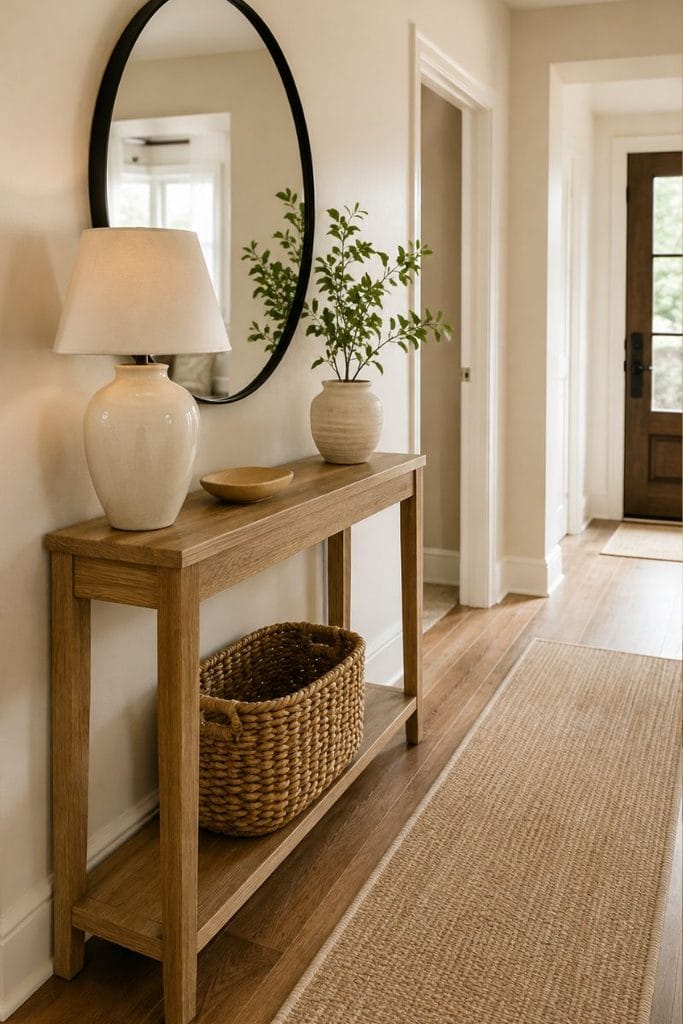
An entryway sets the tone before anyone reaches the main living spaces. Even a narrow hallway deserves a practical landing spot for keys, bags, and everyday items. A console table between 10 and 14 inches deep works well in tighter spaces.
Hang a round mirror roughly 6 to 8 inches above the console and place a small ceramic lamp on one side. A woven basket underneath gives you a place for shoes, scarves, or reusable shopping bags without filling the floor with clutter.
I think functional entryways are among the most useful interior design ideas because they solve a daily problem while making the home feel more finished. A narrow runner in warm beige or muted taupe also helps define the area.
If your entry is especially small, choose a wall-mounted shelf instead of a full console. Add one framed print and a small hook rail, then leave enough walking space for the door to open comfortably.
6. Style the Coffee Table With Restraint
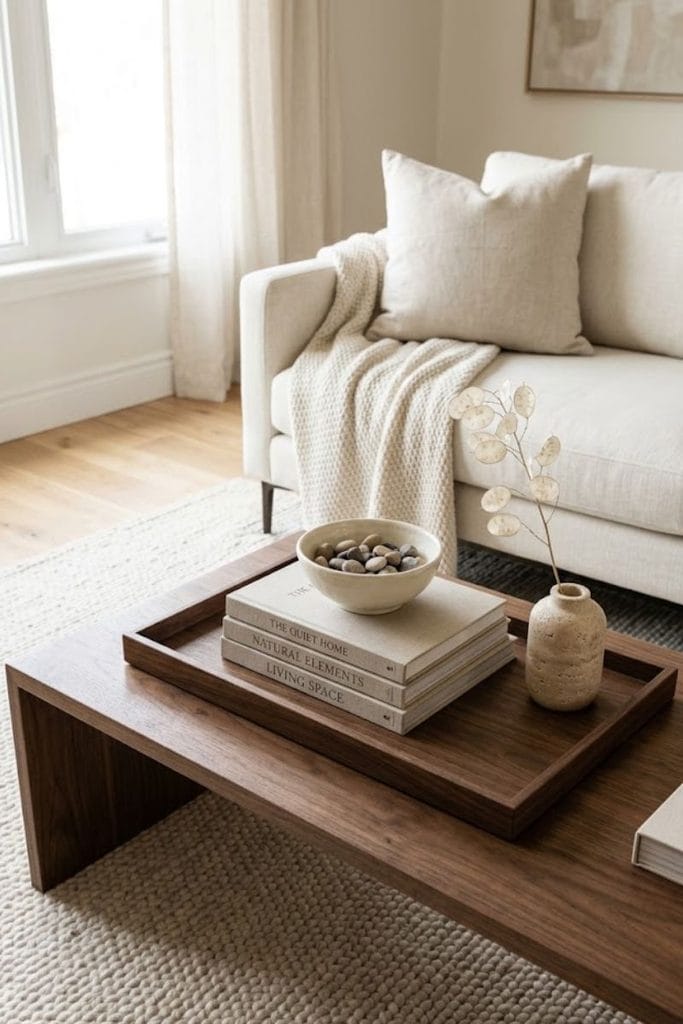
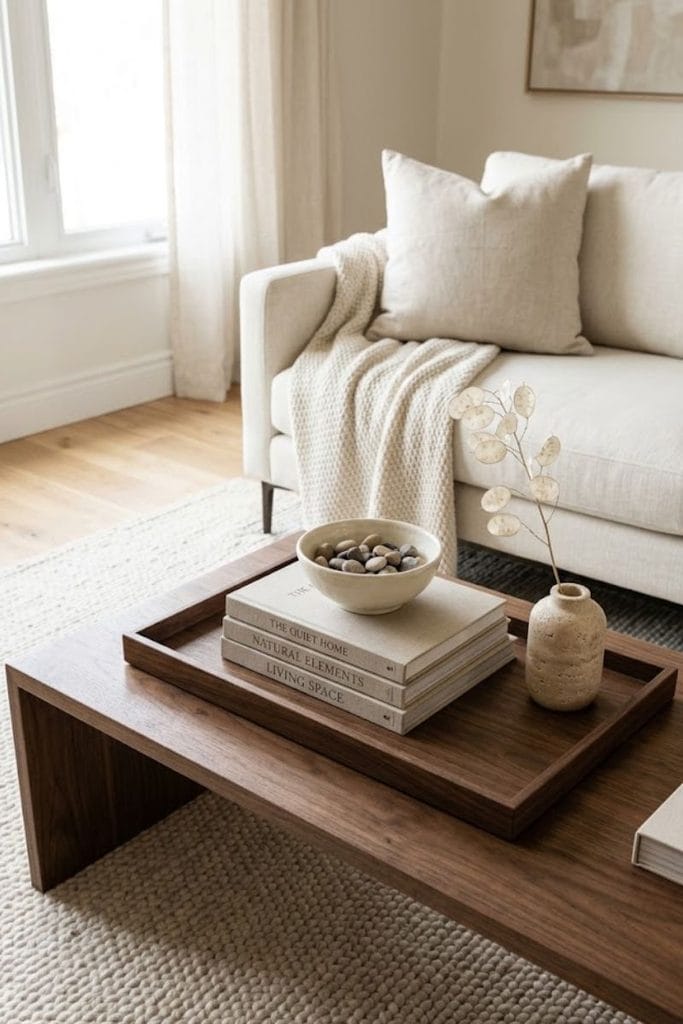
A coffee table looks better when it has breathing room. Instead of covering the entire surface, create one compact arrangement. A rectangular wooden tray measuring around 12 by 18 inches gives you a defined area for books, a candle, and a small ceramic bowl.
Stack two or three books with neutral covers, then place a low vase beside them. Keep at least one-third of the tabletop open so the furniture still feels practical for everyday use.
In my home decor projects, I’ve noticed how quickly a coffee table becomes cluttered when every attractive object gets a place. Interior design ideas work best when decoration supports the room rather than taking over useful surfaces.
For a round table, use a circular tray or one sculptural object in the center. For a rectangular table, an offset arrangement often feels more relaxed than a perfectly centered display.
The materials matter too. Wood, stone, ceramic, and linen usually feel warmer than a collection of glossy plastic accessories.
7. Repeat One Accent Color
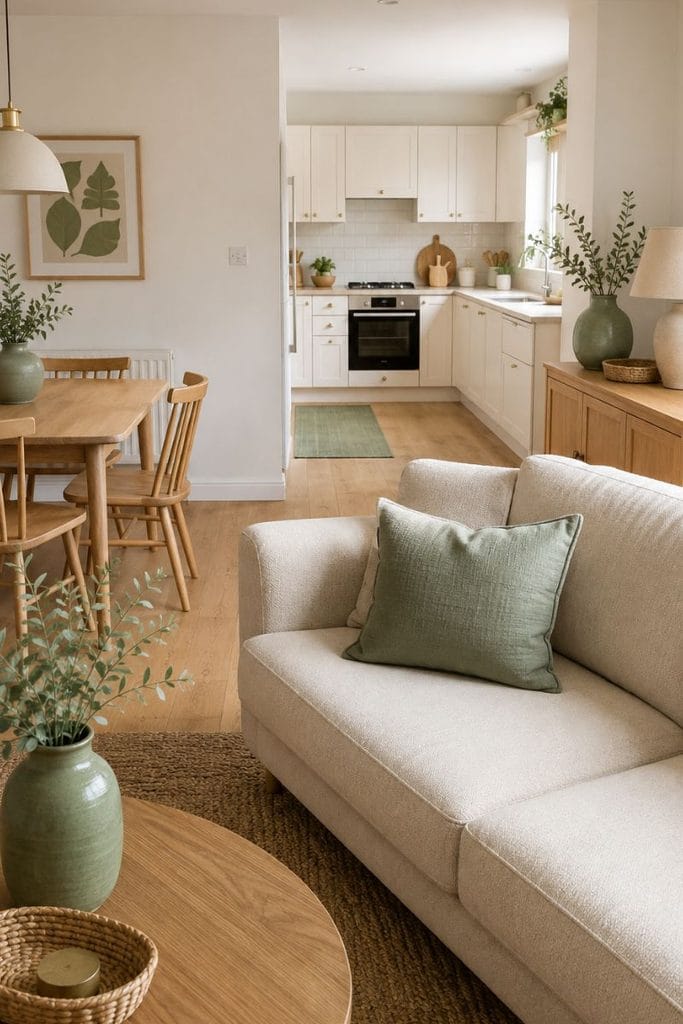
A home feels more connected when one accent color appears in several rooms. Choose a shade you love and use it in small, controlled doses. Sage green works beautifully with cream, oak, and warm brass, while dusty blue suits white, walnut, and natural linen.
You don’t need the color everywhere. Repeat it three or four times in a room through a cushion, artwork, ceramic vase, or small upholstered chair.
This is one of those interior design ideas that helps a home feel collected rather than decorated room by room. When the same sage green appears in the living room cushions, kitchen runner, and bedroom artwork, the spaces feel related.
Keep the main furniture neutral so the accent shade remains easy to change later. A color repeated through accessories also gives you a simple seasonal update. Swap dusty blue for rust in autumn without replacing your larger pieces.
Take a look at our Scandinavian Home Design Ideas for a great example of calm palettes and repeated natural tones.
8. Bring in Natural Materials
Natural materials make rooms feel grounded and comfortable. Think linen curtains, jute rugs, rattan baskets, oak furniture, stone trays, and handmade ceramic pieces. These materials add visual interest without relying on loud patterns.
A living room with a cream linen sofa looks richer when paired with a 5-by-8-foot jute rug and a solid wood coffee table. In a bedroom, washed linen bedding and a woven bench at the foot of the bed create a softer look.
I think natural materials are especially useful when you prefer neutral interiors. Without texture, beige and cream rooms sometimes look flat. A woven basket, rough stone vase, or visible wood grain gives the eye something to notice.
Keep the palette restrained. Too many different materials in competing colors can make a room feel busy. Choose two or three dominant materials and repeat them across the space.
See our Coastal Living Room Ideas for more inspiration using linen, woven textures, light wood, and relaxed neutral colors.
9. Use Oversized Art Instead of Clutter
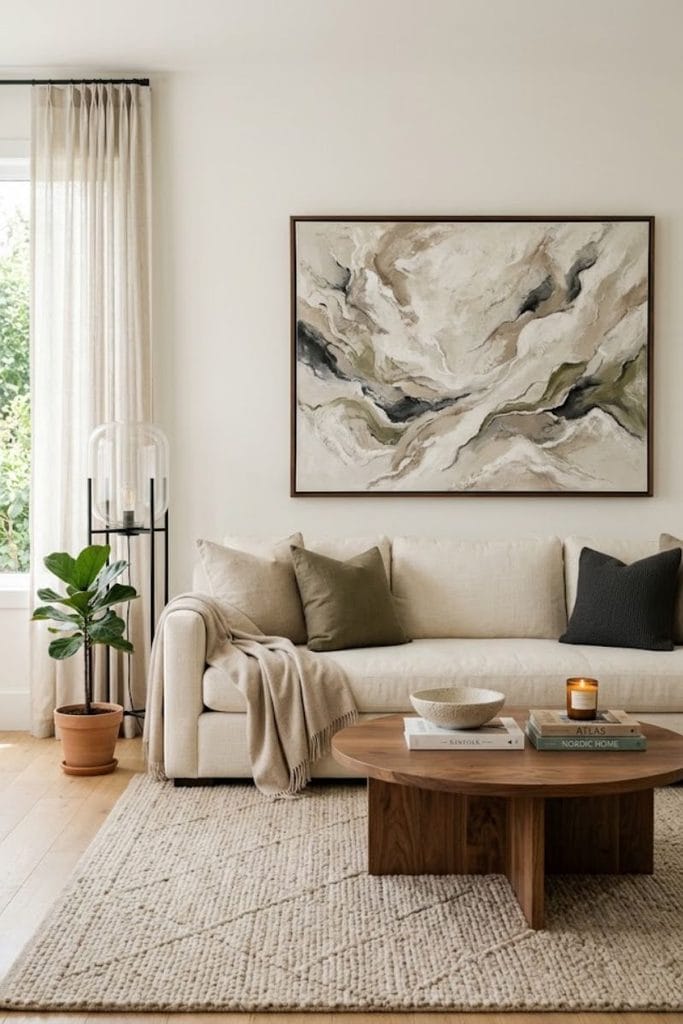
One large artwork often gives a room more impact than a wall covered with tiny pieces. Above a sofa, choose artwork roughly two-thirds the width of the furniture. A 36-by-48-inch abstract canvas works well above many standard sofas.
Choose a muted palette such as cream, charcoal, taupe, and soft olive if your room already has plenty of texture. The artwork should connect with at least one existing color in the room so it feels intentional.
I personally think oversized artwork is one of the easiest interior design ideas for renters and homeowners because it creates a strong visual moment without requiring a major renovation. A single large frame also makes a blank wall feel finished in minutes.
For a dining room, hang the artwork so its center sits around eye level. In a bedroom, position a horizontal piece above the headboard with enough breathing room between the frame and furniture.
Explore our Modern Wall Art Ideas for more artwork styles suited to different rooms.
10. Design for Real Daily Life
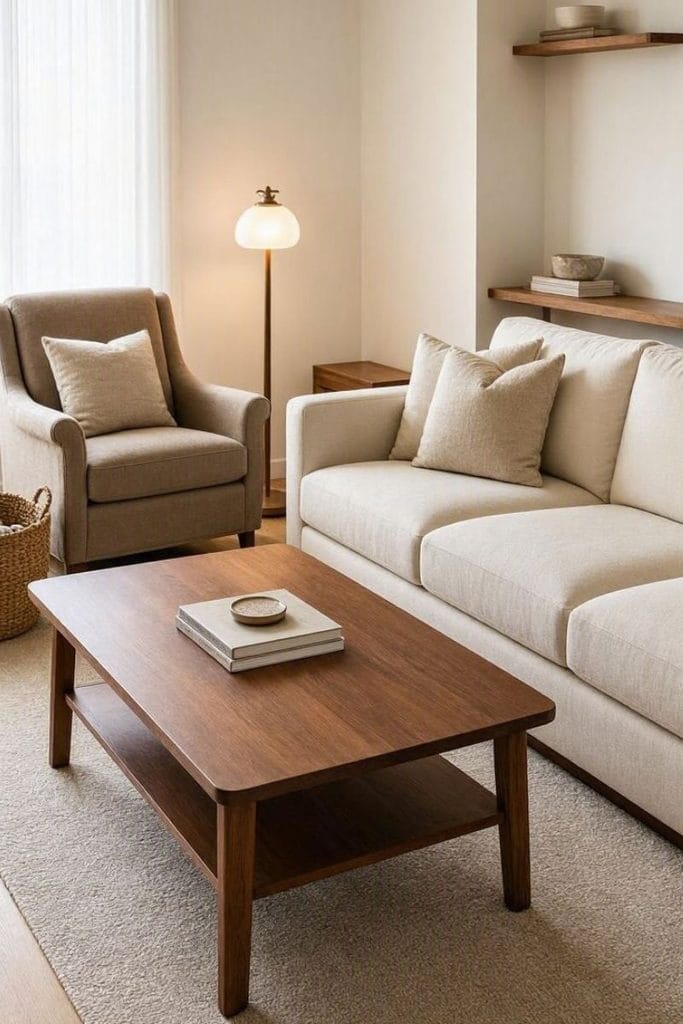
The prettiest room still needs to work for the people living in it. If your family drops shoes near the door, create a dedicated basket or closed cabinet. If you read every evening, place a comfortable chair beside a floor lamp instead of leaving an empty decorative corner.
Think about how you move through the room each day. Leave at least 30 to 36 inches for the main walking path where possible, and avoid placing a large coffee table so close to the sofa that knees hit the edge.
This is where interior design ideas become more than decoration. Good design supports your routines. A bedroom needs easy bedside storage, a living room needs comfortable seating, and a kitchen needs clear working surfaces.
In my experience, the most successful rooms balance beauty with ordinary life. You might love a perfectly styled room online, but your own home needs places for books, chargers, blankets, shoes, and the things you use every day.
Read our Old Money Living Room Ideas for more inspiration on combining comfortable furniture with timeless decorative details.
A Home Should Feel Connected
The best homes rarely follow one decorating formula from room to room. Instead, they repeat a few thoughtful details such as warm white walls, natural wood, soft textiles, one accent color, and comfortable lighting.
If you’re refreshing your home, start with the room you use most. Change one high-impact detail first, then see how it affects the rest of the space. You might love the difference a new rug, oversized artwork, or warmer light makes before you buy anything else.
Pro-Tip: Before purchasing new decor, take photos of your room in daylight and at night. Look at the photos instead of relying only on how the space feels in person. Empty areas, awkward proportions, and color clashes often become much easier to spot in a photo.
I think the strongest interior design ideas are the ones you enjoy every day, not the ones that look good for a single Pinterest photo. Let your rooms stay comfortable, useful, and personal while keeping a clear visual direction.
Which of these interior design ideas would you try first in your home?
